
Support Team Roles in Providing Individualised Support
Posted by SkillMaker in Jan, 2025
What is a concise description of supporting a team in providing individualised support?

Supporting a team in providing individualised support involves collaborating with various health and community service professionals to tailor assistance based on the unique needs and preferences of individuals. This approach ensures that care and support strategies are personalised, effective, and respectful of the individual’s circumstances.
Why do enterprises need to support a team in providing individualised support?
Enterprises need to support a team in providing individualised support to ensure that each client or patient receives care that is customized to their specific needs. This approach enhances client satisfaction, promotes health outcomes, and ensures compliance with industry standards. A well-supported team is also better equipped to address challenges and innovate solutions to meet client needs effectively.
“Supporting a team in providing individualised support fosters a collaborative environment that prioritizes the unique needs of each individual, ensuring effective and compassionate care.”
What are the key components or elements of supporting a team in providing individualised support?
Key components of supporting a team in providing individualised support include:
- Collaboration: Engaging cross-functional teams to address individual needs.
- Communication: Ensuring clear, open lines for discussing strategies and outcomes.
- Training: Providing continuous professional development to keep skills sharp.
- Resource Allocation: Efficiently distributing tools and support necessary for care delivery.
- Feedback Mechanisms: Regularly assessing and refining support strategies.
What key terms, with descriptions, relate to supporting a team in providing individualised support?

Registered Trademark®
- Person-Centred Care: An approach focused on the individual’s personal needs, values, and choices.
- Interdisciplinary Team: A group of professionals from various fields working cooperatively.
- Care Plan: A detailed outline of a person’s care needs and how they will be met.
- Empowerment: Enabling individuals to take control of their care decisions.
- Outcome-Based Practice: Focusing on achieving specific, measurable results in support services.
Who is typically engaged with operating or implementing support for providing individualised support?
Typically, healthcare professionals such as support workers, case managers, nurses, and therapists are involved in implementing individualised support. These individuals collaborate closely with clients and their families to ensure that care is tailored to the individual’s unique circumstances and preferences.
How does supporting a team in providing individualised support align or integrate with other components of Health or Community Services in Australia?
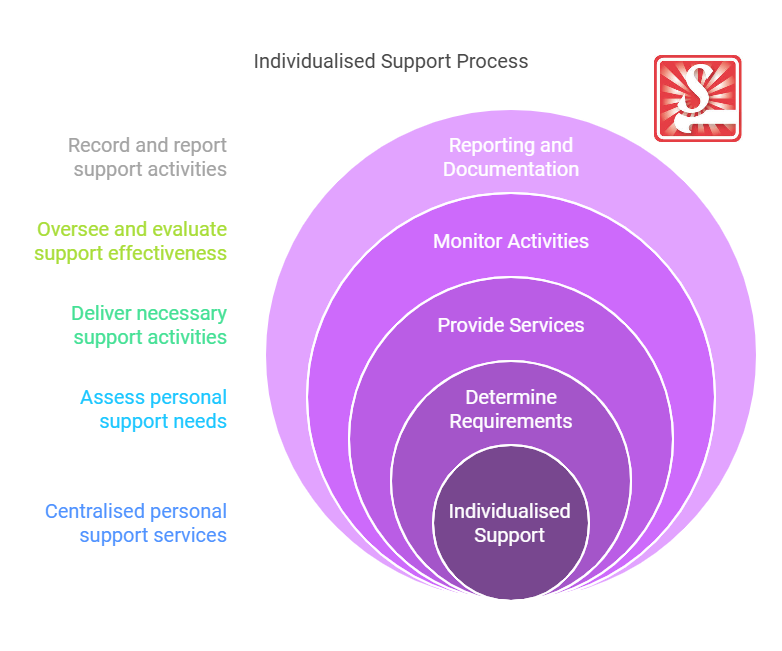
Supporting a team in providing individualised care integrates seamlessly with the broader objectives of health and community services by promoting personalised care, enhancing patient outcomes, and improving client satisfaction. It aligns with policies and practices that emphasise the individual’s role in their own care journey within Australia’s healthcare and community service sectors.
Where can the student go to find out more information about supporting a team in providing individualised support?
- National Disability Insurance Scheme (NDIS)
- Australian Government Department of Health
- Australian Institute of Health and Welfare
- Skillmaker
What job roles would be knowledgeable about supporting a team in providing individualised support?
Roles include:
- Case Managers
- Support Workers
- Nurses
- Social Workers
- Therapists
What is supporting a team in providing individualised support like in relation to sports, family, or schools?

Relating individualised support to sports, it is similar to a coach creating a personalised training regimen for each athlete based on their strengths and areas for improvement. In a family setting, it mirrors how each member receives attention and support tailored to their needs and aspirations. Within schools, individualised support can be compared to educators developing customised learning plans to enhance each student’s educational journey and success.
(The first edition of this post was generated by AI to provide affordable education and insights to a learner-hungry world. The author will edit, endorse, and update it with additional rich learning content.)
- About the Author
- More info

Workskill training for all

 Post Tagged with