
Support Processes in Providing Individualised Support
Posted by SkillMaker in Jan, 2025
What is a concise description of support processes in providing individualised support?

Support processes in providing individualised support involve tailored care plans and approaches that address the unique needs, preferences, and goals of individuals in health and community services. This personalised support ensures that care is delivered with respect, dignity, and effectiveness, enhancing the individual’s quality of life.
Why do people in enterprises need support processes when providing individualised support?
Enterprises need support processes when providing individualised support to ensure that each client or patient receives care that is specifically suited to their unique conditions and needs. This customised service enhances client satisfaction, improves outcomes, and fosters a trusting relationship between the caregiver and the individual. It also helps organisations comply with industry standards and regulations, thereby maintaining their reputation and operational efficiency.
“Support processes in providing individualised support bring precision and empathy, transforming healthcare delivery for enhanced individual well-being.”
What are the key components or elements of support processes in individualised support?
Key components include:
- Assessment: Thorough evaluation of the individual’s needs and preferences.
- Care Planning: Creating a personalised support plan that outlines goals and the means to achieve them.
- Implementation: Delivering support according to the individualised care plan.
- Monitoring and Review: Regularly assessing the effectiveness of the support provided and making necessary adjustments.
- Coordination: Ensuring effective communication among all parties involved in providing support.
What key terms, with descriptions, relate to support processes in individualised support?

Registered Trademark®
- Person-Centred Care: An approach that respects and values the uniqueness of the individual, putting them at the centre of the care process.
- Individual Care Plan (ICP): A customised plan detailing the specific support needs and how they will be addressed.
- Case Management: A collaborative process involving assessment, planning, and coordination of services to meet an individual’s comprehensive health needs.
- Multidisciplinary Team: A group of professionals from different disciplines working together, sharing expertise, and providing comprehensive support.
- Holistic Support: Considering the whole person, including their physical, social, and emotional needs in the supporting process.
Who is typically engaged with operating or implementing support processes in individualised support?
Support workers, case managers, nurses, occupational therapists, and social workers typically engage in operating support processes in individualised support. These professionals collaboratively work to ensure that the support provided is comprehensive, respectful, and effective, aligning with the needs and preferences of the individual.
How do support processes in providing individualised support align or integrate with other components of Health or Community Services in Australia?
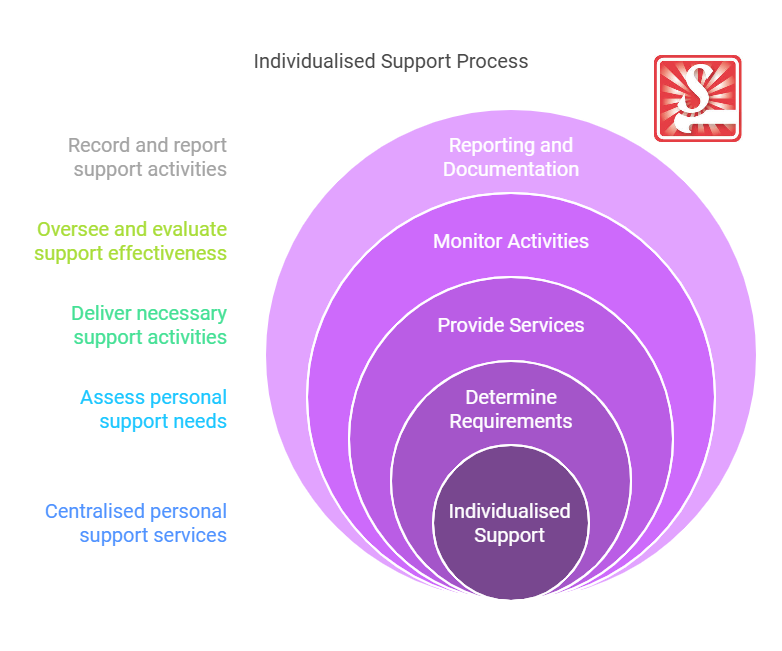
Support processes are fundamental, as they underpin other services and frameworks by ensuring consistency, empathy, and personalization. In the broader context, they align with initiatives like Patient Safety, Evidence-Based Practice, and Integrated Care, promoting a seamless and cohesive approach to Australian healthcare and community services.
Where can the student go to find out more information about support processes in providing individualised support?
- Australian Government Department of Health
- National Disability Insurance Scheme (NDIS)
- My Aged Care
- Skillmaker
What job roles would be knowledgeable about support processes in providing individualised support?
Roles include:
- Individual Support Workers
- Nurses
- Case Managers
- Occupational Therapists
- Social Workers
What are support processes in providing individualised support like in relation to sports, family, or schools?

In sports, it is similar to a coach designing a training regimen that targets an athlete’s specific strengths and weaknesses. In a family setting, it is like creating a parenting plan that caters to each child’s individual needs and characteristics. In schools, it resembles tailored educational strategies developed to meet each student’s learning style, ensuring that they reach their full potential.
(The first edition of this post was generated by AI to provide affordable education and insights to a learner-hungry world. The author will edit, endorse, and update it with additional rich learning content.)
- About the Author
- More info

Workskill training for all

 Post Tagged with