
Understanding Support Activities in Providing Individualised Support
Posted by SkillMaker in Jan, 2025
What is a concise description of support activities in providing individualised support?

Support activities in providing individualised support are tasks and actions that cater to the unique needs of individuals, ensuring their well-being and enhancing their quality of life. These activities are tailored to personal preferences, health conditions, and cultural backgrounds, and are designed to empower individuals by fostering independence and self-esteem.
Why do people in enterprises need support activities in providing individualised support?
Individuals in enterprises need support activities in order to promote a person-centred approach that values and respects the unique needs of each individual. These activities enhance the quality of care provided, increase customer satisfaction, and ensure compliance with regulatory standards. Additionally, they foster inclusive environments where individuals feel valued and supported, thereby increasing the effectiveness and reputation of the service provider.
“Support activities are the backbone of individualised support, ensuring each person’s unique needs are met with respect and dignity.”
What are the key components or elements of support activities in providing individualised support?
Key components of support activities in providing individualised support include:
- Assessment and Planning: Understanding individual needs and creating tailored support plans.
- Communication: Using effective and person-centred communication styles to engage with individuals.
- Nutrition and Health: Providing suitable meals and monitoring health conditions.
- Social and Emotional Support: Encouraging social interaction and providing emotional assistance.
- Safety and Security: Ensuring the individual’s environment is safe and secure.
What key terms, with descriptions, relate to support activities in providing individualised support?

Registered Trademark®
- Person-Centred Approach: A way of providing care that focuses on the needs, preferences, and values of the individual.
- Care Plan: A document detailing the specific needs and preferences of the individual, outlining the support required.
- Empowerment: Encouraging individuals to take an active role in their own care and decision-making.
- Advocacy: Supporting individuals in expressing their views and needs, ensuring their rights are upheld.
- Cultural Competency: The ability to understand, communicate, and effectively interact with people across cultures.
Who is typically engaged with operating or implementing support activities in providing individualised support?
Support workers, carers, social workers, and case managers are typically responsible for implementing support activities in individualised support. They work closely with individuals, their families, and other professionals to ensure that personalised care is delivered effectively and compassionately.
How do support activities align or integrate with other components of Health or Community Services in Australia?
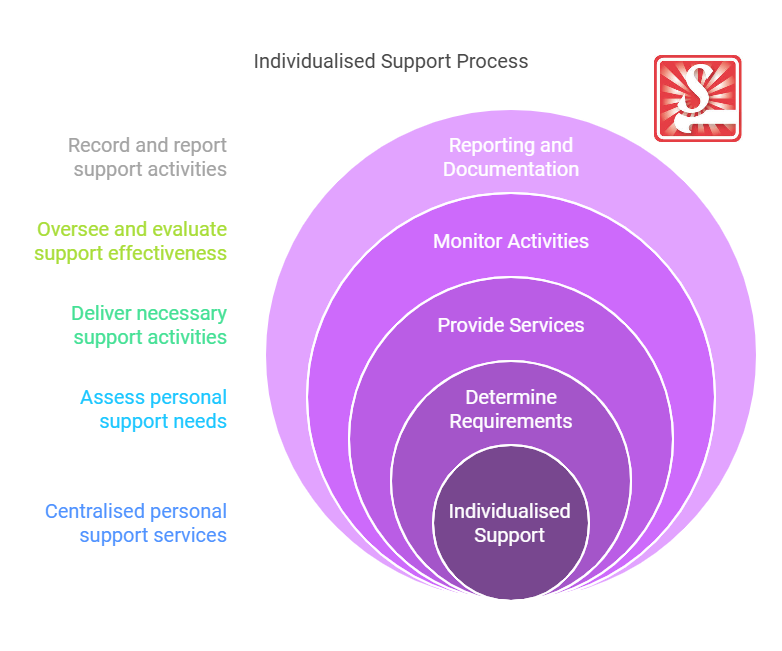
Support activities align with other components of Health or Community Services by promoting a holistic approach to care. They integrate with healthcare professionals, dietary services, and social services to provide a seamless and comprehensive support system that addresses physical, emotional, and social needs. This interdisciplinary collaboration ensures that individuals receive well-rounded and consistent care.
Where can the student go to find out more information about support activities in providing individualised support?
What job roles would be knowledgeable about support activities in providing individualised support?
Roles include:
- Support Workers
- Case Managers
- Social Workers
- Community Care Workers
- Disability Support Workers
What are support activities in providing individualised support like in relation to sports, family, or schools?

In relation to sports, support activities are similar to a coach tailoring training sessions to fit an athlete’s unique strengths and weaknesses. In a family context, it’s akin to parents adjusting their parenting style to suit each child’s personality and needs. In schools, it resembles teachers creating customised lesson plans to cater to diverse learning styles and abilities, ensuring that each student has the opportunity to succeed and grow.
(The first edition of this post was generated by AI to provide affordable education and insights to a learner-hungry world. The author will edit, endorse, and update it with additional rich learning content.)
- About the Author
- More info

Workskill training for all

 Post Tagged with