
Creating Effective Work Schedules for Cleaning Kitchen Premises and Equipment
Posted by SkillMaker in Jan, 2025
What is a concise description of creating effective work schedules for cleaning kitchen premises and equipment?

Creating effective work schedules for cleaning kitchen premises and equipment involves strategically organizing routines to ensure the cleanliness, sanitation, and efficient functioning of hospitality venues. This includes prioritizing tasks, allocating resources, and setting timelines that align with operational hours and compliance standards.
Why do people in enterprises need effective work schedules for cleaning kitchen premises and equipment?
Enterprises need effective work schedules for cleaning kitchen premises and equipment to maintain hygiene standards that ensure food safety and customer satisfaction. Structured scheduling prevents disruption to kitchen operations, supports regulatory compliance, minimizes equipment downtime, and promotes a safe working environment.
“Effective work schedules optimize cleanliness routines in kitchens, safeguarding food safety and ensuring seamless operational flow.”
What are the key components or elements of effective work schedules for cleaning kitchen premises and equipment?
Key components of effective work schedules include:
- Task Prioritization: Identifying critical cleaning tasks that need immediate attention.
- Resource Allocation: Assigning the right personnel and materials to specific tasks.
- Time Management: Setting realistic and efficient timelines for completion.
- Compliance Adherence: Incorporating health standards and regulations into routines.
- Flexibility: Allowing for adjustments to accommodate unexpected challenges.
What key terms, with descriptions, relate to effective work schedules for cleaning?

Registered Trademark®
- Sanitation Cycle: Regular intervals for cleaning tasks to ensure ongoing hygiene.
- Workload Distribution: Evenly allocating tasks among team members to prevent burnout.
- Checklists: Detailed lists that ensure all tasks are completed thoroughly and consistently.
- Peak Hours: Times of high activity when cleaning tasks need special scheduling consideration.
- Regulatory Compliance: Aligning scheduling criteria with legal and safety standards for kitchen operations.
Who is typically engaged with operating or implementing effective work schedules for cleaning?
Roles involved in implementing effective work schedules typically include kitchen managers, cleaning supervisors, sanitation staff, and operations managers. These individuals collaborate to ensure the cleanliness routines are efficient and meet standards.
How do work schedules align or integrate with other components of Hospitality and Catering?
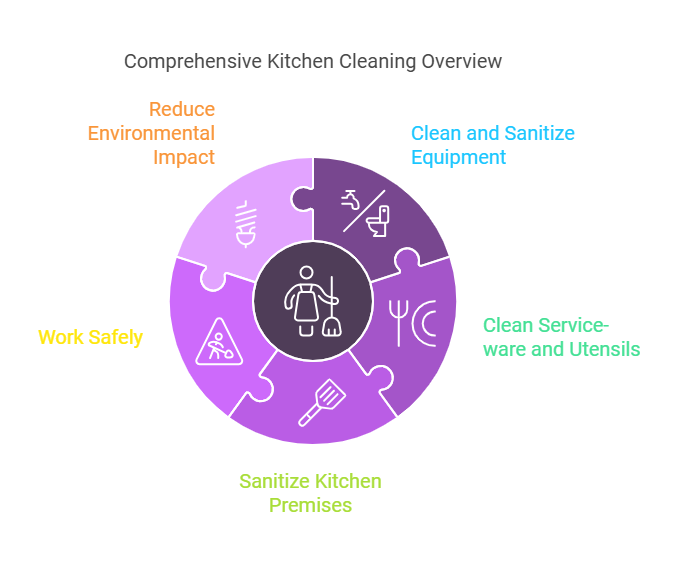
Work schedules align with other Hospitality and Catering components by supporting seamless operation flows and ensuring staff efficiency. Coordinated cleaning schedules mitigate disruptions, enhance food safety and compliance, and contribute to overall service quality, reinforcing the collective goals of the hospitality industry.
Where can the student go to find out more information about effective work schedules for cleaning?
What job roles would be knowledgeable about effective work schedules for cleaning?
Roles include:
- Kitchen Managers
- Cleaning Supervisors
- Sanitation Staff
- Operations Managers
- Compliance Officers
What are work schedules like in relation to sports, family, or schools?

In sports, work scheduling is akin to coaching strategies that allocate resources and time efficiently to maximize team performance. Within families, it’s comparable to organising chores to ensure everyone contributes harmoniously to household maintenance. In schools, it echoes lesson planning, ensuring time structures support effective learning while accommodating varied needs.
(The first edition of this post was generated by AI to provide affordable education and insights to a learner-hungry world. The author will edit, endorse, and update it with additional rich learning content.)
- About the Author
- More info

Workskill training for all

 Post Tagged with