
Bidding Process in Conducting and Completing a Sale by Auction
Posted by SkillMaker in Feb, 2026
What is a concise description of the bidding process when conducting and completing a sale by auction?

The bidding process in an auction involves potential buyers competing to purchase an item or property by making progressively higher offers until no higher bid is made, allowing that person to win the auction. Auctioneers facilitate this process, ensuring transparency and fairness, as bids are clearly voiced, and timings are controlled to determine the highest bidder.
Listen to this article as a podcast
Why do people in the Real Estate industry need a strong understanding of the bidding process when conducting and completing a sale by auction?
A thorough understanding of the bidding process is essential for real estate professionals as it enables them to guide clients through the nuances of auctions, ensuring successful outcomes. Knowledge of this process helps in setting realistic expectations, fostering competitive bidding, and maximising sale prices, ultimately contributing to client satisfaction and professional success.
“Understanding the auction bidding process empowers real estate professionals to strategically manage sales, elevate client confidence, and optimise final transaction outcomes.”
What are the key components or elements of the bidding process in an auction?
Key components of the bidding process in an auction include:
- Opening Bid: The initial price at which the auction begins.
- Bid Increments: Set increases in bid value determined by the auctioneer.
- Bidder Registration: Process for identifying and recording participants.
- Reserve Price: The minimum price the seller is willing to accept.
- Final Bid: The highest offer at which the auction concludes.
What key terms, with descriptions, relate to the bidding process in auctions?

Registered Trademark®
- Auctioneer: The person who conducts the auction and manages the bidding process.
- Gavel: A small hammer used by the auctioneer to signify the end of bidding.
- Hammer Price: The final bid accepted, concluded with the fall of the gavel.
- Proxy Bid: A bid placed on behalf of a bidder unwilling or unable to attend.
- Withdrawn Lot: An item removed from the auction before it is sold.
Who is typically engaged with operating or implementing the bidding process in an auction?
Auctioneers, auction house staff, real estate agents, and potential buyers are primarily involved in operating the bidding process. Auctioneers are pivotal as they control the flow of bidding, while agents assist bidders and sellers by presenting items effectively and managing client expectations.
How does the bidding process align or integrate with other components of the Real Estate industry in Australia?
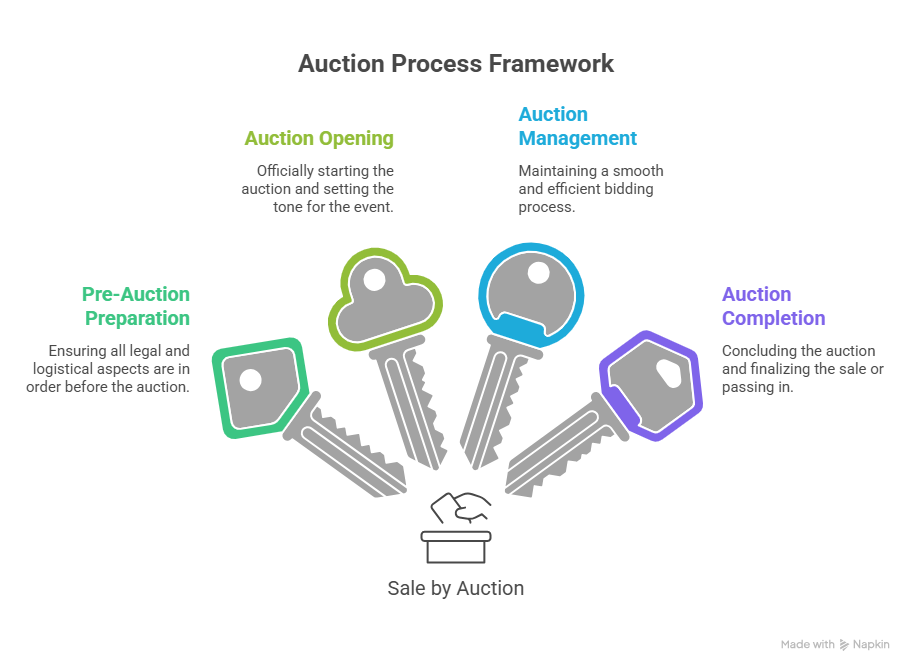
The bidding process is integral to the real estate auction format, supporting the dynamic and competitive marketplaces. It aligns with valuation services, marketing strategies, and buyer-seller negotiations by translating property value perceptions into tangible offers, which guide successful transactions.
Where can the student go to find out more information about the bidding process in auctions?
- General rules for conducting an auction of goods
- The law and authority of auctioning real property
- Skillmaker
What job roles would be knowledgeable about the bidding process in auctions?
Roles include:
- Auctioneers
- Real Estate Agents
- Property Managers
- Sales Consultants
- Valuers
What is the bidding process in an auction like in relation to sports, family, or schools?

The bidding process in an auction is similar to a sports event, where teams (bidders) use strategy and competitive spirit to outplay others for victory (winning the item).
In family terms, it’s like a parent negotiating household tasks with children, drawing bids for preferred choices.
As for schools, it could resemble students competing for top grades, where outperforming peers with better preparation (higher bids) leads to desired outcomes.
(The first edition of this post was generated by AI to provide affordable education and insights to a learner-hungry world. The author will edit, endorse, and update it with additional rich learning content.)
(Skillmaker – 2025)- About the Author
- More info

Workskill training for all
