
Bidding Advances in Conducting and Completing a Sale by Auction
Posted by SkillMaker in Feb, 2026
What is a concise description of bidding advances when conducting and completing a sale by auction?

Bidding advances during an auction describe the incremental increases in bid amounts, which are typically predefined and must be adhered to throughout the auction process. These advances ensure that bidding progresses in an orderly and competitive manner, providing clarity and structure to both bidders and the auctioneer.
Why do people in the real estate industry need to understand bidding advances when conducting and completing a sale by auction?
Understanding bidding advances is crucial for professionals in the real estate industry to facilitate a fair and efficient auction process. Properly managed bidding advances help maintain control during the auction, prevent bidding disputes, and ensure that the property is sold at the highest possible price. This knowledge is essential for building trust and credibility with clients and buyers, ultimately contributing to the auction’s success.
“Bidding advances guide the flow and structure of an auction, ensuring competitiveness, clarity, and efficiency in the bidding process.”
What are the key components or elements of bidding advances when conducting and completing a sale by auction?
Key components of bidding advances during auctions include:
- Initial Bidding Amount: The starting figure from which the bidding process begins.
- Incremental Increases: Predefined bid advances that structure how bidding progresses, often chosen by the auctioneer.
- Bidder Acknowledgments: Confirmations by the auctioneer to acknowledge bids and advances.
- Reserve Price: The minimum price at which the seller will agree to sell the property, guiding bid advancements.
- Competitive Bidding Environment: Ensuring a dynamic and engaging auction atmosphere that encourages bidding.
What key terms, with descriptions, relate to bidding advances when conducting and completing a sale by auction?

Registered Trademark®
- Increment: The pre-established amount by which subsequent bids must increase over the previous bid.
- Hammer Price: The final bid accepted by the auctioneer, signifying sale completion.
- Lot: A single item or group of items offered at auction as a single unit for bidding.
- Outbid: A higher bid made that surpasses the current bid.
- Passed In: Occurs when a lot does not meet the reserve price and remains unsold at auction.
Who is typically engaged with operating or implementing bidding advances when conducting and completing a sale by auction?
Auctioneers, auction house managers, and real estate agents are typically responsible for managing bidding advances in the auction process. These roles are critical in guiding the pace and direction of the bidding, ensuring transparency, and maintaining the competitive nature of the auction.
How do bidding advances in auctions align or integrate with other components of the Real Estate industry in Australia?
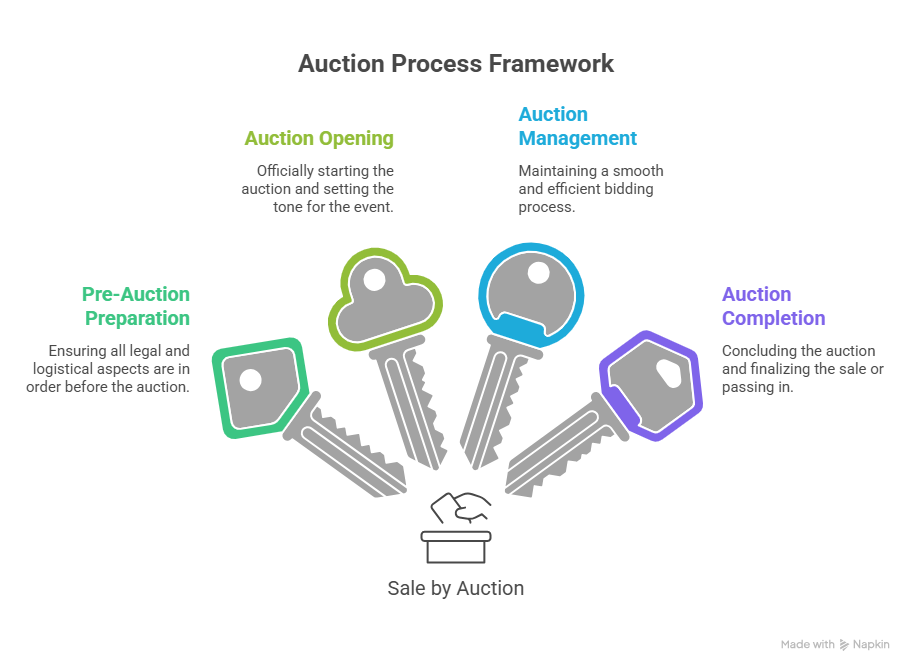
Bidding advances are integral to auction dynamics, bolstering fundamental real estate strategies such as property valuations, negotiations, and market analysis. They ensure that all transactions are executed transparently and equitably, reinforcing trust in market operations. This coherence with auctions provides a vital avenue for sellers to meet or exceed property valuations swiftly, within an organised competitive framework.
Where can the student go to find out more information about bidding advances during auctions?
- General rules for conducting an auction of goods
- The law and authority of auctioning real property
- Skillmaker
What job roles would be knowledgeable about bidding advances during auctions?
Roles include:
- Auctioneers
- Real Estate Agents
- Property Valuers
- Auction House Managers
- Sales Negotiators
What are bidding advances in auctions like in relation to sports, family, or schools?

Bidding advances in auctions are similar to setting the pace in sports, where players must progress through stages of a game with strategy and controlled steps. For families, it is like budgeting, where expenses are incrementally adjusted to fit financial goals. In a school setting, it equates to curriculum progression, where students advance through learning modules in a structured sequence to achieve academic objectives.
(The first edition of this post was generated by AI to provide affordable education and insights to a learner-hungry world. The author will edit, endorse, and update it with additional rich learning content.)
(Skillmaker – 2025)- About the Author
- More info

Workskill training for all
