
Auctioneer Role When Conducting and Completing a Sale by Auction
Posted by SkillMaker in Feb, 2026
What is a concise description of the auctioneer’s role when conducting and completing a sale by auction?

The auctioneer’s role in conducting and completing a sale by auction involves managing the auction process efficiently, creating a dynamic and engaging atmosphere for potential bidders, and ensuring that the legal requirements and competitive selling strategies are adhered to for the optimal conclusion of the sale.
Listen to this article as a podcast
Why do people in the Real Estate industry need the auctioneer’s role when conducting a sale by auction?
The auctioneer plays a crucial role in the Real Estate industry by facilitating open and competitive bidding, which can maximise the sale price in a transparent process. Auctioneers also ensure compliance with legal obligations and protect the interests of both sellers and buyers during the auction. Their presence is vital for orchestrating a seamless and professional auction event.
“The auctioneer is not just a seller but an orchestrator, ensuring each auction is executed ethically, professionally, and effectively, driving the best outcomes for all parties involved.”
What are the key components or elements of the auctioneer’s role when conducting and completing a sale by auction?
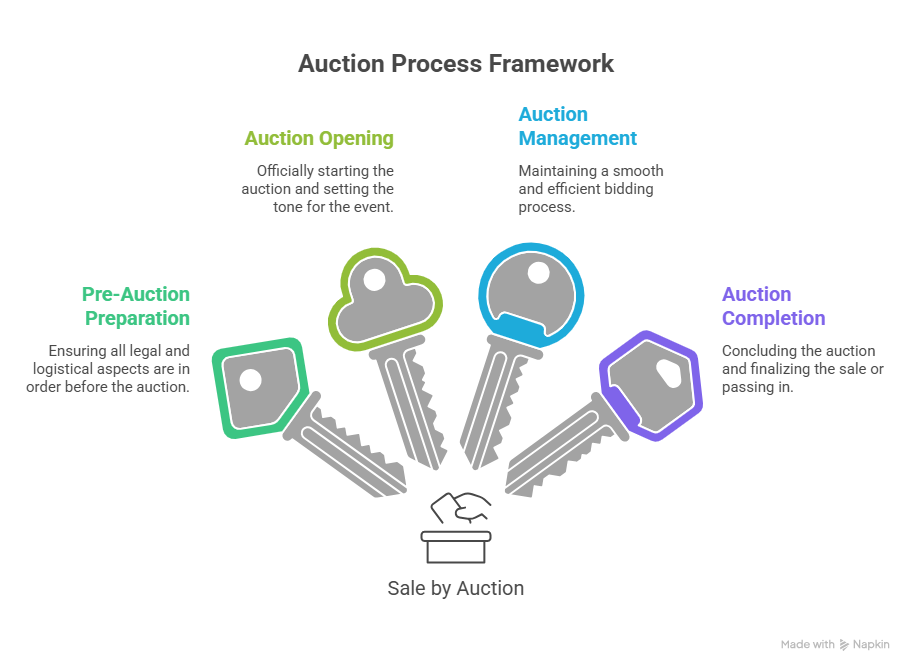
Key components of the auctioneer’s role include:
- Preparation: Ensuring all legal and promotional materials are accurate and ready prior to the auction.
- Opening the Auction: Starting with a thorough introduction and clarity on auction rules and conditions.
- Bidding Process Management: Encouraging open and competitive bidding, maintaining attention, and clarity.
- Finalisation: Declaring a sale once the reserve price is met, completing legal documentation, and concluding the auction efficiently.
- Compliance: Observing state-specific regulations and guidelines to ensure a legally compliant auction.
What key terms, with descriptions, relate to the auctioneer’s role when conducting and completing a sale by auction?

Registered Trademark®
- Reserve Price: The minimum price set by the seller that must be met for the sale to proceed.
- Hammer Price: The final bid accepted by the auctioneer, ending the auction.
- Bidders: Individuals participating in the auction, making offers to purchase.
- Vendor Bids: Bids made on behalf of the seller, typically to start or move the bidding process.
- Increment: The amount by which bids must increase each time a new offer is made.
Who is typically engaged with operating or implementing the auctioneer’s role when conducting a sale by auction?
Licensed auctioneers, real estate agents, and auction support staff are typically engaged in operating and implementing the auction process. They collaborate to ensure that all aspects of the auction, from preparation to execution and finalisation, are handled professionally and according to legal standards.
How does the auctioneer’s role align or integrate with other components of the Real Estate industry in Australia?
The auctioneer’s role complements other real estate practices such as property marketing, valuation, and client negotiations by providing a direct and transparent sales channel. It integrates tightly with regulatory frameworks, ensuring property transactions are conducted legally and clearly. This alignment strengthens the integrity and efficiency of the Real Estate industry in Australia.
Where can the student go to find out more information about the auctioneer’s role when conducting a sale by auction?
- General rules for conducting an auction of goods
- The law and authority of auctioning real property
- Skillmaker
What job roles would be knowledgeable about the auctioneer’s role when conducting a sale by auction?
Roles include:
- Auctioneers
- Real Estate Agents
- Property Valuers
- Compliance Officers
- Auction Assistants
What is the auctioneer’s role like in relation to sports, family, or schools?

In the realm of sports, an auctioneer’s role is comparable to a coach leading a team to victory with strategic decisions and dynamic engagement. In a family setting, it resembles the head of the household orchestrating harmonious family events through clear communication and management. Within schools, it is akin to a principal who ensures all educational activities run smoothly and adhere to necessary guidelines, fostering an environment where everyone can thrive.
(The first edition of this post was generated by AI to provide affordable education and insights to a learner-hungry world. The author will edit, endorse, and update it with additional rich learning content.)
(Skillmaker – 2025)- About the Author
- More info

Workskill training for all
