
Opening Bids: Key to Conducting and Completing a Sale by Auction
Posted by SkillMaker in Feb, 2026
What is a concise description of opening bids when conducting and completing a sale by auction?

Opening bids are the initial offers made by potential buyers at the start of an auction. They set the tone for the auction proceedings by establishing the starting point for the competition. A well-placed opening bid can stimulate bidder interest and encourage active participation, gradually driving the final selling price higher.
Listen to this article as a podcast
Why do people in the Real Estate industry need opening bids when conducting and completing a sale by auction?
In real estate auctions, opening bids are crucial because they initiate the competitive bidding process and can influence the pace and momentum of the auction. They provide a benchmark for other potential buyers, help to gauge market interest in the property, and can significantly affect the final price achieved at auction, which directly impacts the vendor’s success.
“Opening bids in an auction are the spark that ignites the competitive fire among bidders, potentially maximizing the property’s final sale price.”
What are the key components or elements of opening bids when conducting and completing a sale by auction?
Key components of opening bids in auctions include:
- Bidder Engagement: The initial bid should attract interest and participation.
- Pricing Strategy: Establishing a strategic starting bid to encourage competition.
- Auctioneer’s Role: The ability to manage and influence bidding activity.
- Transparency: Clear communication of bidding increments and rules.
- Market Research: Understanding the value perception of the property among potential buyers.
What key terms, with descriptions, relate to opening bids when conducting and completing a sale by auction?

Registered Trademark®
- Reserve Price: The minimum price a seller is willing to accept, which influences the initial bidding range.
- Vendor Bid: A legal bid made by the auctioneer on behalf of the seller to encourage bidding.
- Bidding Increments: The financial steps by which the auctioneer raises the current bid amount.
- Hammer Price: The final bid amount accepted by the auctioneer, concluding the auction.
- Fall of the Hammer: The point at which an auctioneer declares the property sold.
Who is typically engaged with operating or implementing opening bids when conducting and completing a sale by auction?
Key players in the auction process include the auctioneer, who orchestrates the auction, real estate agents who prepare the property and potential bidders, and the vendor, who sets the strategy and reserve price. These roles collectively influence the dynamics of opening bids by shaping auction settings and responding to market feedback.
How do opening bids when conducting and completing a sale by auction align or integrate with other components of the Real Estate industry in Australia?
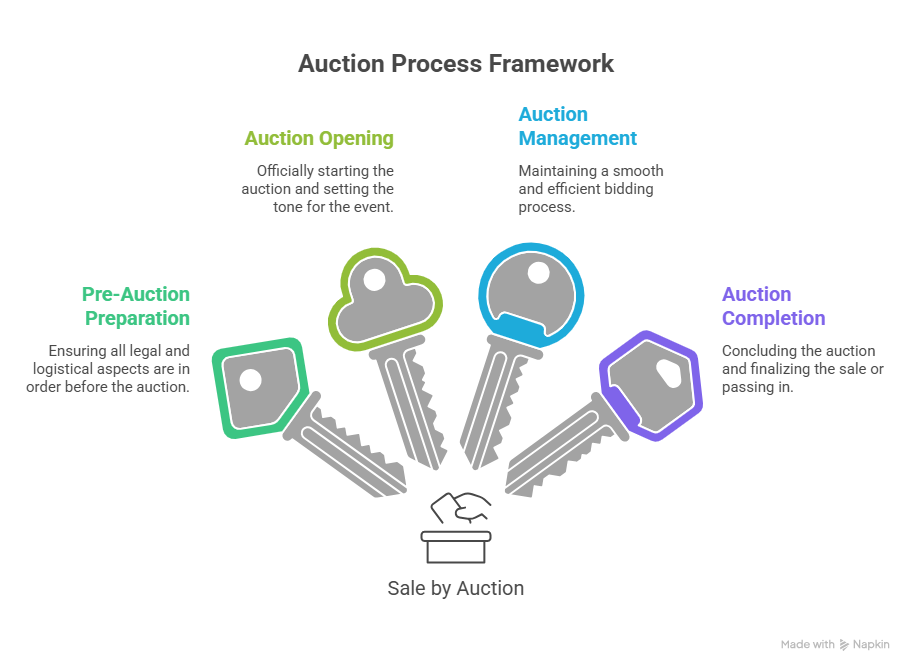
Opening bids integrate with aspects such as property marketing and valuation. They interact directly with buyer perceptions and market trends, which are pivotal in pricing decisions. Effective opening bids also depend on legal compliance within Australian real estate laws, impacting the auction’s transparency and competitiveness.
Where can the student go to find out more information about opening bids when conducting and completing a sale by auction?
- General rules for conducting an auction of goods
- The law and authority of auctioning real property
- Skillmaker
What job roles would be knowledgeable about opening bids when conducting and completing a sale by auction?
Roles include:
- Real Estate Auctioneers
- Real Estate Agents
- Property Valuers
- Vendor Advocates
- Real Estate Assistants
What are opening bids when conducting and completing a sale by auction like in relation to sports, family, or schools?

In sports, opening bids are like the initial plays in a game that set the flow and strategy. Similarly, in a family setting, they may mimic starting a conversation or discussion, guiding the interaction. In schools, they reflect starting questions or topics that engage students and structure the learning environment.
(The first edition of this post was generated by AI to provide affordable education and insights to a learner-hungry world. The author will edit, endorse, and update it with additional rich learning content.)
(Skillmaker – 2025)- About the Author
- More info

Workskill training for all
