
Auction Instructions When Conducting and Completing a Sale by Auction
Posted by SkillMaker in Feb, 2026
What is a concise description of auction instructions when conducting and completing a sale by auction?

When conducting and completing a sale by auction, it involves a structured process with specific instructions designed to facilitate transparent and competitive bidding. These instructions cover the pre-auction preparations, the auction day activities, and the post-auction procedures. These guidelines ensure that all legal obligations are met, potential issues are mitigated, and the auction is conducted fairly and efficiently.
Listen to this article as a podcast
Why do people in the Real Estate industry need auction instructions when conducting and completing a sale by auction?
Clear auction instructions are crucial in the Real Estate industry to ensure a seamless auction experience. They help in managing bidder expectations, maintaining legal compliance, and achieving the best possible sales outcome. Instructions guide auctioneers and participants through each stage of the auction, minimizing the risk of disputes and enhancing the credibility and professionalism of the auction process.
“Detailed auction instructions underpin a fair, efficient, and transparent sale by auction process.”
What are the key components or elements of auction instructions when conducting and completing a sale by auction?
Key components of auction instructions include:
- Pre-Auction Preparation: This involves setting reserve prices, preparing auction materials, and promoting the auction to potential bidders.
- Auction Day Protocols: Steps and procedures that govern bidder registration, the call for bids, and the handling of the reserve price during the auction.
- Post-Auction Procedures: Includes the signing of contracts, deposit handling and managing any unsold lots.
- Compliance and Legal Obligations: Ensuring that the auction adheres to legal requirements and industry standards.
What key terms, with descriptions, relate to auction instructions when conducting and completing a sale by auction?

Registered Trademark®
- Reserve Price: The minimum price that a seller is willing to accept for the property at auction, which is not disclosed to the bidders.
- Bidder Registration: The process by which potential buyers register to bid at the auction.
- Hammer Price: The final bid price at which the auctioneer accepts the winning bid, concluding the auction.
- Vendor Bid: A bid made by or on behalf of the seller to help drive the auction price closer to the reserve price.
Who is typically engaged with operating or implementing auction instructions when conducting and completing a sale by auction?
Auctioneers, sales agents, and auction coordinators are typically engaged in implementing auction instructions. These roles are instrumental in organising the logistics, managing the bidding process, and ensuring compliance with the relevant legal and industry standards throughout the auction.
How does this topic align or integrate with other components of the Real Estate industry in Australia?
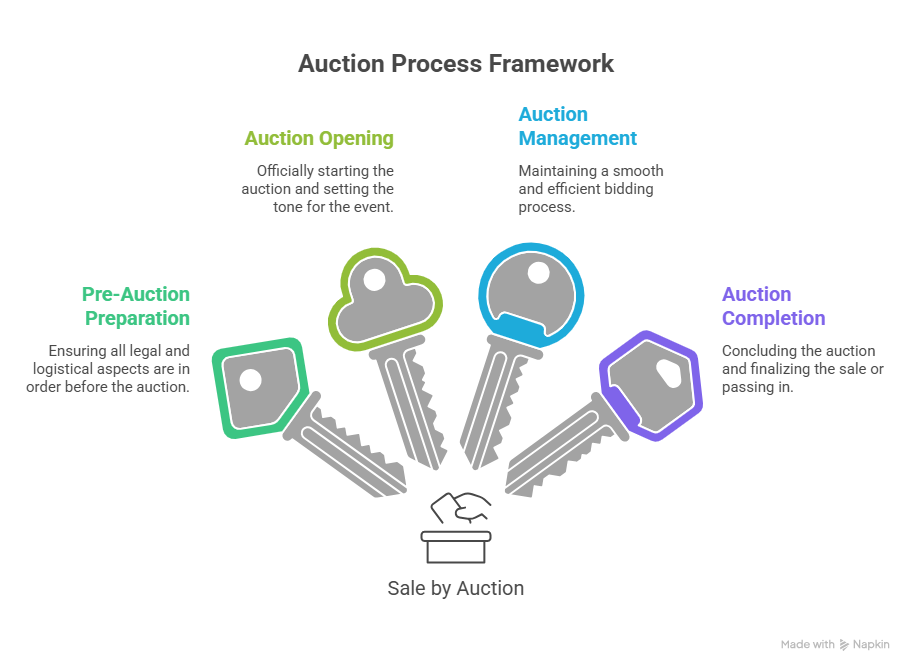
Auction instructions integrate with real estate marketing, negotiation, and legal compliance components by setting the framework for a transparent and competitive sales process. These instructions support the broader strategy of achieving optimal sales outcomes and maintaining client trust and market reputation.
Where can the student go to find out more information about auction instructions when conducting and completing a sale by auction?
- General rules for conducting an auction of goods
- The law and authority of auctioning real property
- Skillmaker
What job roles would be knowledgeable about auction instructions when conducting and completing a sale by auction?
Roles include:
- Auctioneers
- Real Estate Agents
- Auction Coordinators
- Compliance Officers
- Sales Managers
What is the topic like in relation to sports, family, or schools?

In relation to sports, auction instructions in the real estate context are like game rules that players must follow to ensure a fair and competitive match. In a family context, it resembles family guidelines that keep everyone on the same page and maintain harmony. When considering schools, it reflects a school’s code of conduct which sets expectations for students and staff to create a productive learning environment.
(The first edition of this post was generated by AI to provide affordable education and insights to a learner-hungry world. The author will edit, endorse, and update it with additional rich learning content.)
(Skillmaker – 2025)- About the Author
- More info

Workskill training for all
