
Work Area Cleanliness: Essential Practices for Cleaning Kitchen Premises and Equipment
Posted by SkillMaker in Jan, 2025
What is a concise description of work area cleanliness when cleaning kitchen premises and equipment?

Work area cleanliness is a systematic approach to ensure that kitchen premises and equipment are maintained in a hygienic state, preventing contamination and ensuring the safety and quality of food prepared and served. This involves a thorough cleaning and sanitising routine, proper organisation, and adherence to health and safety standards in hospitality environments.
Why do people in enterprises need work area cleanliness when cleaning kitchen premises and equipment?
Maintaining work area cleanliness is crucial for preventing foodborne illnesses, ensuring compliance with health regulations, and creating an efficient work environment. Proper cleanliness reduces the risk of cross-contamination, enhances the lifespan and functionality of kitchen equipment, and fosters a professional setting that improves morale and instils customer confidence in hospitality services.
“Ensuring cleanliness in kitchen premises is fundamental to food safety and operational efficiency in any hospitality enterprise.”
What are the key components or elements of work area cleanliness when cleaning kitchen premises and equipment?
Key components of work area cleanliness include:
- Regular Cleaning Schedules: Ensuring consistent cleaning routines for all surfaces and equipment.
- Sanitisation Protocols: Using appropriate chemicals and methods to eliminate harmful bacteria and pathogens.
- Organisational Systems: Keeping inventory, utensils, and equipment neatly arranged and accessible.
- Waste Management: Effective disposal of food waste and rubbish to prevent pest infestations and odour.
- Safety Compliance: Adhering to health and safety regulations specific to the hospitality industry.
What key terms, with descriptions, relate to work area cleanliness in kitchen premises and equipment?

Registered Trademark®
- HACCP (Hazard Analysis Critical Control Point): A management system addressing food safety by analysing and controlling biological, chemical, and physical hazards.
- Food Safety Plan: A systematic approach to identify and manage food safety hazards to prevent contamination.
- Cross-Contamination: The transfer of harmful bacteria or substances to food surfaces, leading to potential health risks.
- Sanitising Agents: Chemicals used to reduce the number of microorganisms to safe levels.
- Cleaning Routines: Scheduled processes for maintaining hygienic conditions.
Who is typically engaged with operating or implementing work area cleanliness in kitchen premises and equipment?
Chefs, kitchen hands, food safety officers, and facility managers are typically responsible for maintaining work area cleanliness. Their tasks include executing cleaning routines, monitoring compliance with safety protocols, and ensuring efficient operation of cleaning equipment in the kitchen environment.
How does work area cleanliness align or integrate with other components of Hospitality and Catering?
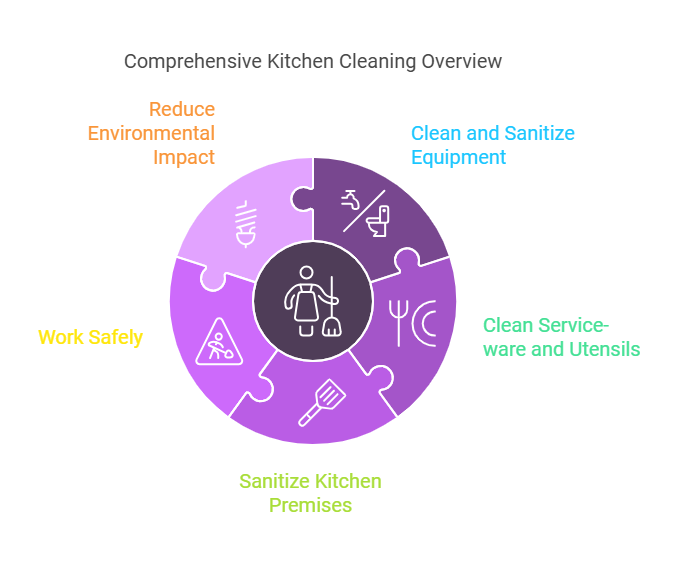
Work area cleanliness is integral to the broader operation of Hospitality and Catering by ensuring food safety, enhancing customer satisfaction, and maintaining a productive work environment. It supports other components like food preparation, service delivery, and overall guest experience, forming a backbone for sustainable hospitality management.
Where can the student go to find out more information about work area cleanliness in kitchen premises and equipment?
- Food Standards Australia New Zealand (FSANZ)
- Safe Food Production Queensland
- Training.gov.au for relevant courses
What job roles would be knowledgeable about work area cleanliness in kitchen premises and equipment?
Roles include:
- Chefs
- Food Safety Officers
- Kitchen Hands
- Facility Managers
- Cleaning Staff
What is work area cleanliness like in relation to sports, family, or schools?

Work area cleanliness in kitchen premises is akin to maintaining a well-organised sports environment, where cleanliness ensures player safety and performance. In a family setting, it’s like keeping a tidy household to ensure everyone’s well-being, while in schools, it mirrors maintaining clean classrooms that promote a healthy learning atmosphere for students.
(The first edition of this post was generated by AI to provide affordable education and insights to a learner-hungry world. The author will edit, endorse, and update it with additional rich learning content.)
- About the Author
- More info

Workskill training for all

 Post Tagged with