
Understanding Constraints in an ICT-Focused Enterprise Analysis
Posted by Gavin Lai in May, 2024
Constraints in an ICT-focused enterprise analysis refer to the limitations and restrictions that impact the planning, design, implementation, and operation of information and communication technology (ICT) systems within an organization. These constraints play a crucial role in shaping the way businesses utilize technology to achieve their goals and objectives.
Enterprises engage with the topic of constraints in ICT-focused analysis to comprehend the challenges and limitations that can affect the successful deployment and usage of ICT systems within their operations. By understanding these constraints, organizations can better strategize and plan for effective ICT integration, ensuring optimal performance and return on investment..
“Constraints in ICT-focused enterprise analysis refer to limitations such as resource, time, regulatory, and compatibility issues that impact ICT planning and operations, shaping how businesses utilize technology to achieve their goals.”
Key Components or Elements:

- Resource Limitations: This includes constraints related to financial resources, technical expertise, and physical infrastructure required for ICT implementation.
- Time Constraints: Time limitations can impact project timelines, deadlines for system deployment, and the speed at which new technologies can be integrated into the enterprise.
- Regulatory and Compliance Constraints: Enterprises must navigate legal and regulatory requirements that dictate how ICT systems should be designed and operated, addng a layer of complexity to the process.
- Compatibility and Interoperability Constraints: Challenges related to the seamless integration of different ICT systems, software, and hardware components.
Key Terms:
- Resource limitations:: Refers to the finite availability of financial, human, and technological resources for ICT implementation.
- Time constraints: Concerns the limitations on project timelines, system deployment schedules, and the adoption of new ICT technologeis within the enterprise.
- Regulatory and compliance constraints: Encompasses the legal and industry-specific regulations that dictate how ICT systems should be designed, implemented, and operated within an organization.
- Compatibility and interoperability constraints: Relates to the challenges associated with integrating diverse ICT systems, applications, and devices to ensure seamless communication and data exchange.
Individuals Engaged in Operations:
IT managers, business analysts, project managers, ICT specialists, regulatory compliance officers, and financial controllers are typically engaged in addressing and managing constraints in ICT-focused enterprise analysis.
Alignment and Integration:
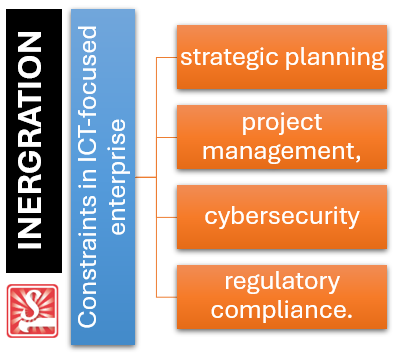
Constraints in ICT-focused enterprise analysis align with various components within the sphere of ICT, such as
- strategic planning
- project management,
- cybersecurity
- regulatory compliance.
Understanding constraints is essential for integrating ICT systems effectively and ensuring alignment with overall business objectives.
Additional Resources:
Students can explore further information on constraints in ICT-focused enterprise analysis through academic journals, industry publications, and professional associations related to ICT management and enterprise analysis.

Registered Trademark®
External links:
Constraints in Project Management
Relevant Job Roles:
- Business analysts
- ICT project managers
- system architects
- regulatory compliance officers
are knowledgeable about the topic of constraints in ICT-focused enterprise analysis.
Comparison with Other Areas:

In relation to sports, constraints in ICT-focused enterprise analysis can be likened to the rules and limitations within a game, dictating how players and teams operate within defined boundaries. In family 0R school settings, these constraints are similar to the guidelines and rules that govern behavior and actions to ensure order and efficiency.

(The first edition of this post was generated by AI to provide affordable education and insights to a learner-hungry world. The author has edited, endorsed, and published it, updating it with additional rich learning content.)
- About the Author
- More info

Gavin brings a wealth of experience and a proven track record of driving technological innovation and digital transformation across industry-leading organisations like Accenture and Siemens. His expertise spans enterprise technology consulting, software design and development, and the cutting-edge realm of generative AI applications.
Armed with a PMP (Project Management Professional) certification from PMI (Project Management Institute), a Master’s degree in Software Engineering, and a Bachelor’s degree in Mathematics, Gavin possesses a rare combination of technical mastery, strategic vision, and project management leadership. He has consistently demonstrated the ability to translate complex business challenges into scalable, future-proof solutions that drive operational excellence and competitive advantage.

 Post Tagged with