
Property Requirements in Conducting and Completing a Sale by Auction
Posted by SkillMaker in Feb, 2026
What is a concise description of property requirements when conducting and completing a sale by auction?

Property requirements during a sale by auction are a set of conditions and legal obligations that must be fulfilled to ensure a successful transaction. These include ensuring the property is correctly listed, obligations are followed, and all necessary documentation is legally compliant and accessible to potential buyers.
Listen to this article as a podcast
Why do people in the Real Estate industry need property requirements when conducting and completing a sale by auction?
In the Real Estate industry, adhering to property requirements when conducting and completing a sale by auction ensures transactions are legally compliant, transparently executed, and efficiently completed. It helps in building trust with potential buyers by providing full disclosure and maintaining ethical standards throughout the auction process.
“Property requirements for auctions safeguard transactional integrity, reinforce buyer confidence, and uphold legislative obligations for a seamless property exchange process.”
What are the key components or elements of property requirements in a sale by auction?
Key components of property requirements in a sale by auction include:
- Legal Documentation: Ensuring titles, contracts, and other required documents are accurate and current.
- Property Condition Reports: Providing an honest assessment of the property’s condition.
- Disclosure Statements: Transparency regarding any existing property issues or restrictions.
- Marketing Materials: Providing clear and comprehensive information for potential bidders.
- Pre-Auction Inspections: Facilitating thorough checks by potential buyers and valuers.
What key terms, with descriptions, relate to property requirements in a sale by auction?

Registered Trademark®
- Vendor’s Statement (Section 32): A legal document provided by the seller disclosing important information about the property.
- Reserve Price: The minimum price that a property owner is willing to accept for the property at auction.
- Bidder’s Registration: Process of registering attendees who want to bid at the auction.
- Settlement Period: A time frame in which the buyer must complete the payment for the property post-auction.
- Clear Title: Document showing the legal ownership of the property without any legal claims against it.
Who is typically engaged with operating or implementing property requirements in a sale by auction?
Real estate agents, auctioneers, property lawyers, and conveyancers are typically responsible for operating or implementing property requirements in a sale by auction. These professionals collaborate to ensure transactions are conducted legally and efficiently, safeguarding the interests of both buyers and sellers.
How does property requirements in a sale by auction align or integrate with other components of the Real Estate industry in Australia?
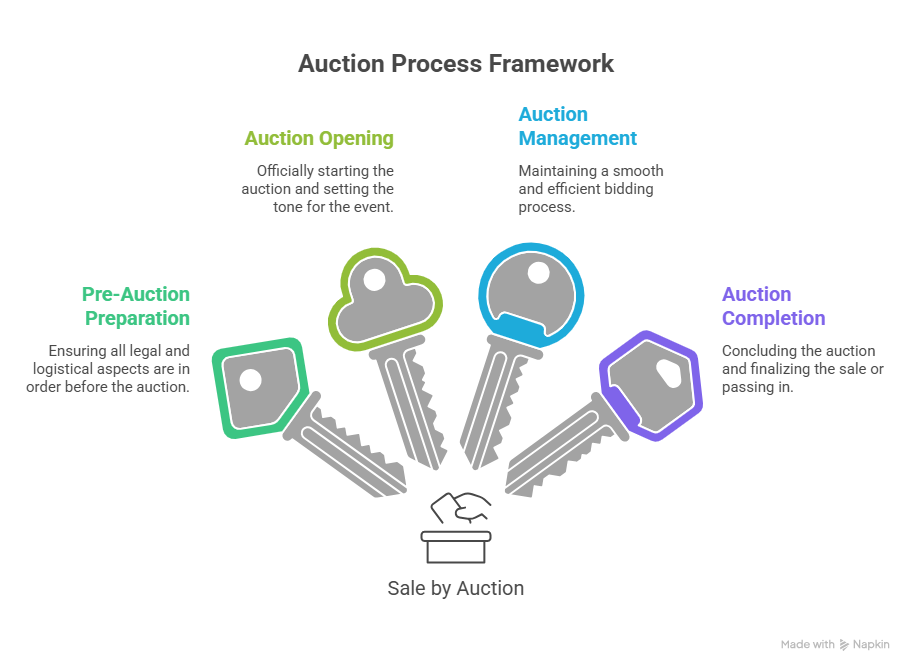
Property requirements in a sale by auction seamlessly integrate with the industry’s focus on legal compliance, ethical standards, and market transparency. Adhering to these requirements ensures that transactions align with Australian property laws and consumers’ rights, thereby reinforcing overall market integrity and trust.
Where can the student go to find out more information about property requirements in a sale by auction?
- General rules for conducting an auction of goods
- The law and authority of auctioning real property
- Skillmaker
What job roles would be knowledgeable about property requirements in a sale by auction?
Roles include:
- Real Estate Agents
- Auctioneers
- Property Lawyers
- Conveyancers
- Compliance Specialists
What are property requirements in a sale by auction like in relation to sports, family, or schools?

In a sports context, property requirements are like the regulations and rules that ensure fair play, ensuring everyone knows what’s expected for a smooth game. For families, it parallels setting household guidelines so everyone understands responsibilities and expectations. In schools, it’s similar to ensuring academic policies and rules are clearly established and communicated, fostering a more organized learning environment.
(The first edition of this post was generated by AI to provide affordable education and insights to a learner-hungry world. The author will edit, endorse, and update it with additional rich learning content.)
(Skillmaker – 2025)- About the Author
- More info

Workskill training for all
