
Auction Documentation: Key to Conducting and Completing a Sale by Auction
Posted by SkillMaker in Feb, 2026
What is a concise description of auction documentation in conducting and completing a sale by auction?

Auction documentation refers to the set of necessary documents and formal paperwork required to successfully conduct and complete a sale by auction. This includes items such as auction agreements, bidder registration forms, terms, and conditions of the auction, and the eventual transfer of title documentation.
Listen to this article as a podcast
Why do people in the Real Estate industry need auction documentation when conducting and completing a sale by auction?
People in the Real Estate industry require proper auction documentation to ensure the legal integrity and transparency of the auction process. Proper documentation helps in maintaining compliance with legal standards, resolving potential disputes, and providing clear records of transactions for both buyers and sellers. This creates trust and ensures a smooth operation during and after the auction.
“Auction documentation lays the foundation for a transparent and legally compliant auction, ensuring all parties are protected and informed throughout the process.”
What are the key components or elements of auction documentation when conducting and completing a sale by auction?
Key components of auction documentation include:
- Auction Agreement: A contract between auctioneer and seller outlining terms, conditions, and responsibilities.
- Bidder Registration Form: Document for recording details of prospective bidders for record keeping and security purposes.
- Terms and Conditions: Clearly defined rules governing the auction process.
- Legal Disclosures: Any statutory information or disclosures required by law.
- Transfer of Title Documents: Paperwork needed for the legal transfer of the property’s title to the new owner.
What key terms, with descriptions, relate to auction documentation when conducting and completing a sale by auction?

Registered Trademark®
- Reserve Price: The minimum price that a seller is willing to accept for the property.
- Vendor Bid: A bid made by or on behalf of the auctioneer on behalf of the vendor.
- Hammer Price: The final bid accepted by the auctioneer, signifying sale completion.
- Settlement: The process of transferring property ownership from seller to buyer.
- Passed In: When a property is not sold at auction as the final bid did not reach the reserve.
Who is typically engaged with operating or implementing auction documentation in conducting and completing a sale by auction?
Auctioneers, real estate agents, legal advisors, and administrative support staff typically manage and implement auction documentation. These professionals coordinate to ensure that all documents are correctly prepared, executed, and compliant with regulations.
How does auction documentation align or integrate with other components of the Real Estate industry in Australia?
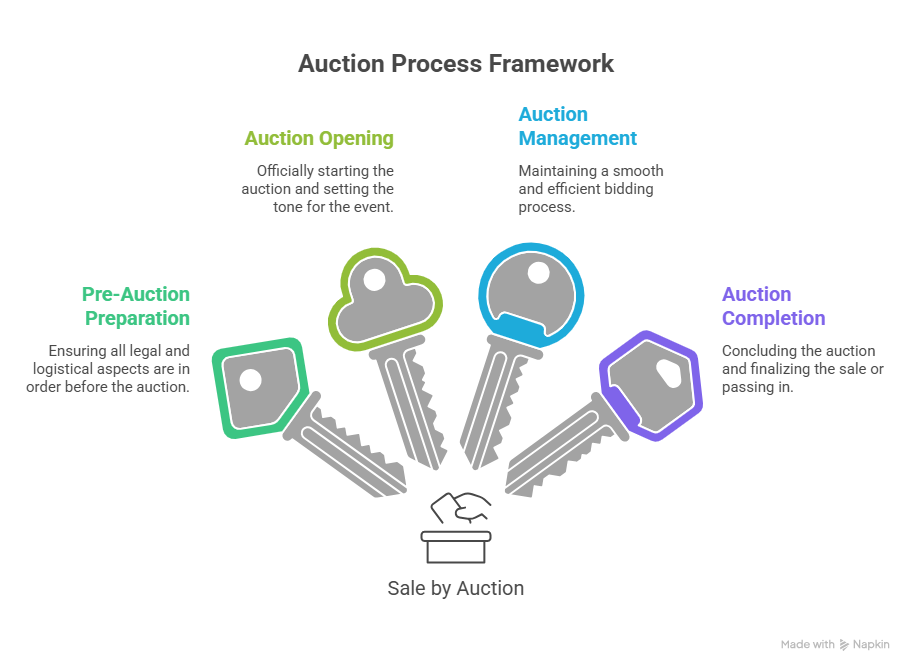
Auction documentation aligns with legal processes, marketing strategies, and property management within the Real Estate industry. It integrates seamlessly with compliance protocols and enhances client relations by providing transparency and legal certainty. This contributes to achieving effective sales outcomes and maintaining industry standards.
Where can the student go to find out more information about auction documentation when conducting and completing a sale by auction?
- General rules for conducting an auction of goods
- The law and authority of auctioning real property
- Skillmaker
What job roles would be knowledgeable about auction documentation when conducting and completing a sale by auction?
Roles include:
- Auctioneers
- Real Estate Agents
- Property Lawyers
- Compliance Officers
- Administrative Coordinators
What is auction documentation like in relation to sports, family, or schools?

In sports, auction documentation can be likened to a game plan or rulebook that all players abide by, ensuring fair play and structure. In a family setting, it mirrors a well-organized family calendar where all members are clearly aware of plans and responsibilities. In schools, it resembles a syllabus that sets clear expectations for students and teachers, ensuring everyone understands the requirements and goals of the academic year.
(The first edition of this post was generated by AI to provide affordable education and insights to a learner-hungry world. The author will edit, endorse, and update it with additional rich learning content.)
(Skillmaker – 2025)- About the Author
- More info

Workskill training for all
