
Property Benefits When Conducting and Completing a Sale by Auction
Posted by SkillMaker in Feb, 2026
What is a concise description of the benefits of conducting and completing a sale by auction in the property market?

Conducting and completing a sale by auction in the property market refers to the process of selling real estate to the highest bidder within a competitive environment. This method accelerates the sales process and often results in obtaining the best market price for the property.
Listen to this article as a podcast
Why do people in the Real Estate industry need to employ auctions when selling property?
The Real Estate industry often uses auctions because they provide a transparent platform where market forces determine the price. This can lead to higher sale prices, foster competition among buyers, and ensure a swift transaction. In addition, auctions can reduce the hassle of prolonged negotiations and offer a clear deadline for the sale.
“Auctions are dynamic, competitive events that drive optimal market prices and offer quick sales closure in the property market.”
What are the key components or elements of conducting and completing a sale by auction in property?
Key components include:
- Marketing Campaign: Promoting the auction to attract potential buyers.
- Auctioneer: A skilled professional leading the auction event.
- Bidder Registration: Process to secure genuine and qualified buyers.
- Reserve Price: Minimum price the seller is willing to accept.
- Open Day Inspections: Providing potential buyers an opportunity to view the property.
What key terms, with descriptions, relate to an auction sale in property?

Registered Trademark®
- Hammer Price: Final sale price achieved at auction.
- Vendor Bid: A bid by or on behalf of the seller.
- On the Market: When the bidding reaches or exceeds the reserve price.
- Passed In: When a property does not meet the reserve price and is not sold at auction.
- Pre-Auction Offers: Offers made for the property before the auction.
Who is typically engaged with operating or implementing property auctions?
Real Estate agents, auctioneers, and sellers are typically engaged in operating property auctions. They coordinate marketing efforts, conduct the auction, and make decisions regarding reserve pricing and acceptance of bids. Potential buyers actively participate in the auction process.
How does conducting a property auction integrate with other components of the Real Estate industry in Australia?
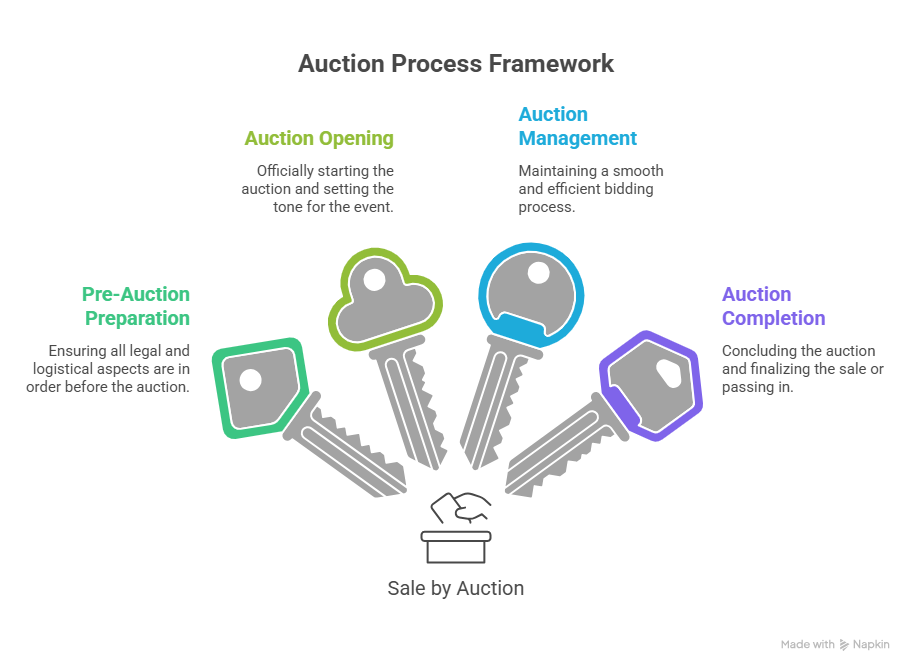
Property auctions align with the competitive and transparent nature of the Real Estate market, enabling buyers and sellers to engage directly and efficiently. Auctions also complement traditional sales methods by potentially raising market awareness and promoting listings. This integration strengthens the visibility and perceived value of properties within the sector.
Where can the student go to find out more information about property auctions?
- General rules for conducting an auction of goods
- The law and authority of auctioning real property
- Skillmaker
What job roles would be knowledgeable about property auctions?
Roles include:
- Real Estate Agents
- Auctioneers
- Property Managers
- Sales Consultants
- Real Estate Valuers
What are property auctions like in relation to sports, family, or schools?

Auctions in the property market resemble a sports event, where the auctioneer acts as the referee, bidders are the players, and the audience adds to the competitive atmosphere. For families, auctions can mirror high-stakes decision-making moments requiring strategy and decisive action. Regarding schools, they are akin to vibrant competitions in which each entity strives to present and secure the best possible outcome efficiently and effectively.
(The first edition of this post was generated by AI to provide affordable education and insights to a learner-hungry world. The author will edit, endorse, and update it with additional rich learning content.)
(Skillmaker – 2025)- About the Author
- More info

Workskill training for all
