
Owning Your Emergency Response Responsibilities in Sports and Recreation
Posted by SkillMaker in Dec, 2024
What is a concise description of owning your emergency response responsibilities in Sport and Recreation?
Owning your emergency response responsibilities in Sport and Recreation involves understanding and executing the specific roles and duties assigned to ensure safety during emergencies. This includes being prepared, acting decisively, and effectively coordinating with others to mitigate risks and provide assistance.
Why do people in enterprises need to own their emergency response responsibilities?
In enterprises, owning emergency response responsibilities ensures a swift and coordinated reaction to crises, minimising harm and damage. It is crucial for maintaining a safe environment, protecting people and assets, and ensuring operations resume smoothly following an incident, which is essential for sustaining trust and compliance with safety standards.
“Owning your emergency response responsibilities empowers individuals to act effectively, ensuring safety and reducing risks in challenging situations.”
What are the key components or elements of owning your emergency response responsibilities?
Key components include:
- Acknowledging Your Role: Understand your specific duties during emergencies.
- Preparation: Regularly participate in training and simulations.
- Communication: Ensure clear and effective communication channels.
- Risk Assessment: Identifying potential hazards and preventive measures.
- Team Coordination: Work collaboratively with team members.
What key terms, with descriptions, relate to owning your emergency response responsibilities?

Certified Training®
- Incident Command System (ICS): A standardized approach for emergency management.
- Standard Emergency Protocols: Established procedures for emergency scenarios.
- First Response: Initial actions taken to manage an emergency.
- Emergency Evacuation Plan: A predetermined route and procedures for safe exit.
- Risk Mitigation: Strategies to reduce the impact of potential emergencies.
Who is typically engaged with operating or implementing emergency response responsibilities?
Sports coaches, facility managers, safety officers, and first aid personnel are typically responsible for implementing emergency response responsibilities. Their collaborative efforts ensure a well-prepared and executed emergency response plan.
How does owning emergency response responsibilities align or integrate with other components of Sport and Recreation?
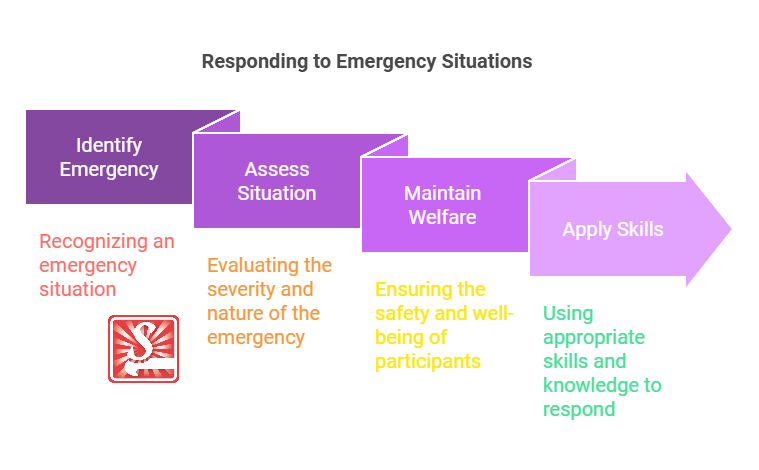
Owning emergency response responsibilities aligns with overall safety management and risk reduction strategies in Sport and Recreation. It complements participant and staff safety protocols and is integrated into operational planning to enhance the overall experience and reliability of sports activities and events.
Where can the student go to find out more information about owning emergency response responsibilities?
- Safeguarding practices and safety management systems
- Australian Red Cross emergency training
- Sport Australia safety and environment policies
What job roles would be knowledgeable about owning emergency response responsibilities?
Roles include:
- Sports Coaches
- Facility Managers
- Safety Officers
- First Aid Personnel
- Event Coordinators
What is owning emergency response responsibilities like in relation to sports, family, or schools?

In sports, owning emergency response responsibilities is like a team knowing their positions and plays to respond promptly when challenges arise. In a family setting, it resembles having agreed-upon plans for unexpected situations, ensuring everyone’s safety. In schools, it mirrors having protocols for students and staff to follow during drills and actual emergencies to maintain calm and order.
(The first edition of this post was generated by AI to provide affordable education and insights to a learner-hungry world. The author will edit, endorse, and update it with additional rich learning content.)
- About the Author
- More info

Workskill training for all

 Post Tagged with