
Organisational Procedures in Providing Individualised Support
Posted by SkillMaker in Jan, 2025
What is a concise description of organisational procedures when providing individualised support?

Organisational procedures when providing individualised support involve structured guidelines and protocols tailored to the unique needs of individuals within health or community services. These procedures ensure that personalised care plans are consistently implemented, monitored, and adjusted as necessary to promote the well-being and autonomy of each client.
Why do people in enterprises need organisational procedures when providing individualised support?
Enterprises need organisational procedures when providing individualised support to ensure consistent, safe, and effective care. These procedures create a framework that helps staff understand their roles and responsibilities, maintain high-quality service standards, and comply with legal and ethical guidelines. Ultimately, this enhances client satisfaction and outcomes while protecting the organisation and its staff from potential liabilities.
“Organisational procedures ensure a unified approach to delivering personalised care, fostering a supportive environment that respects the individuality of each client.”
What are the key components or elements of organisational procedures in providing individualised support?
Key components of organisational procedures in providing individualised support include:
- Assessment Tools: Methods for evaluating individual needs and conditions accurately.
- Care Plans: Documented strategies tailored to each client’s specific needs and goals.
- Staff Training: Ensuring all team members have the necessary skills and knowledge.
- Documentation Protocols: Consistent record-keeping of client interactions and progress.
- Feedback Mechanisms: Systems for clients and families to provide input on services.
What key terms, with descriptions, relate to organisational procedures in providing individualised support?

Registered Trademark®
- Individualised Care: Tailoring care services to meet the unique needs and preferences of each client.
- Client-Centred Approach: Focusing on the needs and empowerment of the client in all aspects of care.
- Compliance: Adhering to legal, ethical, and organisational standards in service provision.
- Risk Management: Identifying and mitigating potential risks to client safety and health.
- Continuous Improvement: Regularly reviewing and refining procedures to enhance service quality.
Who is typically engaged with operating or implementing organisational procedures in providing individualised support?
Support workers, case managers, care coordinators, and allied health professionals are typically responsible for implementing organisational procedures when providing individualised support. These roles collaborate to ensure that clients receive comprehensive and coordinated care tailored to their individual needs.
How do organisational procedures in providing individualised support align or integrate with other components of Health or Community Services in Australia?
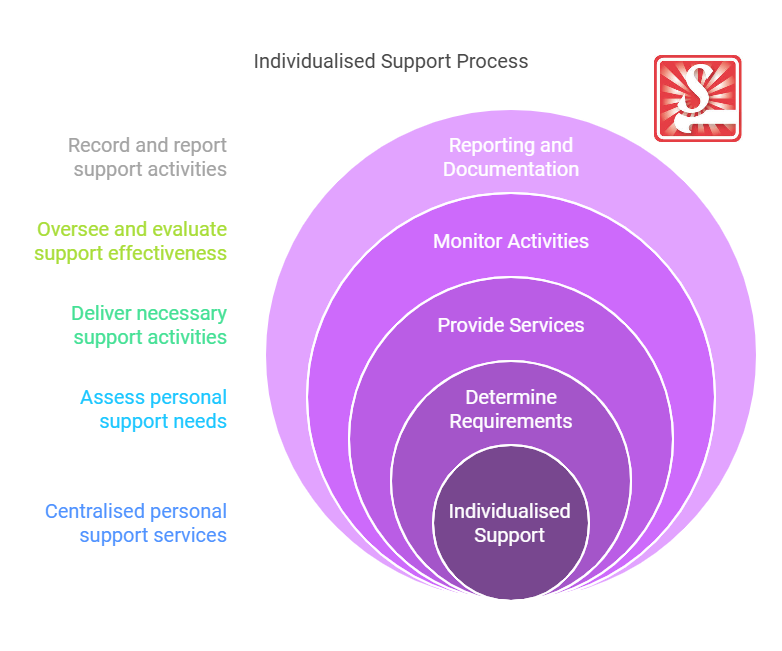
Organisational procedures in providing individualised support integrate seamlessly with the holistic model of care in Australian Health and Community Services. They ensure that services are cohesive, multidisciplinary, and client-focused, aligning with national quality standards and guidelines. This integration supports the continuum of care across various health and community disciplines, promoting unified service delivery.
Where can the student go to find out more information about organisational procedures in providing individualised support?
- National Disability Insurance Scheme (NDIS)
- Department of Health Australia
- Aged Care Quality and Safety Commission
- Skillmaker
What job roles would be knowledgeable about organisational procedures in providing individualised support?
Roles include:
- Support Workers
- Case Managers
- Care Coordinators
- Registered Nurses
- Allied Health Professionals
What are organisational procedures when providing individualised support like in relation to sports, family, or schools?

In relation to sports, organisational procedures for individualised support are like a coach developing a customised training regimen for each athlete to optimise performance.
Within a family, it reflects parents adjusting their approach to meet the unique needs of each child.
In schools, it equates to teachers creating tailored learning plans to accommodate different learning abilities and styles, ensuring each student’s educational success.
(The first edition of this post was generated by AI to provide affordable education and insights to a learner-hungry world. The author will edit, endorse, and update it with additional rich learning content.)
- About the Author
- More info

Workskill training for all

 Post Tagged with