
Organisational Policies when Providing Individualised Support
Posted by SkillMaker in Jan, 2025
What is a concise description of organisational policies when providing individualised support?

Organisational policies when providing individualised support refer to the established guidelines and procedures that ensure personalised care is delivered in a consistent, ethical, and professional manner. These policies help service providers uphold quality care that respects the client’s preferences, dignity, and cultural background.
Why do people in enterprises need organisational policies when providing individualised support?
Enterprises need organisational policies when providing individualised support to maintain a standard of care that is compliant with legal and ethical obligations. These policies ensure that each client receives personalised attention while safeguarding their rights and promoting their wellbeing. They also protect staff by providing a framework for consistent practice and decision-making.
“Organisational policies are the backbone of effective individualised support, ensuring consistency, quality, and respect in service delivery.”
What are the key components or elements of organisational policies when providing individualised support?
Key components of organisational policies related to individualised support include:
- Privacy and Confidentiality: Guidelines on managing personal information responsibly.
- Client-Centred Approach: Policies that prioritise the needs and preferences of the client.
- Safety and Risk Management: Procedures to ensure the physical and emotional safety of clients and staff.
- Consent and Autonomy: Ensuring clients can make informed decisions about their care.
- Cultural Competence: Respecting and incorporating clients’ cultural backgrounds in their care plan.
What key terms, with descriptions, relate to organisational policies in individualised support?

Registered Trademark®
- Informed Consent: The process of obtaining permission from clients based on understanding the potential impacts of care.
- Confidentiality Agreement: A contract ensuring personal information is not disclosed without consent.
- Person-Centred Planning: A strategy focusing on the individual’s needs, goals, and preferences.
- Duty of Care: A legal obligation to act in the best interest of clients.
- Empowerment: Encouraging clients to take control of their lives and decisions.
Who is typically engaged with operating or implementing these organisational policies?
Care coordinators, support workers, social workers, and management staff are typically responsible for operating or implementing organisational policies in individualised support. These roles ensure policies are effectively applied in care delivery and that clients receive equitable, personalised services.
How do organisational policies align or integrate with other components of Health or Community Services in Australia?
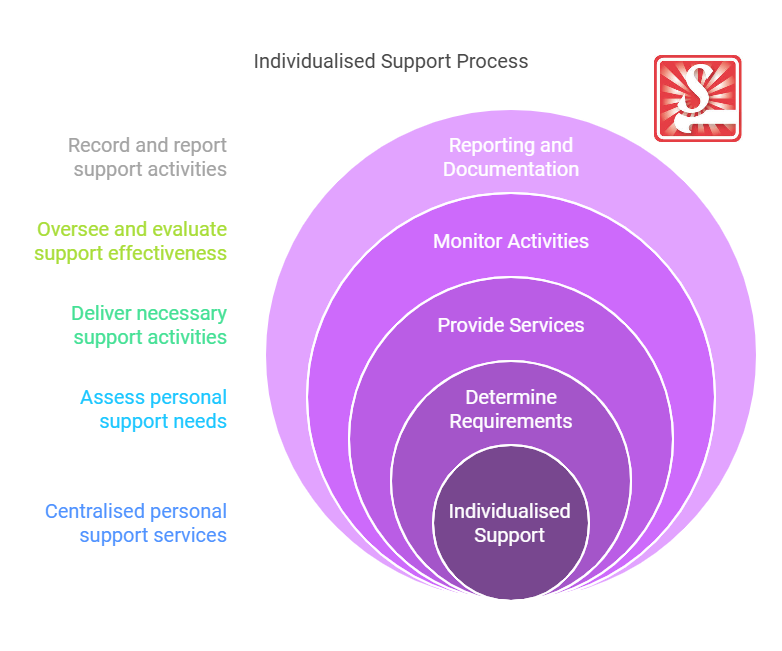
Organisational policies in individualised support integrate with broader health and community services by ensuring that care delivery is consistent with national regulations such as the National Disability Insurance Scheme (NDIS) and the Aged Care Quality Standards. These policies help maintain compliance and align services with the broader goal of holistic community support and welfare.
Where can the student go to find out more information about organisational policies for individualised support?
- NDIS Participant Service Guarantee and Standards
- Aged Care Quality Standards
- Australian Government Department of Health
- Skillmaker
What job roles would be knowledgeable about organisational policies in individualised support?
Roles include:
- Care Coordinators
- Support Workers
- Social Workers
- Case Managers
- Operations Managers
What are organisational policies in individualised support like in relation to sports, family, or schools?

In relation to sports, organisational policies in individualised support can be compared to a coach setting unique training plans for each athlete based on their strengths and weaknesses.
For families, these policies resemble parenting strategies tailored to meet the needs of each family member.
In school settings, they can be likened to personalised education plans that accommodate individual learning styles and abilities to aid in achieving academic success.
(The first edition of this post was generated by AI to provide affordable education and insights to a learner-hungry world. The author will edit, endorse, and update it with additional rich learning content.)
- About the Author
- More info

Workskill training for all

 Post Tagged with