
Market Conditions When Conducting and Completing a Sale by Auction
Posted by SkillMaker in Feb, 2026
What is a concise description of market conditions when conducting and completing a sale by auction?

Market conditions refer to the external economic environment and factors which influence the buying and selling process during a property auction. These include elements like interest rates, economic outlook, property supply and demand, and legislation changes that affect how auctions are conducted and what prices are achieved.
Listen to this article as a podcast
Why do people in the Real Estate industry need to understand market conditions when conducting and completing a sale by auction?
Understanding market conditions is essential for professionals in the Real Estate industry to effectively price the property, anticipate buyer interest, and tailor auction strategies to ensure maximum returns. It helps auctioneers and agents provide realistic expectations to sellers and effectively engage potential buyers, adapting as conditions shift.
“Understanding market conditions is crucial for successful auction sales, enabling proper pricing, strategic planning, and effective buyer engagement.”
What are the key components or elements of market conditions when conducting and completing a sale by auction?
Key components include:
- Economic Indicators: Inflation, employment rates, and GDP can influence property demand and pricing.
- Interest Rates: Affect borrowing costs and buyer affordability.
- Supply and Demand: Number of available properties vs. number of buyers in the market.
- Government Policies: Tax changes, incentives, and zoning laws can impact auctions.
- Seasonality: Certain times of the year can see increased or decreased buyer activity.
What key terms, with descriptions, relate to market conditions when conducting and completing a sale by auction?

Registered Trademark®
- Bull Market: A period when property prices are rising or expected to rise.
- Bear Market: A period of declining property prices, often due to oversupply or decreased demand.
- Bidder Confidence: Trust that buyers have in the market and the likelihood of success in bids.
- Clearance Rate: Measure of how many properties are sold at auction compared to those listed.
- Market Sentiment: General mood of buyers and sellers concerning market health.
Who is typically engaged with operating or implementing market conditions understanding during an auction sale?
Real estate agents, auctioneers, property valuers, and market analysts typically engage with understanding and interpreting market conditions during an auction sale. These professionals are responsible for advising clients on pricing strategies and ensuring that auctions are conducted in a manner maximising potential outcomes.
How do market conditions when conducting and completing a sale by auction align or integrate with other components of the Real Estate industry in Australia?
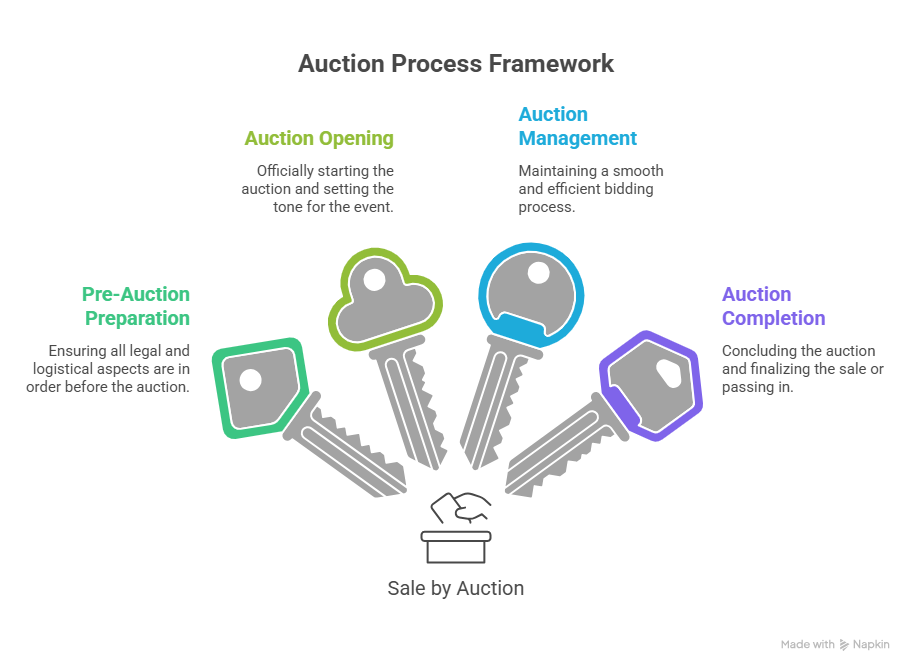
Market conditions integrate with property valuation, buyer financing, legal frameworks, and real estate marketing. Strong awareness of market conditions ensures cohesive operations across these sectors, promoting efficient property transactions, appropriately aligned pricing, and strategic market positioning.
Where can the student go to find out more information about market conditions when conducting and completing a sale by auction?
- General rules for conducting an auction of goods
- The law and authority of auctioning real property
- Skillmaker
What job roles would be knowledgeable about market conditions when conducting and completing a sale by auction?
Roles include:
- Real Estate Agents
- Auctioneers
- Property Valuers
- Market Analysts
- Financial Advisors
What is understanding market conditions when conducting and completing a sale by auction like in relation to sports, family, or schools?

In sports, like analysing an opponent’s strengths and weaknesses to plan a winning strategy, understanding market conditions helps develop strategic auction approaches. In a family, it’s similar to assessing household budgeting needs and adjusting spending habits accordingly. In schools, it’s akin to assessing educational developments to enhance school curriculums or teaching methods.
(The first edition of this post was generated by AI to provide affordable education and insights to a learner-hungry world. The author will edit, endorse, and update it with additional rich learning content.)
(Skillmaker – 2025)- About the Author
- More info

Workskill training for all
