
Allowable Use in Conducting and Completing a Sale by Auction
Posted by SkillMaker in Feb, 2026
What is a concise description of allowable use when conducting and completing a sale by auction?

Allowable use when conducting and completing a sale by auction refers to the legal and regulatory framework within which auctioneers must operate to ensure auctions are conducted transparently, consistently, and fairly. This includes adherence to industry best practices, compliance with state and territory auction laws, and the implementation of an ethical code of conduct.
Listen to this article as a podcast
Why do people in the Real Estate industry need to understand allowable use when conducting and completing a sale by auction?
Understanding allowable use when conducting and completing a sale by auction is crucial for those in the Real Estate industry to ensure compliance, avoid legal liabilities, and uphold the integrity of the auction process. It guarantees the protection of both bidders and sellers, fosters trust, and enhances the reputation of the auctioneer.
“Compliance with allowable use in auctions safeguards trust and ensures a fair, transparent, and legally sound auction process.”
What are the key components or elements of allowable use when conducting and completing a sale by auction?
Key components of allowable use in auctions include:
- Licencing Requirements: Auctioneers must hold the relevant licences and permits.
- Code of Conduct: Auctioneers should adhere to ethical and professional standards.
- Legal Compliance: Observance of state and territory auction laws.
- Disclosure Obligations: Full transparency regarding terms, conditions, and any known defects of the property.
- Bidding Rules: Clear communication of auction rules and procedures to prospective bidders.
What key terms, with descriptions, relate to allowable use when conducting and completing a sale by auction?

Registered Trademark®
- Reserve Price: The minimum price that the seller is willing to accept for the property.
- Vendor Bids: Bids made by or on behalf of the seller to help reach the reserve price.
- Consumer Protection Laws: Legislation designed to protect buyers during the auction process.
- Regulatory Bodies: Government-appointed organisations that oversee and enforce auction laws and regulations.
- Transparent Communication: Clear and open information sharing pre, during, and post-auction.
Who is typically engaged with operating or implementing allowable use when conducting and completing a sale by auction?
Real Estate agents, auctioneers, and legal professionals are typically engaged in ensuring that allowable use standards are met during property auctions. Real Estate regulatory bodies may also be involved in overseeing compliance and addressing breaches.
How does allowable use when conducting and completing a sale by auction align or integrate with other components of the Real Estate industry in Australia?
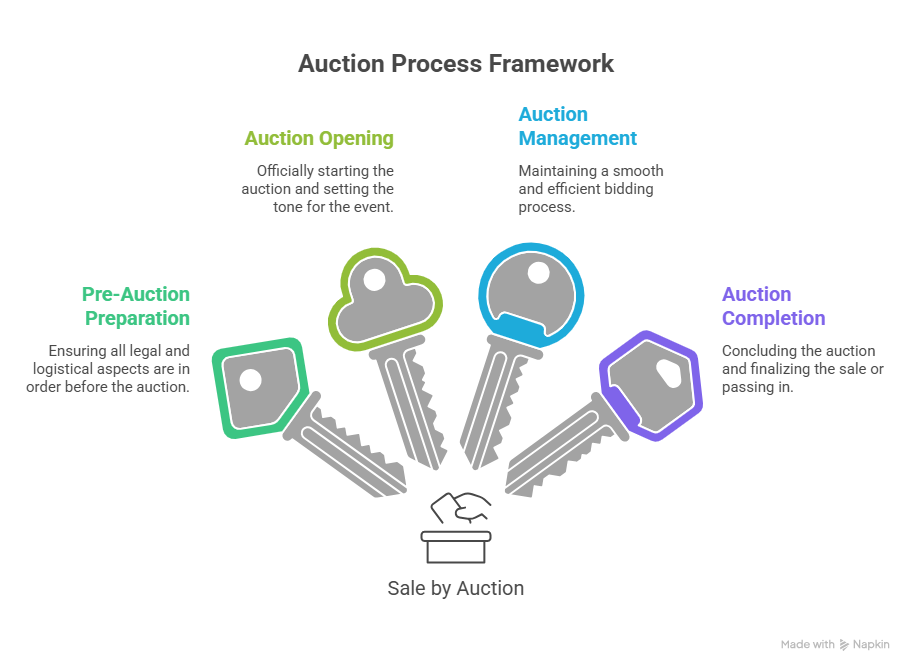
The principles of allowable use when conducting auctions align with broader Real Estate practices, such as ethical standards, consumer protection, and professional conduct. These elements reinforce the regulatory framework that supports market integrity, enhances consumer confidence, and ensures transactions are conducted transparently and equitably.
Where can the student go to find out more information about allowable use when conducting and completing a sale by auction?
- General rules for conducting an auction of goods
- The law and authority of auctioning real property
- Skillmaker
What job roles would be knowledgeable about allowable use when conducting and completing a sale by auction?
Roles include:
- Auctioneers
- Real Estate Agents
- Compliance Officers
- Property Managers
- Legal Advisors
What is allowable use when conducting and completing a sale by auction like in relation to sports, family, or schools?

In comparison to sports, allowable use when conducting auctions is similar to following the official rules and fair play codes that ensure the game is played honestly and safely.
In a family, it mirrors establishing and adhering to family rules that create a harmonious and transparent environment.
In schools, it parallels the adherence to educational standards and codes of conduct that ensure a fair and equitable learning environment for all students.
(The first edition of this post was generated by AI to provide affordable education and insights to a learner-hungry world. The author will edit, endorse, and update it with additional rich learning content.)
(Skillmaker – 2025)- About the Author
- More info

Workskill training for all
