
Informal Networks in Building and Maintaining Business Relationships
Posted by SkillMaker in Oct, 2025
What is a concise description of informal networks in business relationships?

Informal networks in business relationships refer to the self-organised, unofficial relationships that form between individuals within and across organisations. Unlike formal networks, which are defined by official roles, responsibilities, and processes, informal networks are based on personal connections, shared interests, and mutual support, often evolving organically over time.
Listen to this article as a podcast
Why do people in the public sector industry need informal networks for business relationships?
In the public sector, informal networks are invaluable for sharing knowledge, gaining insights, and fostering collaboration beyond formal frameworks. They help public sector employees navigate complex organisational structures, access resources efficiently, and build alliances that aid in policy-making and service delivery, thus playing a crucial role in driving innovation and responsiveness.
“Informal networks empower public sector workers by enhancing access to information, fostering collaboration, and supporting agile responses to emerging challenges.”
What are the key components or elements of informal networks in business relationships?
Key components of informal networks include:
- Trust and Reciprocity: Mutual respect and the exchange of support.
- Shared Interests: Common goals or values that bind individuals together.
- Communication: Open, informal dialogue that facilitates quick information sharing.
- Flexibility: The ability to adapt and evolve without formal constraints.
- Connectivity: Personal or professional connections that extend beyond one’s immediate circle.
What key terms, with descriptions, relate to informal networks in business relationships?

Registered Trademark“\u00AE”
- Social Capital: The value derived from networks of relationships among individuals and organizations.
- Networking: Building and nurturing relationships to exchange information and services.
- Collaborative Culture: An environment that encourages teamwork and open communication.
- Influence: The capacity to impact decisions and outcomes within a network.
- Mentorship: Guiding and supporting others through shared experiences and insights.
Who is typically engaged with operating or implementing informal networks in business relationships?
Typically, employees at all levels, from entry-level staff to senior managers, are engaged in informal networks. These networks often arise naturally among individuals who share professional or personal interests and can include colleagues, stakeholders, partners, and even competitors.
How do informal networks in business relationships align or integrate with other components of the public sector industry in Australia?
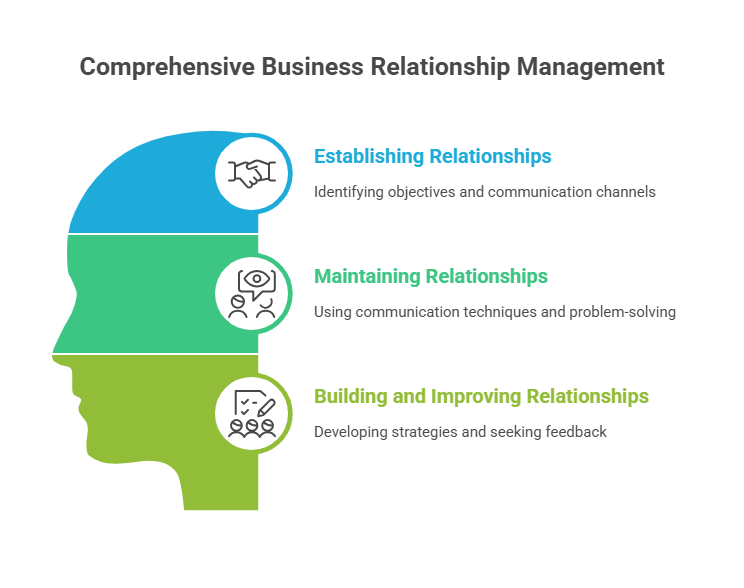
Informal networks complement formal structures within the public sector by filling communication gaps and enhancing collaboration across departments. They enable swift problem-solving and innovation by fostering a culture of shared learning and trust, thus integrating seamlessly with formal policy and management frameworks.
Where can the student go to find out more information about informal networks in business relationships?
What job roles would be knowledgeable about informal networks in business relationships?
Roles include:
- Public Relations Officers
- Community Engagement Coordinators
- Policy Advisors
- Human Resources Managers
- Strategic Planners
What are informal networks in business relationships like in relation to sports, family, or schools?

In the context of sports, informal networks resemble a team’s camaraderie and mutual reliance to achieve success through non-official interactions.
Within a family, they mirror the close-knit dynamics of shared responsibilities and support.
In schools, they can be compared to peer groups or teacher-student relationships that go beyond structured learning to facilitate personal and academic growth.
(The first edition of this post was generated by AI to provide affordable education and insights to a learner-hungry world. The author will edit, endorse, and update it with additional rich learning content.)
(Skillmaker – 2025)- About the Author
- More info

Workskill training for all

 Post Tagged with