
Fall of the Hammer: The Crucial Moment in Completing a Sale by Auction
Posted by SkillMaker in Feb, 2026
What is a concise description of the fall of the hammer in conducting and completing a sale by auction?

The “fall of the hammer” is the definitive moment in an auction where the auctioneer signifies the end of bidding, marking the completion of the sale. This act represents the finality of the auction process, wherein ownership of the item or property is transferred to the highest bidder as determined by the auctioneer.
Listen to this article as a podcast
Why do people in the Real Estate industry need to understand the fall of the hammer when conducting and completing a sale by auction?
Understanding the significance of the fall of the hammer is key for real estate professionals involved in auctions, as it marks the instant when a legally binding contract is formed. Knowledge of this process ensures clarity in negotiations and legal compliance, fostering trust and confidence among buyers and sellers. It minimizes disputes and ensures that all parties are aware of the auction’s conclusion and the formalities that follow.
“The fall of the hammer in auctions signifies not just the end of bidding, but the beginning of a binding commitment between buyer and seller.”
What are the key components or elements of the fall of the hammer in auction sales?
Key components of the fall of the hammer in auctions include:
- Final Bid Announcement: The auctioneer calls out the highest bid thrice before concluding the sale.
- Hammer Strike: The physical action of the auctioneer’s gavel coming down, signifying the end of the bidding.
- Legal Binding: Creation of a binding sales contract upon the gavel’s fall.
- Buyer Identification: Declaration of the winning bidder for record purposes.
- Completion Formalities: Immediate steps followed by documentation and transaction finalisation.
What key terms, with descriptions, relate to the fall of the hammer in auction sales?

Registered Trademark®
- Gavel: The auctioneer’s hammer used to mark the end of bidding.
- Bid Increment: The minimum amount that a new bid must exceed the previous one by during an auction.
- Reserve Price: The minimum price that the seller is willing to accept for the item or property.
- Winning Bidder: The individual or entity with the highest bid at the close of the auction.
- Binding Contract: A legally enforceable agreement that arises upon the fall of the hammer.
Who is typically engaged with operating or implementing the fall of the hammer in auction sales?
The auctioneer is primarily responsible for operating and implementing the fall of the hammer. They ensure the auction follows legal protocols, manage the progression of bids, and officiate the culmination of the sale. Additionally, bidders, sellers, and auction clerks are involved as stakeholders in the process, providing support and ensuring compliance with regulations.
How does the fall of the hammer integrate with other components of the Real Estate industry in Australia?
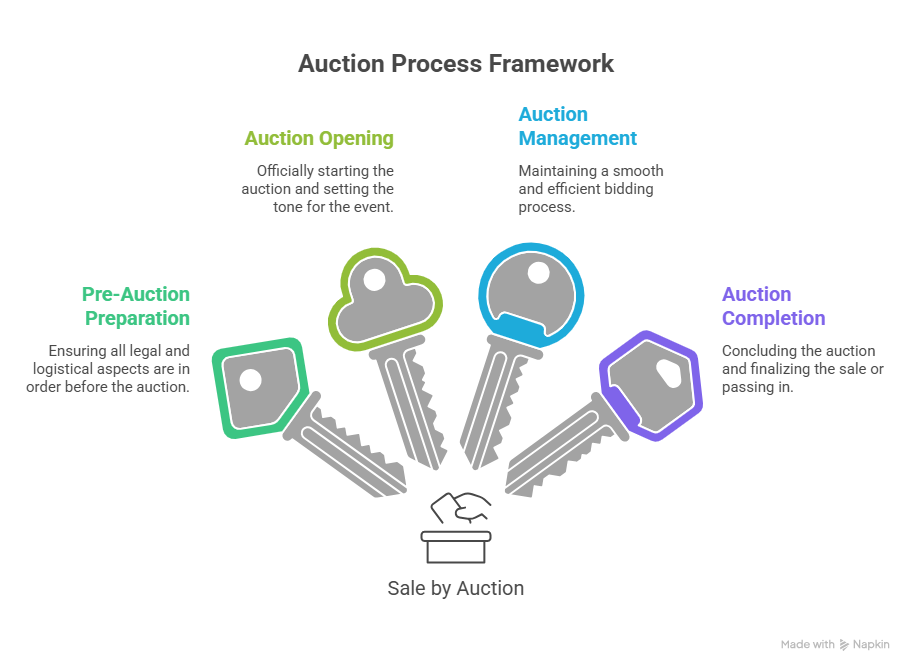
The fall of the hammer is a significant link between bidding and fulfilling the legal requirements of property transactions. It aligns with legal frameworks, such as contracts and conveyancing, and sets in motion further processes like financing and transfer of title. As the definitive moment of an auction, it ensures transparent, competitive practices are upheld, reflecting broader industry standards for integrity and professionalism.
Where can the student go to find out more information about the fall of the hammer in auction sales?
- General rules for conducting an auction of goods
- The law and authority of auctioning real property
- Skillmaker
What job roles would be knowledgeable about the fall of the hammer in auction sales?
Roles include:
- Auctioneers
- Real Estate Agents
- Legal Advisors
- Auction Clerks
- Compliance Officers
What is the fall of the hammer like in relation to sports, family, or schools?

In sports, the fall of the hammer is akin to the final whistle at the end of a match, determining the outcome and sealing the result. In the context of family, it resembles the parental decision concluding a family discussion, setting the path forward with certainty. In schools, it mirrors the final bell, marking the end of a period and providing a clear signal for what follows next, be it next class or the end of the school day.
(The first edition of this post was generated by AI to provide affordable education and insights to a learner-hungry world. The author will edit, endorse, and update it with additional rich learning content.)
(Skillmaker – 2025)- About the Author
- More info

Workskill training for all
