
Effective Approaches in Providing Individualised Support
Posted by SkillMaker in Jan, 2025
What is a concise description of providing individualised support in Health or Community Services?

Providing individualised support in Health or Community Services involves delivering care that is tailored to meet the unique needs and preferences of each person. This approach emphasises respect, dignity, and autonomy, ensuring that individuals receive support that aligns with their personal goals and life circumstances.
Why do people in enterprises need to provide individualised support in Health or Community Services?
Enterprises in Health or Community Services must provide individualised support to ensure that care is relevant and effective, fostering trust and engagement with the individuals they serve. Personalised care enhances outcomes by improving satisfaction, promoting independence, and addressing the specific health or social challenges faced by each person.
“Providing individualised support allows for a personalised approach to care, ensuring each individual’s unique needs and preferences are respectfully addressed.”
What are the key components or elements of providing individualised support?
Key components of providing individualised support include:
- Assessment: Comprehensive understanding of the individual’s needs and circumstances.
- Collaboration: Working with individuals and their support networks to develop tailored solutions.
- Flexibility: Adapting services to suit changing needs and preferences.
- Empowerment: Encouraging autonomy and enabling individuals to make informed choices.
- Respect and Dignity: Valuing each person’s background, culture, and identity.
What key terms, with descriptions, relate to providing individualised support?

Registered Trademark®
- Care Plan: A document outlining the personalised support and services to be provided.
- Person-Centred Approach: A method of empowering individuals to have control over their care.
- Diversity and Inclusion: Recognising and valuing differences in cultural and social backgrounds.
- Advocacy: Supporting individuals in voicing their needs and preferences.
- Outcomes Focus: Evaluating the success of support based on improved wellbeing and satisfaction.
Who is typically engaged with operating or implementing individualised support?
Care workers, support coordinators, case managers, and healthcare professionals are typically engaged in operating or implementing individualised support. These individuals work collaboratively to ensure that the services provided are well-balanced and aligned with the needs and preferences of the person receiving care.
How does providing individualised support align or integrate with other components of Health or Community Services in Australia?
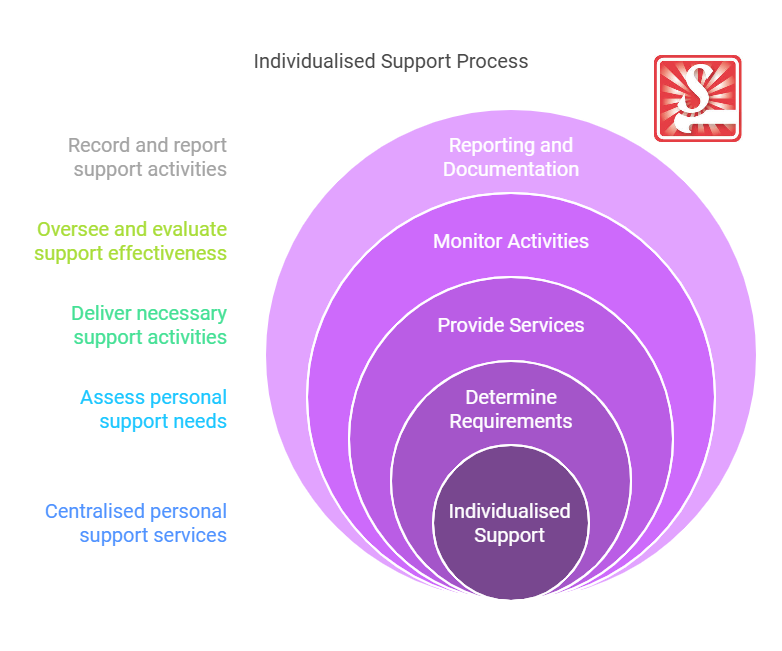
Providing individualised support is integral to the broader framework of Health and Community Services in Australia. It aligns with goals of person-centred care, promoting inclusivity, enhanced accessibility, and tailored interventions that improve health and social outcomes. This approach is foundational for creating responsive and adaptive support systems that cater to diverse populations.
Where can the student go to find out more information about individualised support?
- Australian Government Department of Health and Aged Care
- National Disability Insurance Scheme (NDIS)
- My Aged Care
- Skillmaker
What job roles would be knowledgeable about providing individualised support?
Roles include:
- Support Workers
- Case Managers
- Aged Care Workers
- Disability Support Coordinators
- Community Nurses
What is providing individualised support like in relation to sports, family, or schools?

Providing individualised support in the context of sports resembles a coach developing training plans that cater to each athlete’s strengths and weaknesses. In a family setting, it resembles tailoring family activities or communication styles to accommodate each member’s preferences and needs. In schools, it mirrors educators using differentiated teaching strategies to cater to the diverse learning needs of their students, ensuring that each child achieves their full potential.
(The first edition of this post was generated by AI to provide affordable education and insights to a learner-hungry world. The author will edit, endorse, and update it with additional rich learning content.)
- About the Author
- More info

Workskill training for all

 Post Tagged with