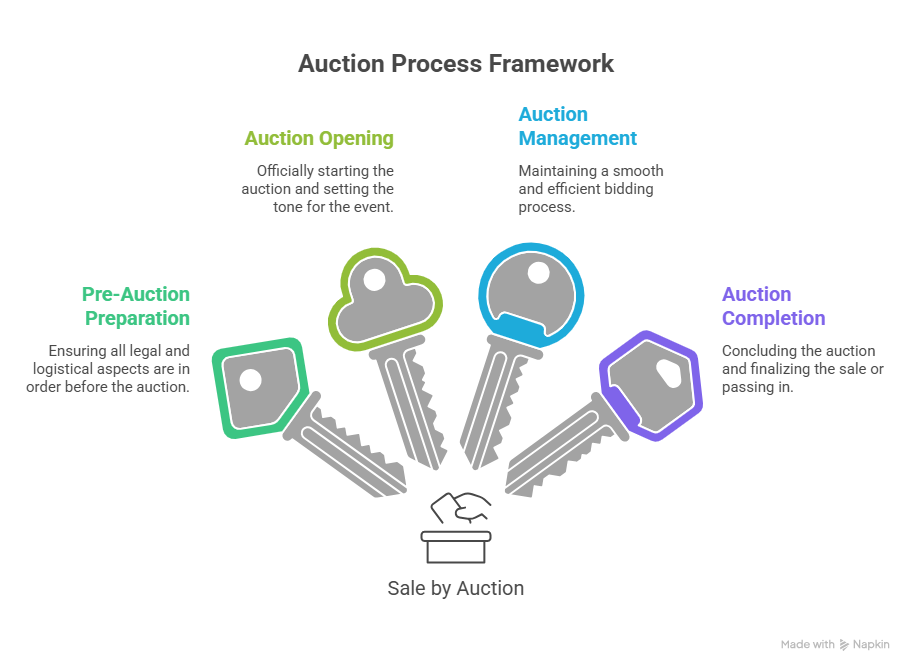
What is a concise description of auction rules when conducting and completing a sale by auction?
Auction rules when conducting and completing a sale by auction constitute a set of regulations and guidelines that govern how auctions must be conducted legally and ethically. These rules ensure transparency, fair play, and accountability between buyers, sellers, and auctioneers in the real estate industry.
Listen to this article as a podcast
Why do people in the Real Estate industry need auction rules when conducting and completing a sale by auction?
People in the real estate industry need to understand auction rules to ensure the integrity and fairness of the auction process. Adhering to legal guidelines protects all parties involved and helps maintain confidence in the auction system. Compliance with these rules can prevent legal disputes, bolster market integrity, and enhance professional credibility.
“Auction rules maintain integrity and fairness, ensuring a transparent process where all participants are protected and informed.”
What are the key components or elements of auction rules when conducting and completing a sale by auction?
Key components of auction rules include:
Compliance with Legislation: Ensuring adherence to state and federal auction laws.
Registration Process: Accurate recording of all bidders’ details.
Conducting Bids: Rules governing how bids are called and accepted.
Disclosure of Reserve Price: Knowing when and to whom the reserve price may be disclosed.
Statement of Terms and Conditions: Clarifying auction participation requirements.
What key terms, with descriptions, relate to auction rules when conducting and completing a sale by auction?
Reserve Price: The minimum price a seller is willing to accept in the auction.
Vendor Bidding: The practice of the auctioneer making bids on behalf of the seller.
Passed In: When the highest bid fails to meet the reserve price, resulting in no sale.
Fall of the Hammer: The moment the auctioneer signifies that a sale has taken place.
Bidder Registration: Process ensuring all potential buyers are registered before bidding.
Who is typically engaged with operating or implementing auction rules when conducting and completing a sale by auction?
Auctioneers, real estate agents, vendors (sellers), and bidders are primarily engaged in implementing auction rules. Auctioneers lead the process, ensuring compliance with legal requirements, while agents assist their clients—both buyers and sellers—through the auction proceedings.
How do auction rules align or integrate with other components of the Real Estate industry in Australia?
Auction rules complement real estate practices by establishing a transparent, consistent, and competitive sales method. They parallel regulatory frameworks, ethical standards, and industry practices, ensuring that auctions are conducted in a manner that upholds real estate’s integrity, ethical standards, and public trust in Australia.
Where can the student go to find out more information about auction rules when conducting and completing a sale by auction?
What job roles would be knowledgeable about auction rules when conducting and completing a sale by auction?
Roles include:
Auctioneers
Real Estate Agents
Compliance Officers
Property Consultants
Legal Advisors
What is conducting and completing a sale by auction like in relation to sports, family, or schools?
In sports, conducting and completing a sale by auction resembles a game where strategies must be followed to win. In family settings, it’s like making collective decisions with established rules everyone respects. In schools, it equates to following guidelines and procedures to ensure a fair and orderly process, similar to academic assessments and result evaluations.
(The first edition of this post was generated by AI to provide affordable education and insights to a learner-hungry world. The author will edit, endorse, and update it with additional rich learning content.)