
Common Challenges Faced in Receiving, Storing, and Maintaining Stock
Posted by SkillMaker in Jan, 2025
What is a concise description of challenges faced when receiving, storing, and maintaining stock?
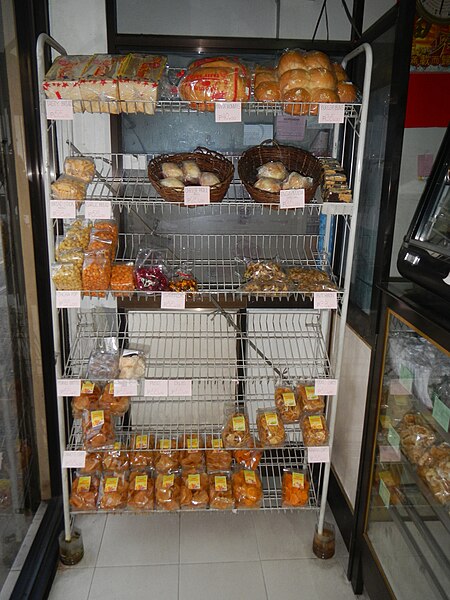
Challenges in managing stock include issues in receiving, storing, and maintaining inventory effectively in hospitality and catering environments. These issues can lead to inefficiencies, increased costs, and disruptions in service delivery. Understanding and mitigating these challenges are essential for smooth operations.
Why do people in enterprises need to address challenges when receiving, storing, and maintaining stock?
Addressing these challenges is crucial for enterprises as mishandling in stock management can lead to overstocking or stockouts, spoilage, financial losses, and dissatisfied customers. Efficient stock management ensures the timely availability of products, reduces waste, and enhances overall operational efficiency and customer satisfaction.
“Addressing stock challenges ensures seamless operations, minimizes waste, and satisfies customer demand efficiently.”
What are the key components or elements of challenges faced in receive, store, and maintaining stock?
Key components of these challenges include:
- Receiving Errors: Incorrect quantities, wrong items, or damaged goods.
- Storage Constraints: Limited space or inadequate conditions for preserving stock quality.
- Stock Rotation: Implementation of FIFO (First In, First Out) principles to avoid expiration of goods.
- Stock Loss: Theft or unaccounted loss leading to discrepancies.
- Inventory Control Systems: Efficient systems are needed for accurate tracking and forecasting.
What key terms, with descriptions, relate to challenges in receiving, storing, and maintaining stock?

Registered Trademark®
- Stock Discrepancy: Differences between recorded and actual stock levels.
- Supply Chain Management: Coordinating the flow of goods from supplier to final customer.
- Inventory Turnover: How often stock is replaced over time, indicating efficiency.
- Perpetual Inventory System: Continuous tracking of inventory updates automatically with each sale or purchase.
- Batch Tracking: Monitoring specific groups of stock items, usually for quality control.
Who is typically engaged with operating or implementing processes to manage stock challenges?
Warehouse managers, stock controllers, procurement officers, and operations managers are typically engaged in processes to manage stock-related challenges. These roles involve overseeing the receipt, storage, and distribution of goods to ensure optimal stock management and reduce discrepancies.
How does managing stock challenges align or integrate with other components of Hospitality and Catering?
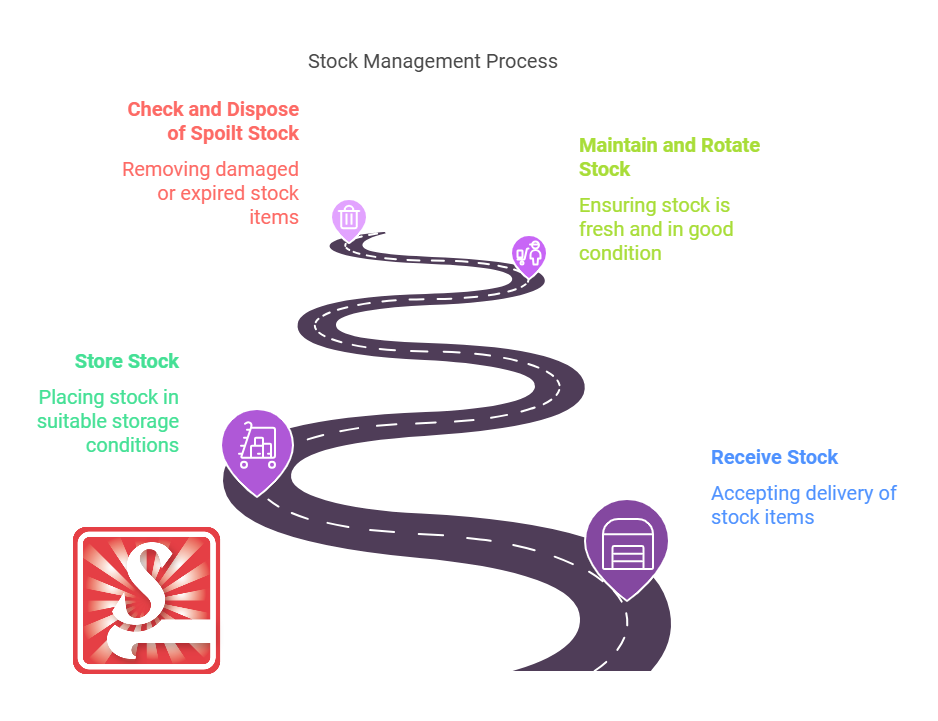
Managing stock challenges aligns with several operational areas, such as menu planning, cost control, and customer service. Efficient stock management ensures the timely availability of ingredients for menu execution, minimizes cost wastage through precise inventory levels, and enhances customer satisfaction by maintaining consistent product availability.
Where can the student go to find out more information about managing stock challenges?
What job roles would be knowledgeable about stock management challenges?
Roles that would be knowledgeable about this include:
- Inventory Managers
- Warehouse Supervisors
- Procurement Specialists
- Operations Managers
- Logistics Coordinators
What is stock management like in relation to sports, family, or schools?

In relation to sports, managing stock challenges is similar to a coach strategizing a team’s resources optimally to win games.
In a family context, it’s akin to effectively managing household groceries to ensure meals are prepared without shortage or wastage.
In schools, it parallels the management of educational materials to meet the demand of the students without overstocking or running low.
(The first edition of this post was generated by AI to provide affordable education and insights to a learner-hungry world. The author will edit, endorse, and update it with additional rich learning content.)
- About the Author
- More info

Workskill training for all

 Post Tagged with