
The Role of Other Parties in Conducting and Completing a Sale by Auction
Posted by SkillMaker in Feb, 2026
What is a concise description of the role of other parties in a property auction?

The role of other parties in a property auction involves contributing to a diverse set of responsibilities and functions to ensure the auction process is legal, transparent, and effective. This includes the actions of auctioneers, vendors, bidders, and legal advisors who collectively work to facilitate the seamless execution of the auction.
Listen to this article as a podcast
Why do people in the Real Estate industry need to understand the role of other parties in property auctions?
Understanding the role of other parties in property auctions is essential for those in the Real Estate industry as it ensures a comprehensive and compliant approach to sales. Knowledge of each party’s duties facilitates communication, upholds ethical standards, and optimizes conditions for successful transactions, benefiting all stakeholders involved in the auction process.
“Understanding the roles of different parties in auctions strengthens the foundation of Real Estate transactions, ensuring transparency and success for all involved.”
What are the key components or elements involving other parties in property auctions?
Key components involving other parties in property auctions include:
- Auctioneer: The professional conducting the auction, responsible for compliance and closing the sale.
- Vendor: The property owner who initiates the sale process.
- Bidders: Participants interested in purchasing the property, actively competing in the bidding process.
- Legal Advisors: Professionals ensuring the auction adheres to legal frameworks and contractual obligations.
- Real Estate Agents: Facilitators offering support services and negotiating terms on behalf of clients.
What key terms, with descriptions, relate to the role of other parties in property auctions?

Registered Trademark®
- Reserve Price: The minimum price that the vendor is willing to accept for the property, often undisclosed.
- Bidder Registration: The process whereby interested participants register to legitimately bid at the auction.
- Vendor Bid: A bid made by the auctioneer on behalf of the vendor, used as a strategy to increase competition.
- Passed In: A term used when a property does not meet the reserve price, and thus is not sold at auction.
- Auction Date: The set date on which the auction takes place, requiring all parties to be present and prepared.
Who is typically engaged with operating or implementing this topic in the context of property auctions?
The primary roles engaged in property auctions include auctioneers, who are pivotal in conducting the event; vendors, who own and decide to sell their property; bidders, actively competing for the purchase; and legal advisors, ensuring legality and compliance throughout the process.
How does the role of other parties in auctions align or integrate with other components of the Real Estate industry in Australia?
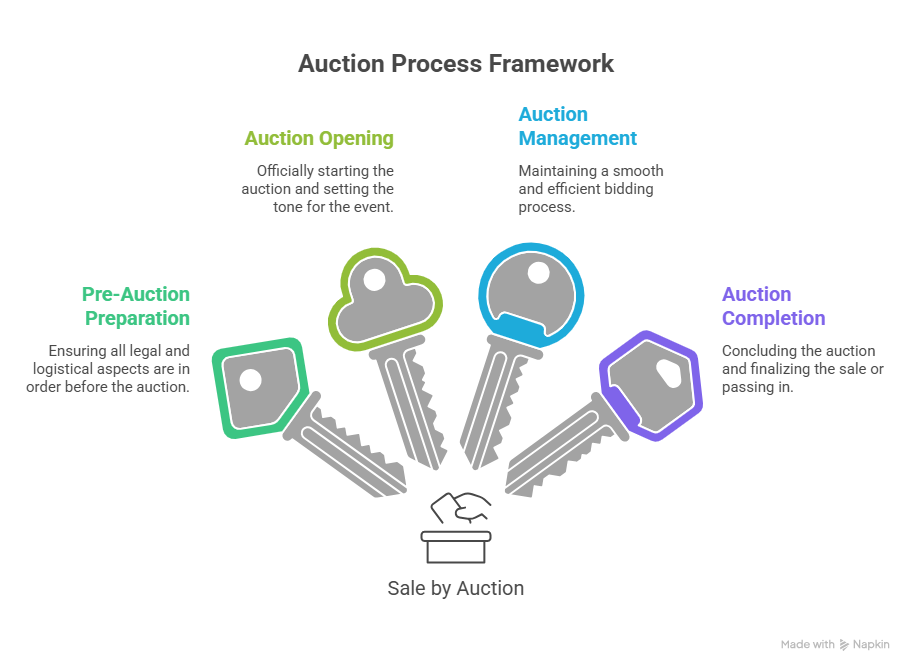
The role of other parties in auctions integrates closely with the Real Estate industry’s legal, ethical, and operational frameworks. The collaboration of these parties maintains the integrity, transparency, and success of transactions, making a significant contribution to broader industry standards and practices.
Where can the student go to find out more information about the role of other parties in property auctions?
- General rules for conducting an auction of goods
- The law and authority of auctioning real property
- Skillmaker
What job roles would be knowledgeable about the role of other parties in property auctions?
Roles include:
- Auctioneers
- Real Estate Agents
- Legal Advisors
- Property Solicitors
- Bidders and Buyers Advocates
What is the role of other parties in property auctions like in relation to sports, family, or schools?

In sports, the role of other parties in property auctions can be likened to players, coaches, referees, and supporters, each playing a crucial role to achieve a common goal.
In a family, it resembles the way different family members contribute to household tasks and decisions to maintain harmony.
In schools, it’s similar to the collaborative effort between teachers, students, and parents working together to achieve educational objectives and create a conducive learning environment.
(The first edition of this post was generated by AI to provide affordable education and insights to a learner-hungry world. The author will edit, endorse, and update it with additional rich learning content.)
(Skillmaker – 2025)- About the Author
- More info

Workskill training for all
