
Family Support in Providing Individualised Support
Posted by SkillMaker in Jan, 2025
What is a concise description of family support in providing individualised support?

Family support in the context of providing individualised support refers to the involvement and assistance family members offer to individuals receiving health or community services. This support is essential in creating tailored care plans that address the unique needs of the individual while considering the insights and contributions of family members.
Why do people in enterprises need family support when providing individualised support?
Enterprises engaged in health or community services need family support to enhance the effectiveness of the care provided. Families offer valuable insights into the individual’s preferences, history, and behaviours, enabling service providers to craft more comprehensive and meaningful support plans. Furthermore, family involvement fosters a collaborative environment that enhances the quality of care, leading to better outcomes for clients.
“Involving families in individualised support ensures that care plans are reflective of personal needs and familial insights, promoting holistic and effective care experiences.”
What are the key components or elements of family support in individualised support?
Key components of family support in individualised support include:
- Collaboration: Working closely with family members to gather information and feedback.
- Communication: Establishing clear, open lines with family members to discuss care plans.
- Inclusive Decision-Making: Involving families in the planning and decision-making process.
- Support Networks: Encouraging the development of family and community support networks.
- Education: Providing resources and guidance to families to support their role in care.
What key terms, with descriptions, relate to family support in providing individualised support?

Registered Trademark®
- Person-Centred Care: Prioritising the preferences, needs, and values of individuals and their families.
- Family Engagement: Actively involving family members in caregiving processes.
- Holistic Approach: Considering all aspects of an individual’s life, including family dynamics, in care planning.
- Resilience Building: Enhancing families’ capacity to adapt and thrive in supporting loved ones.
- Empowerment: Enabling families to take an active role in decision-making and support activities.
Who is typically engaged with operating or implementing family support in individualised support?
Professionals like social workers, care coordinators, support workers, and healthcare providers are typically involved in implementing family support in individualised care. These roles facilitate communication between family members and service providers, ensuring that the support plan is well-rounded and in line with family insights and needs.
How does family support in individualised support align or integrate with other components of Health or Community Services in Australia?
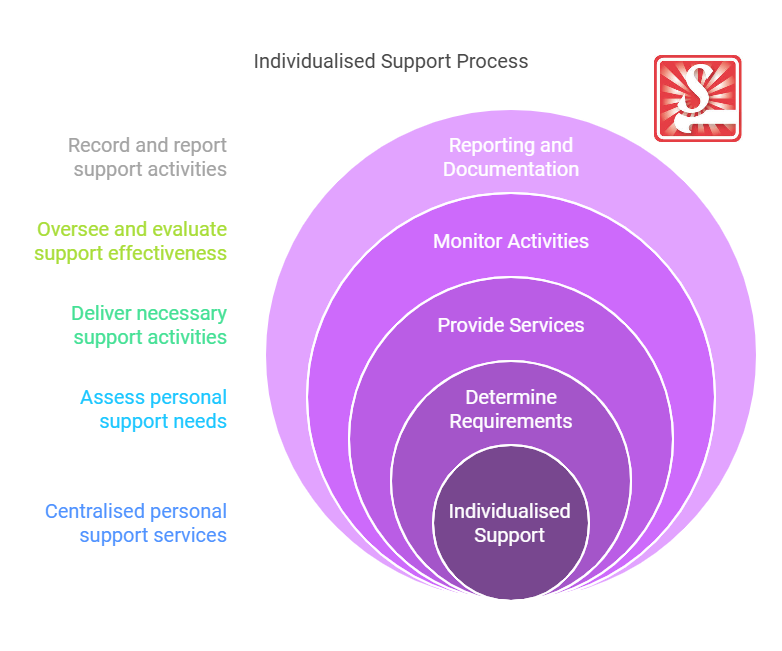
Family support in individualised care aligns with broader health and community services by enhancing person-centred practices. It integrates with other components such as mental health support, aged care, and disability services by maximising resources and fostering a collaborative care environment that addresses the unique needs of individuals through family insights and participation.
Where can the student go to find out more information about family support in providing individualised support?
- Carers Australia – Support for family carers
- My Aged Care – Government support for aged care
- National Disability Insurance Scheme (NDIS)
- Skillmaker
What job roles would be knowledgeable about family support in providing individualised support?
Roles include:
- Support Workers
- Social Workers
- Community Service Workers
- Healthcare Providers
- Case Managers
What is family support in providing individualised support like in relation to sports, family, or schools?

In sports, family support reflects teamwork, where each member contributes to the shared goals of the team.
In a family context, it resembles family members working together to ensure everyone is supported, much like coordinating family routines.
In schools, it is comparable to family communities supporting students in achieving educational goals through active involvement and collaboration with teachers.
(The first edition of this post was generated by AI to provide affordable education and insights to a learner-hungry world. The author will edit, endorse, and update it with additional rich learning content.)
- About the Author
- More info

Workskill training for all

 Post Tagged with