
Ethical Considerations When Providing Individualised Support
Posted by SkillMaker in Jan, 2025
What is a concise description of ethical considerations when providing individualised support?

Ethical considerations when providing individualised support involve understanding and adhering to moral principles and professional standards that ensure respect, dignity, and safety for individuals receiving care. This includes confidentiality, informed consent, autonomy, social justice, and cultural respect, thus fostering trust and effective service delivery.
Why do people in enterprises need ethical considerations when providing individualised support?
Enterprises need ethical considerations in provision of support to ensure that they uphold moral and professional standards that protect both service providers and clients. Ethical guidelines help prevent exploitation and discrimination, foster trust, enhance the quality of care, and ensure compliance with legal obligations. This leads to positive outcomes for clients and reputation enhancement for the enterprise.
“Ethical considerations in support provision safeguard dignity, promote fairness, and nurture trust, forming the cornerstone of compassionate and effective care.”
What are the key components or elements of ethical considerations when providing individualised support?
Key components of ethical considerations include:
- Confidentiality: Ensuring privacy and security of client information.
- Informed Consent: Obtaining permission with full understanding of care and circumstances.
- Respect for Autonomy: Empowering individuals to make their own decisions.
- Non-Maleficence and Beneficence: Prioritising well-being and avoiding harm.
- Social Justice: Ensuring equality and fairness in access to support.
What key terms, with descriptions, relate to ethical considerations when providing individualised support?

Registered Trademark®
- Confidentiality: Ensuring that personal information is protected and only shared with those who have a right to know.
- Informed Consent: The process of ensuring that individuals are fully informed and voluntarily agree to engage with services or treatments.
- Respect for Autonomy: Honour the individual’s right to make decisions about their own life and care.
- Non-Maleficence: The obligation to not inflict harm intentionally.
- Cultural Competence: The ability to understand and respect cultural differences in service delivery.
Who is typically engaged with operating or implementing ethical considerations in individualised support?
Healthcare and community service providers, social workers, support workers, nurses, and case managers are typically responsible for implementing ethical considerations in individualised support. These professionals are trained to adhere to ethical standards and ensure respectful, fair, and dignified treatment of individuals.
How does ethical considerations in providing individualised support align or integrate with other components of Health or Community Services in Australia?
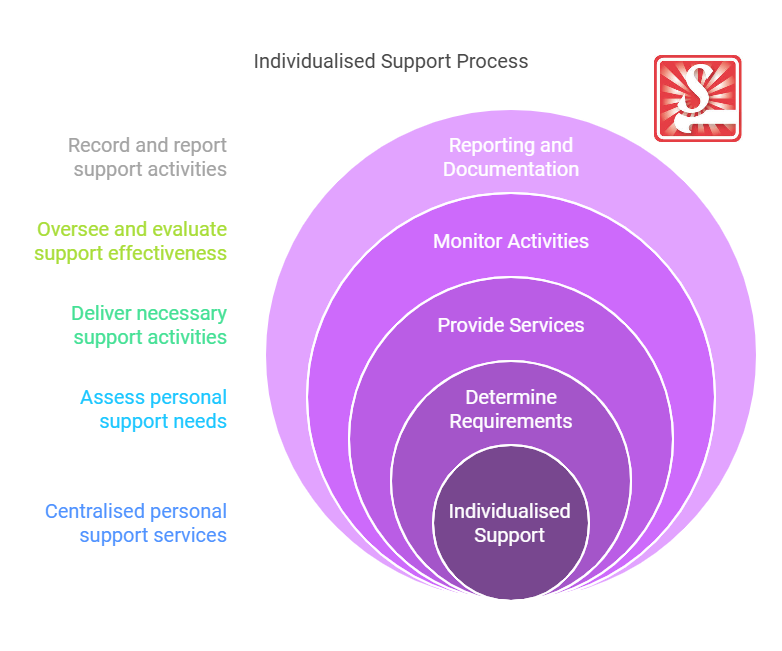
Ethical considerations in individualised support integrate closely with legal frameworks, care plans, and organisational policies in Australian Health and Community Services. They ensure that all practices not only comply with laws but also promote holistic, client-centred care that respects individual rights and dignity. Such ethical practices align with broader health objectives, quality standards, and community values.
Where can the student go to find out more information about ethical considerations in providing individualised support?
- National Health and Medical Research Council (NHMRC)
- Australian Association of Social Workers (AASW)
- Community Services
- Skillmaker
What job roles would be knowledgeable about ethical considerations in providing individualised support?
Roles include:
- Social Workers
- Support Workers
- Nurses
- Case Managers
- Care Coordinators
What are ethical considerations in providing individualised support like in relation to sports, family, or schools?

In sports, ethical considerations resemble fair play where rules and respect ensure equitable competition. Within a family context, it translates to mutual respect and understanding amongst members, fostering harmonious relationships. In schools, it mirrors a commitment to fairness and respect for every student’s individuality, creating an inclusive and supportive educational environment.
(The first edition of this post was generated by AI to provide affordable education and insights to a learner-hungry world. The author will edit, endorse, and update it with additional rich learning content.)
- About the Author
- More info

Workskill training for all

 Post Tagged with