
Workplace Safety Procedures When Cleaning Kitchen Premises and Equipment
Posted by SkillMaker in Jan, 2025
What is a concise description of workplace safety procedures when cleaning kitchen premises and equipment?
Workplace safety procedures when cleaning kitchen premises and equipment involve implementing systematic practices to prevent accidents, injuries, and hazards. These procedures help ensure the safety and well-being of kitchen staff by adhering to guidelines on handling cleaning agents, maintaining clean and dry floors, and ensuring proper ventilation, thereby promoting a safe working environment.
Why do people in enterprises need workplace safety procedures when cleaning kitchen premises and equipment?
Enterprises need workplace safety procedures when cleaning kitchen premises and equipment to minimize the risk of accidents, such as slips, trips, or chemical exposure. Adhering to these procedures not only protects employees but also ensures compliance with legal safety standards, reduces potential liabilities, and maintains a productive and secure working environment.
“Workplace safety procedures are essential in maintaining a secure kitchen environment, preventing accidents, and ensuring the well-being of all staff members.”
What are the key components or elements of workplace safety procedures when cleaning kitchen premises and equipment?
Key components of workplace safety procedures in kitchen cleaning include:
- Personal Protective Equipment (PPE): Use of gloves, aprons, goggles, and masks to protect against chemical exposure.
- Safe Handling: Proper use and storage of cleaning chemicals to prevent spills and exposure.
- Slip Prevention: Ensuring floors are clean and dry to avoid slips, trips, and falls.
- Ventilation: Ensuring proper airflow when using cleaning agents to prevent inhalation of harmful fumes.
- Training and Communication: Providing staff with adequate safety training and instructions.
What key terms, with descriptions, relate to workplace safety procedures when cleaning kitchen premises and equipment?

Registered Trademark®
- Hazard Analysis: Identifying potential hazards in the kitchen environment to mitigate risks.
- Chemical Safety: Safe storage and use of chemical agents, with awareness of Safety Data Sheets (SDS).
- Risk Assessment: Evaluating the potential risks associated with cleaning tasks and taking preventative measures.
- Emergency Procedures: Established protocols for handling accidents or hazardous situations.
- PPE: Personal protective equipment used to safeguard against workplace hazards.
Who is typically engaged with operating or implementing workplace safety procedures when cleaning kitchen premises and equipment?
Kitchen supervisors, occupational health and safety officers, cleaning staff, and kitchen employees are typically responsible for implementing workplace safety procedures. These roles ensure that safety guidelines are followed rigorously to prevent accidents and injuries.
How do workplace safety procedures when cleaning kitchen premises and equipment align or integrate with other components of Hospitality and Catering?
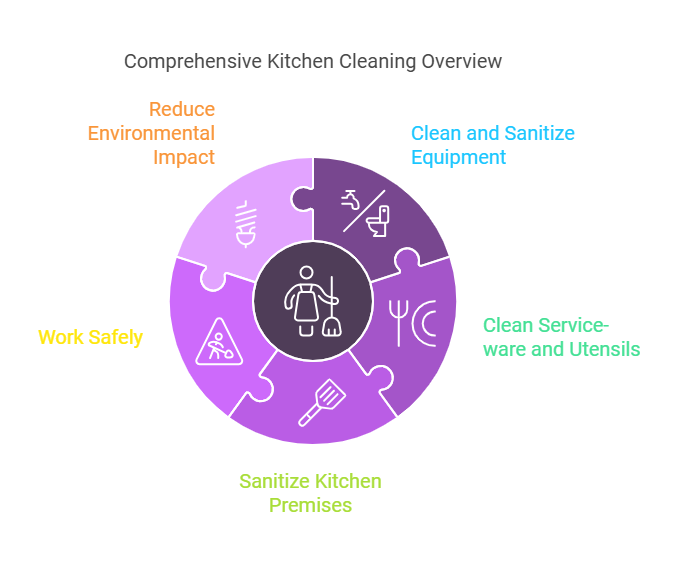
Workplace safety procedures align with other components of Hospitality and Catering by ensuring a clean, safe, and operational environment, which is essential for quality food production and customer satisfaction. Adhering to safety procedures complements food hygiene practices, staff training, and overall operational efficiency in hospitality settings.
Where can the student go to find out more information about workplace safety procedures when cleaning kitchen premises and equipment?
What job roles would be knowledgeable about workplace safety procedures when cleaning kitchen premises and equipment?
Roles include:
- Occupational Health and Safety Officers
- Kitchen Supervisors
- Cleaning Staff
- Food Safety Inspectors
- Catering Managers
What are workplace safety procedures when cleaning kitchen premises and equipment like in relation to sports, family, or schools?

In relation to sports, workplace safety procedures are like a team sticking to the rules and wearing the necessary gear for safety.
In a family context, it embodies teaching children rules to ensure home safety, like keeping cleaning products out of reach.
In schools, it’s akin to having clear safety drill procedures to manage potential hazards and keep everyone safe.
(The first edition of this post was generated by AI to provide affordable education and insights to a learner-hungry world. The author will edit, endorse, and update it with additional rich learning content.)
- About the Author
- More info

Workskill training for all

 Post Tagged with