
Title Defects When Conducting and Completing a Sale by Auction
Posted by SkillMaker in Feb, 2026
What is a concise description of title defects when conducting and completing a sale by auction?

Title defects refer to any issues or discrepancies in a property’s title that could potentially impede its sale during an auction. These defects might include unpaid liens, boundary disputes, or errors in the property description. They are crucial to address because they can affect the property’s marketability and legality, requiring resolution before a buyer can confidently purchase a property without future legal complications.
Listen to this article as a podcast
Why do people in the Real Estate industry need to understand title defects when conducting and completing a sale by auction?
Understanding and identifying title defects when conducting auctions is crucial for real estate professionals to ensure a smooth transaction process. It enables them to resolve any legal or financial issues tied to the property title before the auction date. This preparedness is essential to instil confidence in potential buyers, mitigate legal risks, and enhance the marketability of the property, thereby promoting successful and dispute-free transactions.
“Addressing title defects is essential for a seamless and transparent auction process, ensuring legal compliance and fostering buyer confidence.”
What are the key components or elements of handling title defects during an auction sale?
Key components of dealing with title defects in auction sales include:
- Title Searches: Conducting thorough title searches before listing, to identify potential defects.
- Defect Resolution: Addressing and rectifying known title issues prior to auction to ensure clarity and legality.
- Legal Consultation: Engaging legal experts for advice and confirmation of title status.
- Disclosure: Transparently disclosing any and all resolved or unresolved defects to potential buyers.
- Documentation Assurance: Ensuring all necessary documents are correct and available.
What key terms, with descriptions, relate to title defects in auction sales?

Registered Trademark®
- Title Search: The process of reviewing public records to confirm a property’s legal ownership and identify any liens or claims.
- Lien: A legal claim against a property, typically for unpaid debts.
- Easement: A right held by another party to use a portion of the property for a specific purpose, such as utilities.
- Encroachment: A situation where a structure or extension illegally extends onto a neighbouring property.
- Certificate of Title: An official document showing ownership of land or property.
Who is typically engaged with identifying and resolving title defects during an auction sale?
Real estate agents, auctioneers, conveyancers, solicitors, and title company professionals are typically involved in identifying and resolving title defects before an auction sale. These professionals have the expertise needed to manage the legalities and ensure that the transfer of ownership is free of disputes or encumbrances.
How does handling title defects integrate with the real estate auction process in Australia?
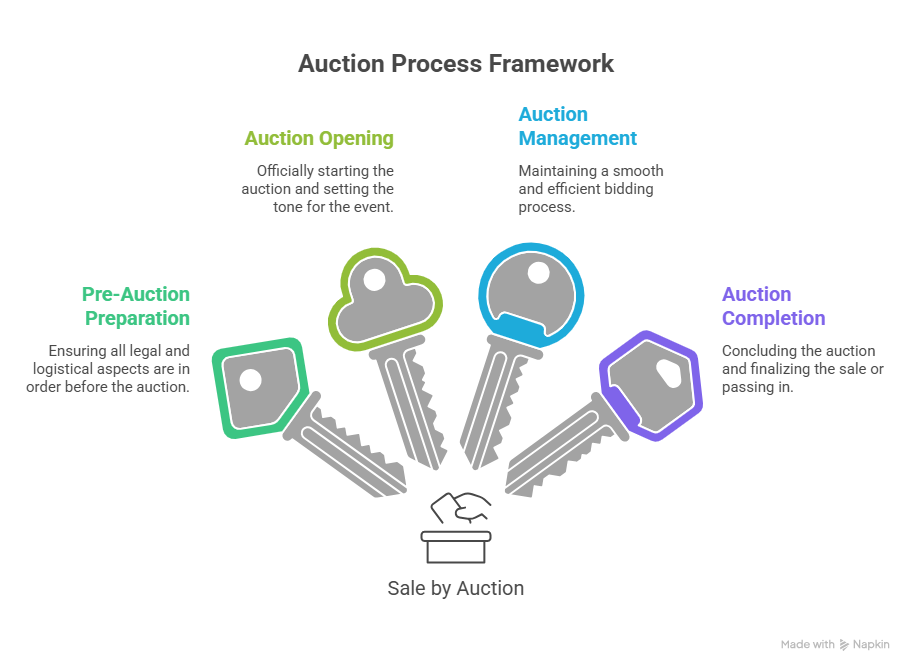
Addressing title defects aligns with the auction process by ensuring legal compliance and a clear title before selling, thus reducing the risk of post-sale disputes. Transparent communication about the title status helps facilitate trust and engagement from potential buyers, ensuring a more dynamic and successful auction process within the regulatory framework in Australia.
Where can the student go to find out more information about managing title defects in auction sales?
- General rules for conducting an auction of goods
- The law and authority of auctioning real property
- Skillmaker
What job roles would be knowledgeable about title defects in auction sales?
Roles include:
- Auctioneers
- Conveyancers
- Real Estate Agents
- Solicitors
- Title Company Representatives
What is handling title defects like in relation to sports, family, or schools?

Regarding sports, handling title defects resembles a team working together to remove obstacles before a championship match, ensuring rules are followed for fair competition. In a family, it echoes resolving disputes and establishing harmony before a significant family event. For schools, it’s akin to verifying students’ records to ensure qualifications are correct before graduation, ensuring all academic goals are met without hitches.
(The first edition of this post was generated by AI to provide affordable education and insights to a learner-hungry world. The author will edit, endorse, and update it with additional rich learning content.)
(Skillmaker – 2025)- About the Author
- More info

Workskill training for all
