
Reporting Requirements When Cleaning Kitchen Premises and Equipment
Posted by SkillMaker in Jan, 2025
What is a concise description of reporting requirements when cleaning kitchen premises and equipment?

Reporting requirements when cleaning kitchen premises and equipment involve systematically documenting the cleaning activities, procedures followed, and any issues observed. Proper reporting ensures accountability, compliance with hygiene standards, and fosters communication among team members in hospitality and catering environments.
Why do people in enterprises need reporting requirements when cleaning kitchen premises and equipment?
Enterprises require clear reporting requirements to maintain hygiene and safety standards in kitchen operations. Documenting cleaning activities helps identify areas needing improvement, ensures compliance with health regulations, and provides a record for audits. This practices enhances efficiency, reduces risks of contamination, and assures customers of the highest cleanliness standards.
“Thorough reporting in kitchen cleaning fosters accountability and ensures that hygiene standards are consistently met and upheld.”
What are the key components or elements of reporting requirements when cleaning kitchen premises and equipment?
Key components include:
- Detailed Records: Timely documentation of tasks completed, equipment used, and areas cleaned.
- Checklists: Standardised forms that ensure all areas and equipment are cleaned systematically.
- Issue Logging: Noting problems or maintenance needs observed during cleaning.
- Compliance Reporting: Meeting health and safety regulations through accurate record-keeping.
- Feedback Loop: Providing insights for continuous improvement and efficient kitchen operations.
What key terms, with descriptions, relate to reporting requirements when cleaning kitchen premises and equipment?

Registered Trademark®
- Sanitisation Logs: Records indicating when and how sanitation tasks are completed.
- Inspection Reports: Documents that capture the condition of the kitchen and equipment post-cleaning.
- Health Standards Compliance: Guidelines and regulations ensuring cleanliness to prevent health risks.
- HACCP (Hazard Analysis and Critical Control Points): A systematic approach to managing food safety risks.
- Workflow Efficiency Charts: Diagrams that track the effectiveness of cleaning protocols.
Who is typically engaged with operating or implementing reporting requirements when cleaning kitchen premises and equipment?
Roles typically engaged include kitchen managers, hygiene officers, cleaning staff, and quality assurance personnel. These individuals are responsible for documenting cleaning processes, ensuring compliance, and identifying areas for further improvement within the kitchen operations.
How do reporting requirements when cleaning kitchen premises and equipment align or integrate with other components of Hospitality and Catering?
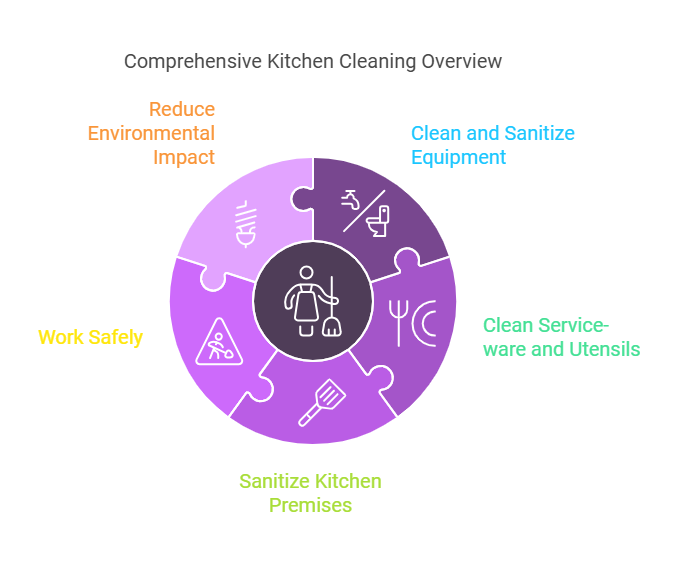
Reporting requirements complement other Hospitality and Catering operations by providing a structured approach to hygiene and safety. This encompasses food handling protocols, customer service standards, and operational efficiency, enhancing the overall dining experience and maintaining compliance with health regulations.
Where can the student go to find out more information about reporting requirements when cleaning kitchen premises and equipment?
What job roles would be knowledgeable about reporting requirements when cleaning kitchen premises and equipment?
Roles include:
- Kitchen Managers
- Hygiene Officers
- Cleaning Supervisors
- Quality Assurance Inspectors
- Food Safety Auditors
What are reporting requirements when cleaning kitchen premises and equipment like in relation to sports, family, or schools?

In the realm of sports, adhering to reporting requirements mirrors the precise documentation athletes maintain in training logs for performance tracking. Within a family context, it compares to keeping a chore chart to ensure everyone contributes to household cleanliness and order. In schools, it corresponds to maintaining attendance records and progress reports to systematically evaluate student performance and improvement.
(The first edition of this post was generated by AI to provide affordable education and insights to a learner-hungry world. The author will edit, endorse, and update it with additional rich learning content.)
- About the Author
- More info

Workskill training for all

 Post Tagged with