
Own Responsibility When Cleaning Kitchen Premises and Equipment
Posted by SkillMaker in Jan, 2025
What is a concise description of own responsibility when cleaning kitchen premises and equipment?
Own responsibility when cleaning kitchen premises and equipment involves understanding and implementing the necessary procedures to ensure hygiene, safety, and efficiency. It encompasses following safety protocols, using cleaning agents correctly, and maintaining a clean and sanitary workspace that aligns with industry standards.
Why do people in enterprises need own responsibility when cleaning kitchen premises and equipment?
In any hospitality or catering workplace, maintaining a clean kitchen is crucial for preventing contamination and ensuring customer safety. When individuals take responsibility for cleaning tasks, it reduces the risk of foodborne illnesses, promotes a sanitary work environment, and complies with health regulations. This proactive approach helps avoid costly health code violations and boosts the establishment’s reputation for cleanliness and safety.
“Taking responsibility in cleaning kitchen premises ensures hygiene, safety, and enhances operational integrity within the hospitality industry.”
What are the key components or elements of own responsibility when cleaning kitchen premises and equipment?
Key components include:
- Understanding Cleaning Protocols: Knowledge of the appropriate cleaning procedures for various equipment and surfaces.
- Use of Correct Cleaning Agents: Selecting the right cleaning products and using them safely to avoid damage or contamination.
- Safety Considerations: Wearing protective gear and following safety guidelines to prevent accidents and injuries.
- Regular Maintenance Checks: Inspecting equipment for cleanliness and any signs of wear or damage.
- Team Collaboration: Working effectively with colleagues to ensure a comprehensive cleaning routine is maintained in all areas.
What key terms, with descriptions, relate to own responsibility when cleaning kitchen premises and equipment?

Registered Trademark®
- Sanitisation: The process of reducing pathogens on surfaces to safe levels as set by health regulations.
- Cross-Contamination: The transfer of harmful bacteria from one surface or food item to another.
- HACCP (Hazard Analysis Critical Control Points): A systematic approach to food safety that addresses physical, chemical, and biological hazards across production processes.
- Personal Protective Equipment (PPE): Gear worn to minimise exposure to hazards during cleaning tasks, such as gloves and goggles.
- Deep Cleaning: An intensive cleaning process that involves the removal of deep-seated germs and grime beyond standard daily cleaning.
Who is typically engaged with operating or implementing own responsibility when cleaning kitchen premises and equipment?
Kitchen staff, including chefs, line cooks, dishwashers, and cleaning personnel, are typically responsible for implementing their own responsibilities during cleaning tasks. Each team member plays an essential role in ensuring kitchen hygiene, with supervisors overseeing the execution of cleaning protocols to ensure all standards are met consistently.
How does own responsibility when cleaning kitchen premises and equipment align or integrate with other components of Hospitality and Catering?
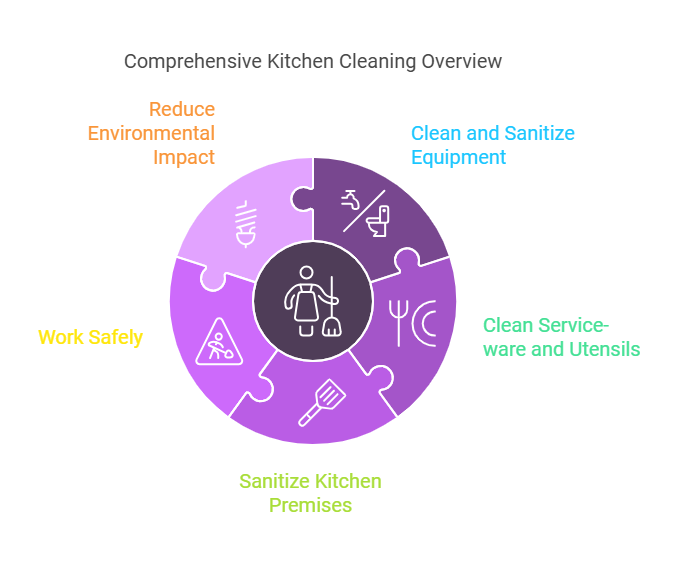
Taking responsibility for cleaning kitchen premises aligns with broader hospitality operations by creating a safe and healthy working environment that enhances food quality and service excellence. Proper cleaning integrates with compliance, operational efficiency, customer satisfaction, and upholding brand reputation as part of the holistic customer experience in the hospitality and catering sectors.
Where can the student go to find out more information about own responsibility when cleaning kitchen premises and equipment?
What job roles would be knowledgeable about own responsibility when cleaning kitchen premises and equipment?
Roles include:
- Chefs and Head Cooks
- Kitchen Hands
- Food Safety Supervisors
- Cross-functional Shift Supervisors
- Housekeeping and Sanitation Managers
What is own responsibility when cleaning kitchen premises and equipment like in relation to sports, family, or schools?

In relation to sports, taking responsibility while cleaning kitchen premises is similar to a team maintaining their sports equipment and uniforms to ensure peak performance during play.
In a family context, it’s like everyone in the household playing a part in keeping common areas clean and welcoming.
In schools, it exemplifies students maintaining a clean and conducive learning environment by being responsible for their own desks and shared spaces.
(The first edition of this post was generated by AI to provide affordable education and insights to a learner-hungry world. The author will edit, endorse, and update it with additional rich learning content.)
- About the Author
- More info

Workskill training for all

 Post Tagged with