
Organisational WHS Policies in Maintaining Workplace Safety
Posted by SkillMaker in Dec, 2024
What is a concise description of organisational WHS policies when assisting with maintaining workplace safety?

Organisational WHS (Workplace Health and Safety) policies are formal guidelines and protocols designed by enterprises to ensure a safe and healthy working environment. These policies define responsibilities, procedures, and practices that protect workers from potential occupational hazards while promoting wellbeing and compliance with legislative requirements.
Why do people in enterprises need organisational WHS policies when assisting with maintaining workplace safety?
People in enterprises need these policies to establish a safety-first mindset that minimizes the risk of injury and illness. By adhering to WHS protocols, employees, and employers can create a benchmark for safety performance, ensuring compliance with regulations and fostering a culture of care and responsibility that protects everyone in the workplace.
“Effective WHS policies are the cornerstone of a safe workplace, ensuring that all safety measures are systematically and consistently applied, reducing risks and enhancing the overall welfare of the workforce.”
What are the key components or elements of organisational WHS policies in maintaining workplace safety?
Key components of organisational WHS policies include:
- Risk Assessment: Identifying potential hazards and assessing their likelihood and impact.
- Incident Reporting: Procedures for reporting and investigating accidents and near-misses.
- Training Programs: Educating employees on WHS best practices and emergency procedures.
- Safety Equipment: Providing appropriate PPE (Personal Protective Equipment) and ensuring its use.
- Emergency Preparedness: Developing and practicing emergency response plans.
What key terms, with descriptions, relate to organisational WHS policies when maintaining workplace safety?

Registered Trademark®
- Hazard Identification: The process of recognizing potential sources of harm in the workplace.
- Risk Management: The approach to minimizing risks through appropriate strategies and controls.
- Compliance: Adhering to relevant WHS laws and regulations.
- PPE (Personal Protective Equipment): Gear and clothing designed to protect employees from hazards.
- Duty of Care: The legal obligation to ensure the safety and wellbeing of all employees.
Who is typically engaged with operating or implementing organisational WHS policies?
WHS officers, safety managers, supervisors, and employees are all integral to the operation and implementation of WHS policies. While WHS professionals devise and oversee the policies, supervisors and employees must adhere to and enact these practices daily to maintain a safe working environment.
How do organisational WHS policies align or integrate with other components of Workplace Safety?
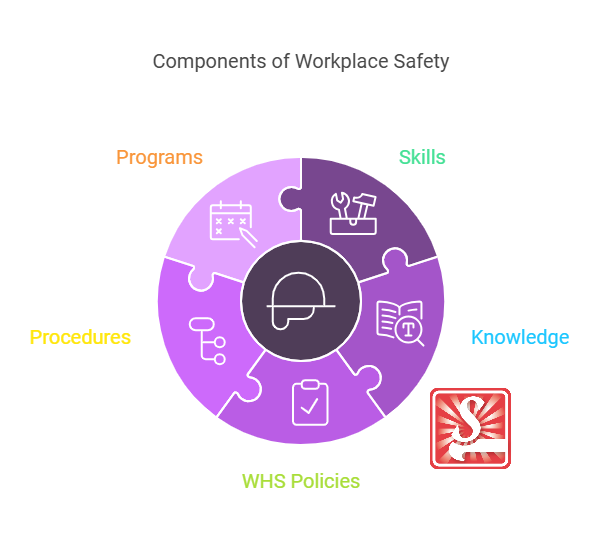
Organisational WHS policies form the backbone of workplace safety as they dictate the standards and actions required to manage risks effectively. These policies work in tandem with job safety analyses, hazard controls, and safety audits, creating a comprehensive safety management system that protects employees and property.
Where can the student go to find out more information about organisational WHS policies?
What job roles would be knowledgeable about organisational WHS policies?
Roles include:
- Workplace Safety Officers
- Compliance Managers
- Safety Auditors
- HR Managers
- Occupational Health Specialists
What are organisational WHS policies like in relation to sports, family, or schools?

In sports, organisational WHS policies are like team rules and safety drills that keep players safe and the game fair. In family settings, they resemble house rules that ensure everyone’s wellbeing, like childproofing or fire safety measures. Within schools, they parallel rules and guidelines that protect students and staff, fostering a secure learning environment.
(The first edition of this post was generated by AI to provide affordable education and insights to a learner-hungry world. The author will edit, endorse, and update it with additional rich learning content.)
- About the Author
- More info

Workskill training for all

 Post Tagged with