
Organisational Procedures when Building and Maintaining Business Relationships
Posted by SkillMaker in Oct, 2025
What is a concise description of organisational procedures for business relationships?

Organisational procedures for building and maintaining business relationships refer to the systematic practices, protocols, and policies that companies implement to foster positive interactions and long-term engagement with stakeholders. These procedures are aimed at ensuring effective communication, trust-building, and strategic partnership management.
Listen to this article as a podcast
Why do people in the Public sector industry need organisational procedures in business relationships?
In the Public sector industry, having organisational procedures for business relationships is essential for transparency, accountability, and the efficient allocation of resources. It helps ensure public trust, facilitates collaboration with various stakeholders, and enables the sector to deliver services effectively through well-managed partnerships.
“Effective organisational procedures create pathways to successful and lasting business relationships, critical to achieving public sector goals and fulfilling community needs.”
What are the key components or elements of organisational procedures in business relationships?
Key components of organisational procedures in business relationships include:
- Communication Protocols: Established channels and etiquettes for clear interactions.
- Stakeholder Engagement Plans: Structured approaches for managing stakeholder expectations and inputs.
- Performance Assessment: Evaluation metrics for relationship monitoring and improvement.
- Conflict Resolution Procedures: Defined methods for addressing and resolving disputes.
- Collaborative Decision-Making: Processes to include varied perspectives in planning and execution.
What key terms, with descriptions, relate to organisational procedures in business relationships?

Registered Trademark“®”
- Relationship Management: The process of maintaining positive engagement with stakeholders.
- Organisational Alignment: Ensuring that all parts of the organisation work harmoniously toward common goals.
- Stakeholder Mapping: Identifying and classifying stakeholders based on influence and interest levels.
- Business Ethics: The moral principles guiding executive decision-making and operations.
- Feedback Mechanisms: Systems to receive and respond to stakeholder inputs and concerns.
Who is typically engaged with operating or implementing organisational procedures in business relationships?
Individuals such as relationship managers, project managers, public affairs officers, and community engagement coordinators are typically involved in operating or implementing these organisational procedures. They work to ensure that the relationship goals are clear and that all communications are consistent and effective.
How do organisational procedures in business relationships align or integrate with other components of the Public sector industry in Australia?
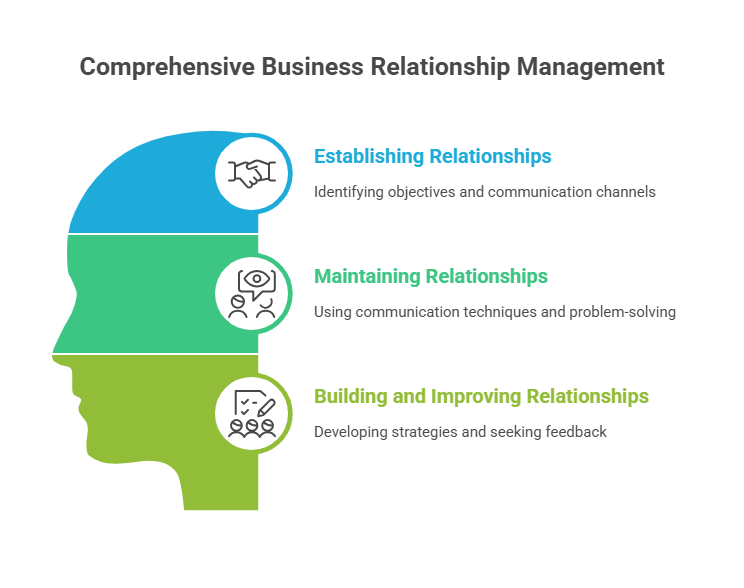
Organisational procedures for business relationships align with public sector goals by fostering collaborative environments that uphold transparency and accountability. They integrate effectively with governance frameworks and policy implementation, ensuring holistic and inclusive public administration.
Where can the student go to find out more information about organisational procedures in business relationships?
What job roles would be knowledgeable about organisational procedures in business relationships?
Roles include:
- Relationship Managers
- Project Managers
- Community Engagement Officers
- Public Affairs Officers
- Policy Advisors
What are organisational procedures in business relationships like in relation to sports, family, or schools?

In relation to sports, organisational procedures for business relationships resemble a strategic playbook, where everyone understands their roles and the importance of teamwork towards a common goal. In a family context, they reflect an organised household with schedules and plans that keep everything running smoothly. For schools, they are similar to a curriculum that guides educational objectives while fostering relationships between educators, students, and parents.
(The first edition of this post was generated by AI to provide affordable education and insights to a learner-hungry world. The author will edit, endorse, and update it with additional rich learning content.)
(Skillmaker – 2025)- About the Author
- More info

Workskill training for all

 Post Tagged with