
Organisational Policies: Key to Building and Maintaining Business Relationships
Posted by SkillMaker in Oct, 2025
What is a concise description of organisational policies in building and maintaining business relationships?

Organisational policies in building and maintaining business relationships refer to the set of guidelines and principles that govern interactions with stakeholders, including clients, partners, and employees. These policies are designed to promote trust, cooperation, and mutual respect, ensuring that business relationships are effective and sustainable over time.
Listen to this article as a podcast
Why do people in the Public sector industry need organisational policies to build and maintain business relationships?
In the Public sector industry, organisational policies are crucial for ensuring consistency, transparency, and accountability in interactions with stakeholders. These policies help public sector agencies to manage relationships efficiently, adhere to regulatory requirements, and fulfill their mandate to serve the public interest. By providing a clear framework, these policies enable organisations to build trust and credibility with other sectors and the community at large.
“Organisational policies are essential in fostering transparent, consistent, and accountable relationships, paving the way for sustainable interactions within the Public sector and beyond.”
What are the key components or elements of organisational policies in building and maintaining business relationships?
Key components of organisational policies in this context include:
- Code of Conduct: Outlines expectations for behaviours and interactions.
- Communication Protocols: Guidelines for effective, transparent communication.
- Conflict Resolution: Procedures to address and resolve disputes.
- Confidentiality Policies: Protects sensitive information shared between parties.
- Partnership Agreements: Frameworks for collaboration with other entities.
What key terms, with descriptions, relate to organisational policies in building and maintaining business relationships?

Registered Trademark“®”
- Stakeholder Engagement: The process of involving individuals, groups, or organisations who may be affected by decisions.
- Ethical Standards: Norms governing professional conduct in business.”””
- Transparency: The openness and clarity with which an organisation operates, sharing relevant information with stakeholders.
- Compliance: Adherence to legal and regulatory requirements.
- Collaboration: Working jointly with others to achieve shared goals.
Who is typically engaged with operating or implementing organisational policies in building and maintaining business relationships?
In public sector organisations, roles such as relationship managers, communication officers, compliance managers, and project managers are typically engaged in implementing organisational policies for business relationships. These professionals ensure that interactions adhere to the established guidelines while fostering positive and productive relationships.
How do organisational policies integrate with other components of the Public sector industry in Australia?
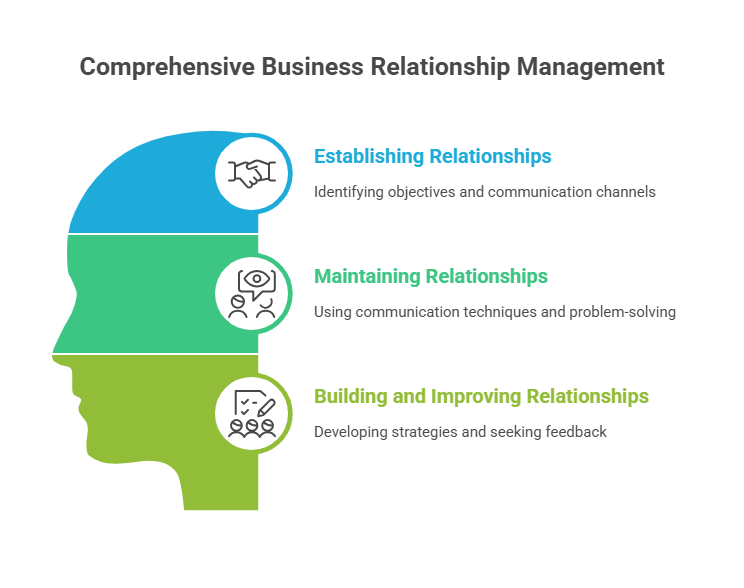
Organisational policies in the Public sector are integrated with broader governance frameworks, ensuring consistent application of regulations and standards across the sector. These policies complement other elements such as risk management, strategic planning, and compliance initiatives to form a cohesive approach to public administration and service delivery.
Where can the student go to find out more information about organisational policies in building and maintaining business relationships?
What job roles would be knowledgeable about organisational policies in building and maintaining business relationships?
Roles include:
- Policy Advisors
- Relationship Managers
- Compliance Managers
- Communication Officers
- Public Relations Specialists
What are organisational policies in building and maintaining business relationships like in relation to sports, family, or schools?

Just as a well-coached sports team follows strategic plans to achieve success, organisations rely on policies to guide their interactions. In a family, akin to set rules and routines that ensure harmony, organisational policies provide structure. In schools, they’re comparable to codes of conduct that promote inclusive and respectful environments.
(The first edition of this post was generated by AI to provide affordable education and insights to a learner-hungry world. The author will edit, endorse, and update it with additional rich learning content.)
(Skillmaker – 2025)- About the Author
- More info

Workskill training for all

 Post Tagged with