
Hierarchy of Control Measures in Assisting with Maintaining Workplace Safety
Posted by SkillMaker in Dec, 2024
What is a concise description of hierarchy of control measures when assisting with maintaining workplace safety?

The hierarchy of control measures is a systematic approach used in workplace safety to minimize or eliminate risks to workers’ health and safety. It prioritizes control methods from the most effective measures to the least, guiding employers in implementing solutions to create a safer work environment.
Why do people in enterprises need the hierarchy of control measures?
Enterprises need the hierarchy of control measures to systematically address workplace hazards, ensuring the safety and wellbeing of employees. Implementing these measures can help reduce workplace accidents and incidents, improve regulatory compliance, and demonstrate a commitment to safety, ultimately leading to increased productivity and employee morale.
“The hierarchy of control measures ensures effective hazard management, promoting a culture of safety and responsibility in the workplace.”
What are the key components or elements of the hierarchy of control measures?
Key components of the hierarchy of control measures include:
- Elimination: Physically removing the hazard from the workplace.
- Substitution: Replacing the hazard with a less hazardous option.
- Engineering Controls: Isolating people from the hazard through engineered solutions.
- Administrative Controls: Implementing processes and procedures to reduce exposure to hazards.
- PPE (Personal Protective Equipment): Providing protective gear to safeguard individuals against hazards.
What key terms, with descriptions, relate to the hierarchy of control measures?

Registered Trademark®
- Risk Assessment: The process of identifying hazards, analyzing or evaluating the risk associated with that hazard.
- Hazard Control: Regulatory and procedural mechanisms to manage potential direct threats.
- Safety Protocols: Collection of rules and procedures to ensure safety in different contexts.
- Occupational Safety and Health (OSH): A multidisciplinary field concerned with the safety, health, and welfare of people at work.
- Compliance: Ensuring that the workplace meets the legal requirements for health and safety.
Who is typically engaged with operating or implementing the hierarchy of control measures?
Typically, Health and Safety Officers, Managers, Supervisors, Safety Committees, and Workers themselves are involved in implementing the hierarchy of control measures. These individuals and groups collaborate to identify hazards and apply the most effective controls to mitigate risks in the workplace.
How does the hierarchy of control measures align or integrate with other components of Workplace Safety?
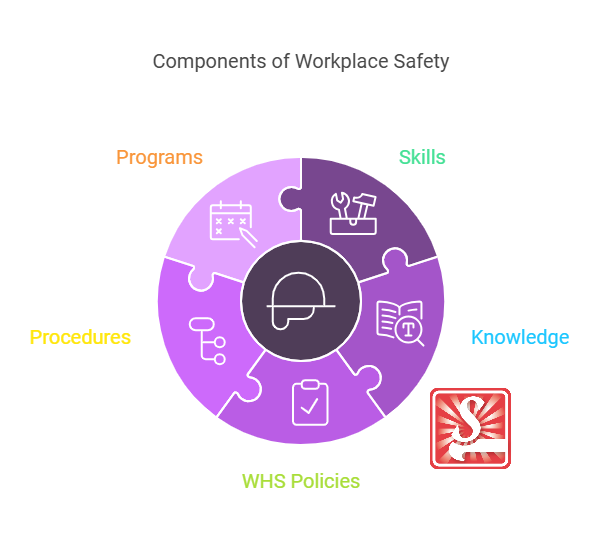
The hierarchy of control measures integrates with broader workplace safety processes by forming the backbone of risk management strategies. It complements policies like risk assessments, safety audits, training programs, and emergency response plans by providing a clear roadmap for reducing hazards effectively.
Where can the student go to find out more information about the hierarchy of control measures?
What job roles would be knowledgeable about the hierarchy of control measures?
Roles include:
- Health and Safety Officers
- Risk Managers
- Safety Consultants
- Site Managers
- Operations Managers
What is the hierarchy of control measures like in relation to sports, family, or schools?

In sports, the hierarchy of control measures can be compared to a coach’s strategy to mitigate risks of injury by systematically addressing vulnerabilities, from changing techniques to providing protective gear. In a family setting, it resembles organizing household routines to ensure each family member’s safety. Within schools, it mirrors the implementation of safety guidelines to maintain a secure learning environment, where potential hazards are minimized through structured rules and equipment.
(The first edition of this post was generated by AI to provide affordable education and insights to a learner-hungry world. The author will edit, endorse, and update it with additional rich learning content.)
- About the Author
- More info

Workskill training for all

 Post Tagged with