
Health Professionals in Providing Individualised Support
Posted by SkillMaker in Jan, 2025
What is a concise description of providing individualised support in Health or Community Services?

Providing individualised support involves tailoring care and assistance to meet the unique needs and preferences of each client in Health or Community Services. This approach respects personal choice, fosters autonomy, and ensures that the support aligns with the individual’s goals and circumstances.
Why do people in enterprises need to provide individualised support in Health or Community Services?
In enterprises, providing individualised support is crucial for delivering high-quality care and building trust between clients and service providers. It enhances client satisfaction, promotes better health outcomes, and ensures compliance with ethical standards and legislation. By focusing on individual needs, enterprises can reduce unnecessary interventions and improve resource allocation.
“Providing individualised support in Health or Community Services is about honouring each person’s unique story and journey, crafting care that speaks directly to their needs.”
What are the key components or elements of providing individualised support?
Key components of providing individualised support include:
- Assessment: Understanding the specific needs, preferences, and goals of the individual.
- Planning: Developing a tailored support plan that addresses identified needs.
- Implementation: Delivering support as per the tailored plan while adapting to changing circumstances.
- Monitoring and Review: Regularly checking progress and making necessary adjustments to the support plan.
- Communication: Maintaining open and effective communication with the individual and their support network.
What key terms, with descriptions, relate to providing individualised support?

Registered Trademark®
- Person-Centred Care: Focusing support on the individual’s personal preferences, needs, and values.
- Holistic Approach: Considering all aspects of an individual’s life, including physical, emotional, social, and spiritual needs.
- Empowerment: Enabling individuals to take control of their own care and make informed decisions.
- Advocacy: Supporting individuals in expressing their needs and rights.
- Collaboration: Working with the individual, their families, and other professionals to provide well-rounded support.
Who is typically engaged with operating or implementing individualised support?
Roles typically engaged in providing individualised support include nurses, social workers, support workers, case managers, and allied health professionals. These professionals work collaboratively with individuals to develop and deliver personalised support plans and ensure that care remains focused on the unique requirements of each client.
How does providing individualised support align or integrate with other components of Health or Community Services in Australia?
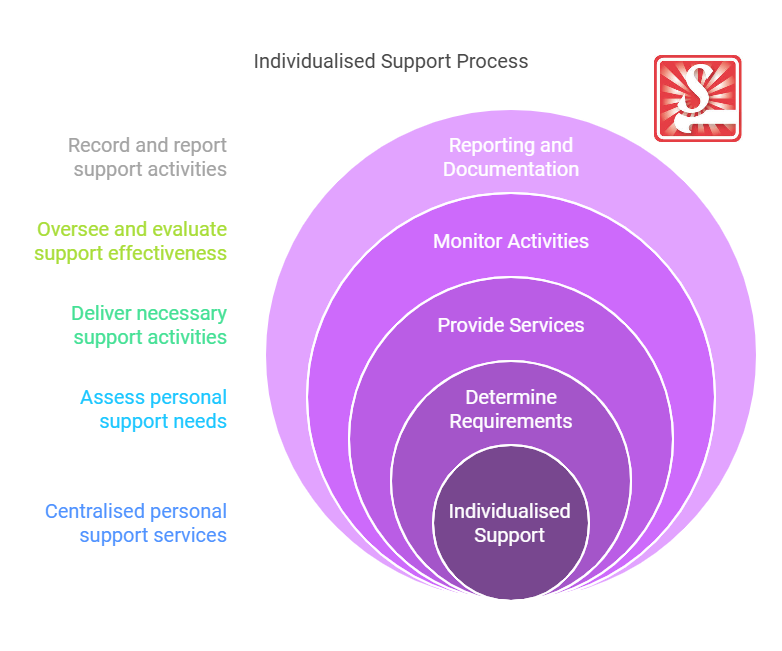
Providing individualised support integrates with broader health and community service operations by ensuring seamless transitions between care settings, supporting continuity of care, and boosting overall service quality. It aligns with policies that emphasise client-centredness and respect for diversity, thus enhancing collaborations between multiple stakeholders and care providers within the sector.
Where can the student go to find out more information about providing individualised support?
- Aged Care Quality and Safety Commission
- National Disability Insurance Scheme (NDIS)
- Australian Government Department of Health
- Skillmaker
What job roles would be knowledgeable about providing individualised support?
Roles include:
- Support Workers
- Social Workers
- Nurses
- Case Managers
- Allied Health Professionals
What is providing individualised support like in relation to sports, family, or schools?

In sports, providing individualised support mimics tailoring training to meet each athlete’s strengths and weaknesses, aiding in personal and team success. In a family context, it’s akin to understanding each member’s individual needs and preferences to create harmony. For schools, it resembles adapting teaching methods to cater to different learning styles, ensuring all students achieve their potential.
(The first edition of this post was generated by AI to provide affordable education and insights to a learner-hungry world. The author will edit, endorse, and update it with additional rich learning content.)
- About the Author
- More info

Workskill training for all

 Post Tagged with