
Existing Risk Control Measures: Assisting with Maintaining Workplace Safety
Posted by SkillMaker in Dec, 2024
What is a concise description of existing risk control measures in workplace safety?
Existing risk control measures in workplace safety encompass a range of strategies and practices that aim to eliminate or minimize exposure to hazards within the workplace. These include processes designed to identify potential risks, assess their impact, and implement appropriate controls to prevent accidents or injuries.
Why do people in enterprises need existing risk control measures?
Enterprises need existing risk control measures to protect workers from harm, ensure compliance with legal and regulatory requirements, and maintain a safe and productive working environment. Effective risk controls reduce the likelihood of workplace incidents, which can diminish productivity and morale, increase costs, and damage the organization’s reputation.
“Implementing effective risk control measures is crucial for ensuring a safe workplace and preserving the well-being of the workforce while fulfilling regulatory obligations.”
What are the key components or elements of existing risk control measures?
Key components of existing risk control measures include:
- Hazard Identification: Systematic recognition of potential workplace hazards.
- Risk Assessment: Evaluating the likelihood and consequences of hazards.
- Control Implementation: Applying measures to eliminate or reduce risks.
- Monitoring and Review: Regular evaluation of control measures’ effectiveness.
- Employee Training: Providing information and training on risk management.
What key terms, with descriptions, relate to risk control measures?

Registered Trademark®
- Hierarchy of Controls: A framework to prioritize control options based on effectiveness.
- Elimination: Removing a hazard entirely from the workplace.
- Substitution: Replacing a hazardous element with a safer alternative.
- Engineering Controls: Modifying equipment to minimize risk.
- Administrative Controls: Policies and procedures to prevent hazardous exposure.
Who is typically engaged with operating or implementing risk control measures?
Safety officers, operations managers, supervisors, and health and safety committees are typically involved in operating or implementing risk control measures. These roles ensure the effective identification, assessment, and control of workplace risks to maintain safety standards.
How do existing risk control measures align or integrate with other components of Workplace Safety?
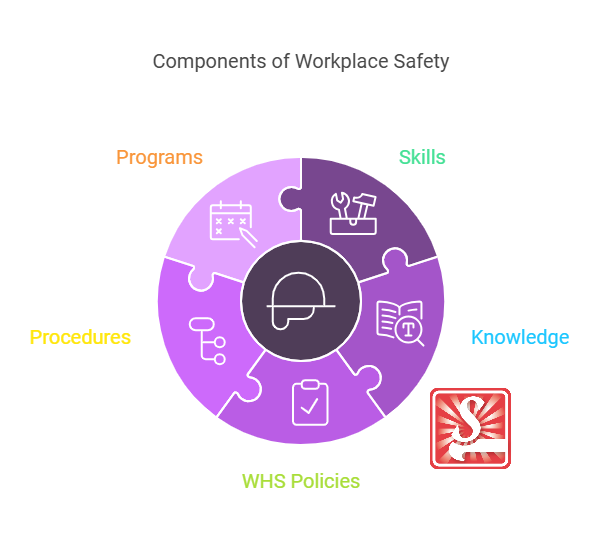
Risk control measures integrate with workplace safety by supporting the overall safety framework. They connect with safety policies, emergency response protocols, incident reporting systems, and compliance strategies. These measures ensure seamless safety operations across different organizational layers and processes.
Where can the student go to find out more information about existing risk control measures?
What job roles would be knowledgeable about existing risk control measures?
Roles include:
- Workplace Health and Safety Officers
- Safety Inspectors
- Risk Assessors
- Operations Managers
- Site Supervisors
What are existing risk control measures like in relation to sports, family, or schools?

Relating risk control measures to sports, they resemble strategies and rules that keep players safe on the field through regulated play and protective gear. In families, they mimic setting household safety rules to prevent accidents and maintain well-being. In schools, they reflect policies to enhance student safety via secure infrastructure and safety drills.
(The first edition of this post was generated by AI to provide affordable education and insights to a learner-hungry world. The author will edit, endorse, and update it with additional rich learning content.)
- About the Author
- More info

Workskill training for all

 Post Tagged with