
Emergency Instructions: Responding to Emergency Situations in Sport and Recreation
Posted by SkillMaker in Dec, 2024
What is a concise description of emergency instructions when responding to emergency situations?

Emergency instructions for responding to emergency situations in the sport and recreation context involve a set of predetermined steps and protocols designed to ensure the safety and well-being of all participants and staff. It’s about quick, effective response to incidents, minimising harm, maintaining order, and ensuring that help is provided in a timely manner until professional services arrive.
Why do people in enterprises need emergency instructions for responding to emergency situations?
Individuals in sport and recreation enterprises need these instructions to effectively manage crises, reduce panic, and facilitate efficient communication during emergencies. Following a standardized protocol ensures all staff and participants are informed and secure, reducing the risk of injury and ensuring compliance with legal and safety standards, thereby safeguarding the reputation and operational continuity of the enterprise.
“Well-crafted emergency instructions lead to swift, coordinated actions that save lives and reassure everyone present.”
What are the key components or elements of emergency instructions for responding to emergency situations?
Key components of emergency instructions include:
- Assessment: Quickly evaluating the situation to determine the severity and necessary response.
- Communication Protocols: Establishing clear lines of communication among staff and emergency services.
- Evacuation Procedures: Safe and orderly evacuation routes and assembly points.
- First Aid: Availability of trained personnel and access to first aid kits.
- Post-Incident Review: Evaluation of the response to improve future procedures.
What key terms, with descriptions, relate to emergency instructions in this context?

Registered Trademark®
- Emergency Action Plan (EAP): A formal plan that outlines how emergencies will be managed safely and effectively.
- Chain of Command: A hierarchy that defines who is responsible for making decisions during an emergency.
- Risk Assessment: The process of identifying potential hazards and evaluating their likelihood and impact.
- Incident Command System (ICS): A standardized approach to the command, control, and coordination of emergency response.
- All-Hazards Approach: Planning for a wide range of potential emergencies and disasters.
Who is typically engaged with operating or implementing emergency instructions?
Emergency instructions are typically implemented by facility managers, safety officers, coaches, lifeguards, and senior staff members. These individuals are trained to take charge during emergencies, ensuring protocols are followed effectively to mitigate risks and address any incidents swiftly.
How do emergency instructions align or integrate with other components of Sport and Recreation?
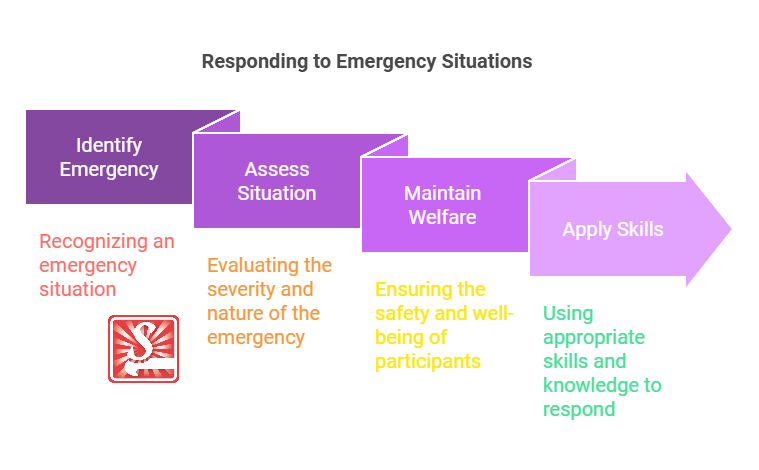
Emergency instructions in sport and recreation align with safety training, risk management plans, and participant education. They integrate by ensuring preparedness is part of daily operations, using drills and feedback to refine procedures and protect participants, staff, and facilities from unexpected incidents.
Where can the student go to find out more information about emergency instructions?
- Sport Australia for safety resources and guidelines
- Sports Medicine Australia for injury prevention and emergency response
- Australian Red Cross for first aid training and emergency preparedness
What job roles would be knowledgeable about emergency instructions?
Roles include:
- Facility Managers
- Safety Officers
- Recreation Coordinators
- Trainers and Coaches
- Lifeguards
What is the topic like in relation to sports, family, or schools?

In sports, having emergency instructions is like a playbook that keeps all players safe in unforeseen circumstances.
In a family context, it resembles household emergency plans that prepare members for any sudden crises.
In schools, it parallels emergency drills and protocols that ensure students and staff are ready for a range of situations, maintaining a secure and structured environment.
(The first edition of this post was generated by AI to provide affordable education and insights to a learner-hungry world. The author will edit, endorse, and update it with additional rich learning content.)
- About the Author
- More info

Workskill training for all

 Post Tagged with