
Emergency Exits and Their Importance in Responding to Emergency Situations
Posted by SkillMaker in Dec, 2024
What is a concise description of emergency exits in responding to emergency situations?
Emergency exits are crucial components of a comprehensive plan for managing emergencies, facilitating quick and efficient evacuation to ensure the safety of all occupants during crises such as fires, natural disasters, or other emergencies. These exits are specifically designed pathways leading to safety, marked to be easily identifiable during a panic situation.
Why do people in enterprises need emergency exits in responding to emergency situations?
Enterprises need to ensure that emergency exits are readily accessible and functional to safeguard the well-being of their employees, visitors, and customers. Ensuring clear, unobstructed access to emergency exits prevents injury and saves lives by facilitating timely evacuation. Well-planned exits also ensure enterprises comply with legal and safety regulations, thereby avoiding potential liabilities or fines.
“In times of crisis, a clear path to safety is a beacon of hope. Emergency exits save lives by guiding us through chaos to safety.”
What are the key components or elements of emergency exits in responding to emergency situations?
Key components of emergency exits include:
- Clearly Marked Signs: Easily visible and legible signs indicating exit points.
- Accessibility: Unobstructed pathways that can accommodate all individuals, including those with disabilities.
- Emergency Lighting: Illuminated paths to aid visibility in low-light conditions.
- Regular Maintenance and Inspection: Ensuring exit doors, pathways, and signage are in optimal condition.
- Communication Systems: Information dissemination tools to guide and direct individuals during evacuations.
What key terms, with descriptions, relate to emergency exits in responding to emergency situations?

Registered Trademark®
- Evacuation Plan: A comprehensive outline detailing the steps and processes for safely exiting a facility during emergencies.
- Panic Hardware: Devices installed on doors to allow quick and easy egress during an emergency.
- Aisle Width: The required width of pathways leading to exits to allow efficient flow of evacuees.
- Assembly Point: A designated safe area where evacuees gather post-evacuation for headcounts and instructions.
- Fire-rated Doors: Special doors designed to remain intact under heat for a specified time to contain fires.
Who is typically engaged with operating or implementing emergency exits in responding to emergency situations?
Facility managers, safety officers, architects, and building engineers are primarily involved in the planning, installation, and maintenance of emergency exits. Additionally, staff members are trained to guide evacuees and perform drills to ensure everyone understands the evacuation process.
How do emergency exits align or integrate with other components of Sport and Recreation?
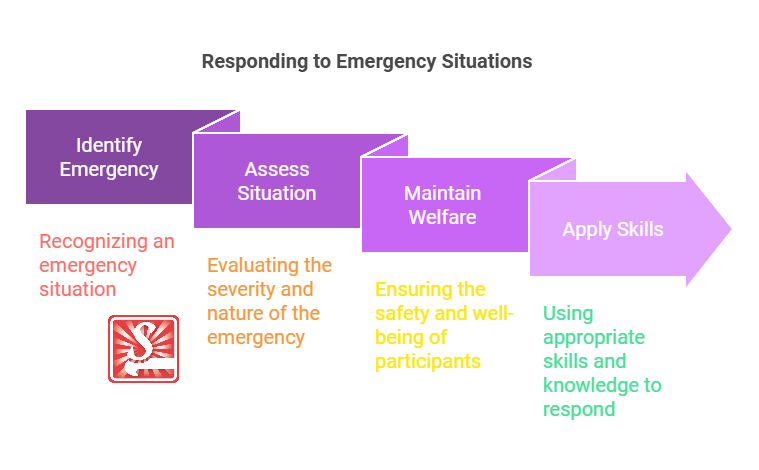
Emergency exits are integral to sport and recreation facilities where large groups gather, such as stadiums or community centres. They are designed to ensure spectator and participant safety during large events. Integration with fire safety systems, crowd management strategies, and emergency response plans heightens their effectiveness, assuring an all-encompassing safety framework.
Where can the student go to find out more information about emergency exits in responding to emergency situations?
- Safe Work Australia for workplace safety guidelines
- Fire Protection Association Australia for fire safety and exit guidelines
- WorkSafe Victoria for building safety standards
What job roles would be knowledgeable about emergency exits in responding to emergency situations?
Roles include:
- Safety Officers
- Facility Managers
- Building Inspectors
- Architects and Engineers
- Event Coordinators
What are emergency exits like in relation to sports, family, or schools?

In sports venues, emergency exits are crucial for ensuring swift evacuations during large events, akin to precise strategies athletes employ to succeed. In a family home, they bring peace of mind, like knowing everyone has a plan in case of emergencies. In schools, they ensure the safe and orderly exit of students, paralleling teachings that guide students toward knowledge and safety.
(The first edition of this post was generated by AI to provide affordable education and insights to a learner-hungry world. The author will edit, endorse, and update it with additional rich learning content.)
- About the Author
- More info

Workskill training for all

 Post Tagged with