
Emergency Equipment in Responding to Emergency Situations
Posted by SkillMaker in Dec, 2024
What is a concise description of emergency equipment when responding to emergency situations?
Emergency equipment in responding to emergency situations refers to the tools and resources essential for effective management of unforeseen events within a sports and recreation setting. This includes first aid kits, fire extinguishers, defibrillators, communication devices, and emergency signalling equipment, all aimed at ensuring the safety and well-being of individuals.
Why do people in enterprises need emergency equipment when responding to emergency situations?
People in enterprises require emergency equipment to quickly and efficiently handle potential hazards, injuries, or life-threatening situations. Having appropriate resources at hand reduces response time, enhances safety protocols, and can potentially save lives. Businesses uphold their duty of care by ensuring they are equipped to tackle emergencies effectively, thereby fostering a safe environment and building trust.
“In emergency situations, having the appropriate equipment can be the difference between a manageable situation and a catastrophe.”
What are the key components or elements of emergency equipment when responding to emergency situations?
Key components of emergency equipment include:
- First Aid Kit: Contains bandages, antiseptics, and medical supplies for treating injuries.
- Defibrillator (AED): A device used to restore a normal heartbeat by sending an electric pulse or shock to the heart.
- Fire Extinguisher: Used to put out or control small fires in emergency situations.
- Communication Devices: Radios or mobile phones to ensure communication with emergency services.
- Emergency Signalling Equipment: Whistles, flashlights, or flares used to signal for help.
- Personal Protective Equipment (PPE): Includes items like gloves, masks, and eye protection to ensure responder safety.
What key terms, with descriptions, relate to emergency equipment when responding to emergency situations?

Registered Trademark®
- First Responder: An individual who is trained to provide initial care during emergency situations until professional medical help arrives.
- Risk Assessment: The process of identifying potential hazards and risks in the workplace to prepare for emergency situations.
- Emergency Protocols: Pre-established guidelines for responding to different types of emergencies.
- Sustainability of Response: Ensuring that emergency equipment and procedures are readily available and can be sustained until external help arrives.
- Incident Management: Coordination and management of resources and responsibilities to respond to an emergency promptly and effectively.
Who is typically engaged with operating or implementing emergency equipment in sport and recreation environments?
Personnel including sports coaches, recreation officers, safety officers, facility managers, and designated first responders are typically responsible for operating or implementing emergency equipment in sports and recreation environments. Their roles ensure safety measures are executed efficiently and promptly during emergencies.
How does the use of emergency equipment integrate with other components of Sport and Recreation?
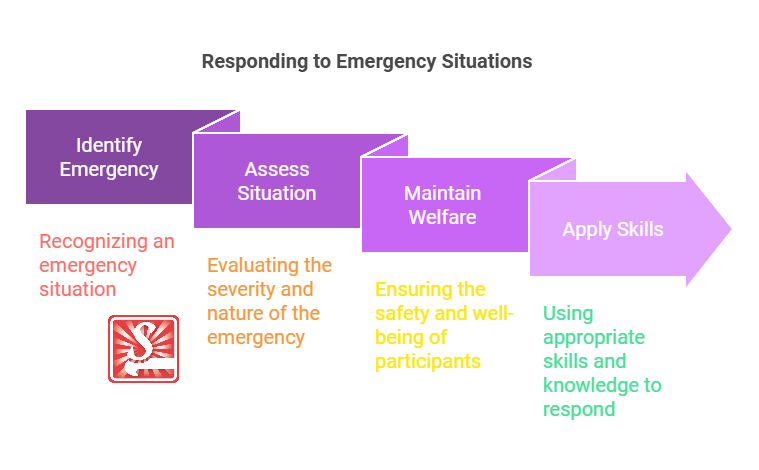
The use of emergency equipment aligns with risk management practices, safety audits, and preparedness training in sports and recreation environments. It ensures a holistic safety approach, integrates with emergency action plans, and works in conjunction with safety protocols and incident reporting systems to ensure comprehensive emergency management.
Where can the student go to find more information about emergency equipment in responding to emergency situations?
What job roles would be knowledgeable about emergency equipment in responding to emergency situations?
Roles include:
- Safety Officers
- Facility Managers
- First Responders
- Sports Coaches
- Recreation Officers
What is the emergency equipment in responding to emergency situations like in relation to sports, family, or schools?

In the context of sports, emergency equipment is like a coach on the sidelines, ready to jump into action at any sign of distress to ensure player safety. For families, it mirrors having a well-stocked medicine cabinet at home, ready to address minor accidents or health concerns promptly. In schools, it represents school-wide emergency drills that prepare students and staff to effectively handle various situations enhancing their safety and security.
(The first edition of this post was generated by AI to provide affordable education and insights to a learner-hungry world. The author will edit, endorse, and update it with additional rich learning content.)
- About the Author
- More info

Workskill training for all

 Post Tagged with