
Effective Utilisation of Delivery Documentation in Stock Management
Posted by SkillMaker in Jan, 2025
What is a concise description of delivery documentation in receiving, storing, and maintaining stock?
Delivery documentation involves the paperwork and digital records that accompany stock when it’s delivered to a business. This documentation includes invoices, packing slips, and delivery notices that detail the quantity, description, and value of goods delivered. Accurate delivery documentation is crucial for verifying orders and maintaining inventory records.
Why do people in enterprises need effective delivery documentation when receiving, storing, and maintaining stock?
Enterprises rely on delivery documentation to confirm that the stock received matches the purchase order and meets quality standards. This documentation plays a vital role in streamlining the receiving process, preventing discrepancies, and ensuring efficient inventory management. It supports financial accountability and compliance with regulatory requirements.
“Effective delivery documentation is the cornerstone of efficient stock management, ensuring accuracy, compliance, and seamless operational flow in hospitality and catering enterprises.”
What are the key components or elements of delivery documentation in stock management?
Key components of delivery documentation include:
- Invoice: A document showing the quantity, description, pricing, and total cost of the goods delivered.
- Packing Slip: Details the items included in the shipment without pricing information.
- Delivery Note: Confirms the delivery of products as specified and serves as proof of delivery.
- Purchase Order: A reference document that details the original order placed with the supplier.
- Receipt Acknowledgement: A signed confirmation that the goods have been received intact.
What key terms, with descriptions, relate to delivery documentation in stock management?

Registered Trademark®
- Bill of Lading: A legal document issued by a carrier that details the types, quantities, and destination of the goods being carried.
- Stock Reconciliation: The process of ensuring that records of stock levels match the actual inventory on hand.
- Backorder: An order that cannot be filled until out-of-stock stock is available again.
- Inventory Turnover: A metric that shows how efficiently a company turns its inventory into sales.
- Supply Chain Management: The active management of supply chain activities to maximise customer value and achieve a sustainable competitive advantage.
Who is typically engaged with operating or implementing delivery documentation processes in stock management?
Stock controllers, procurement officers, warehouse managers, and logistics coordinators typically engage in managing delivery documentation. Their collective efforts ensure that stock is received, stored, and maintained efficiently and accurately, contributing to seamless operations in hospitality and catering enterprises.
How does delivery documentation align or integrate with other components of Hospitality and Catering?
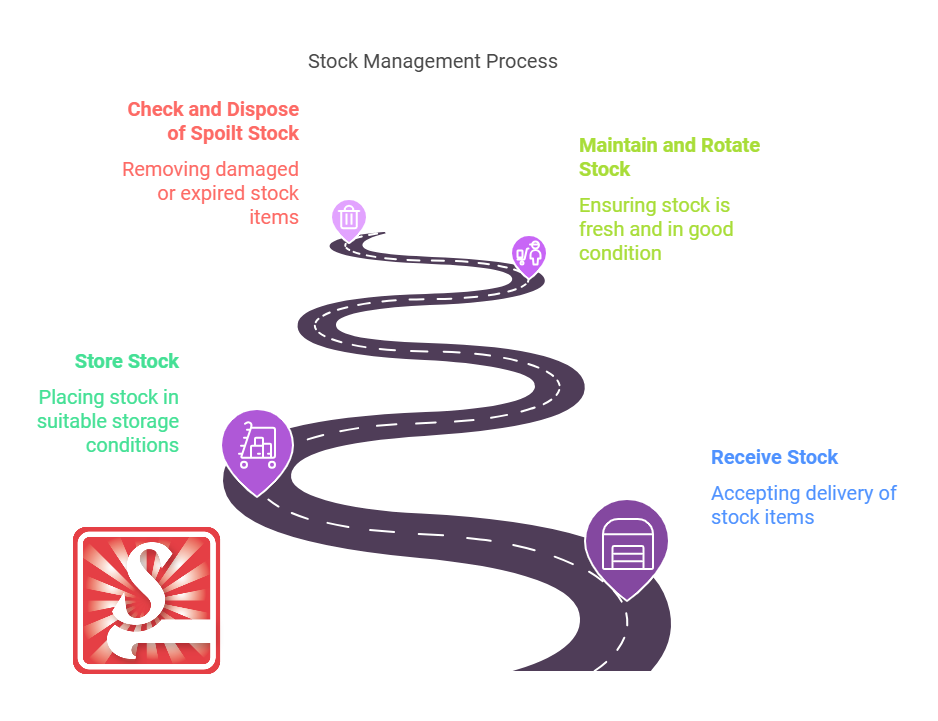
Delivery documentation aligns with inventory management and financial accounting as it provides records essential for tracking stock levels and financial transactions. It also integrates with supply chain management by contributing to efficient procurement and restocking strategies, ensuring that hospitality businesses maintain optimal stock levels to meet customer demand.
Where can the student go to find out more information about delivery documentation in stock management?
- NSW Food Authority’s guides on food handling and storage
- Australian Hospitality Association for industry standards
- National Center for Biotechnology Information for related research
What job roles would be knowledgeable about delivery documentation in stock management?
Roles include:
- Stock Controllers
- Procurement Officers
- Warehouse Managers
- Logistics Coordinators
- Inventory Managers
What is delivery documentation like in relation to sports, family, or schools?

In relation to sports, delivery documentation is akin to a team’s playbook, guiding actions and confirming the successful execution of strategies. In a family context, it resembles a shopping list that ensures the purchase matches the family’s needs. For schools, it acts like a syllabus, ensuring that the planned educational resources meet the school’s curriculum requirements.
(The first edition of this post was generated by AI to provide affordable education and insights to a learner-hungry world. The author will edit, endorse, and update it with additional rich learning content.)
- About the Author
- More info

Workskill training for all

 Post Tagged with