
Effective Organisational Strategies for Cleaning Kitchen Premises and Equipment
Posted by SkillMaker in Jan, 2025
What is a concise description of organisational information related to cleaning kitchen premises and equipment?

Understanding organisational information in the context of cleaning kitchen premises and equipment involves identifying the protocols, standards, and responsibilities within a hospitality or catering establishment—essential for maintaining hygiene, safety, and efficiency. This includes scheduled cleaning routines, proper equipment use, and adherence to safety guidelines to ensure a clean and safe kitchen environment.
Why do people in enterprises need organisational information when cleaning kitchen premises and equipment?
Enterprises in the hospitality and catering industry rely on organisational information to systematically manage cleaning processes and ensure compliance with health regulations. A structured cleaning approach minimises cross-contamination risks, enhances food safety, and promotes a positive dining experience for customers, thereby upholding the establishment’s reputation and operational standards.
“Utilising comprehensive organisational information for kitchen cleaning is crucial for promoting a safe, compliant, and efficient culinary environment.”
What are the key components or elements of organisational information when cleaning kitchen premises and equipment?
Key components of organisational information for cleaning kitchens include:
- Cleaning Schedules: Pre-defined timelines for regular and deep cleaning tasks.
- Standard Operating Procedures (SOPs): Detailed instructions for cleaning different equipment and areas.
- Safety Guidelines: Protocols to ensure the safe use of cleaning chemicals and equipment.
- Staff Responsibilities: Clear roles for each team member involved in cleaning tasks.
- Inspection Checklists: Tools to verify completed cleaning tasks and ensure compliance.
What key terms, with descriptions, relate to organisational information when cleaning kitchen premises and equipment?

Registered Trademark®
- Sanitisation: Reducing bacteria to a safe level by using heat or chemicals.
- Disinfection: The process of eliminating or reducing harmful microorganisms from surfaces.
- Cross-Contamination: Transfer of harmful bacteria from one substance or object to another.
- Personal Protective Equipment (PPE): Clothing and gear such as gloves and masks used to reduce exposure to hazards.
- Food Safety Standards: Regulations and practices aimed at preventing foodborne illnesses.
Who is typically engaged with operating or implementing organisational cleaning information in kitchens?
Staff roles such as kitchen hands, chefs, kitchen supervisors, and cleaning staff are typically involved in the implementation of organisational cleaning information. These roles collectively ensure that hygienic standards are maintained at all times, preventing safety hazards and ensuring compliance with health regulations.
How does organisational information in kitchen cleaning align or integrate with other components of Hospitality and Catering?
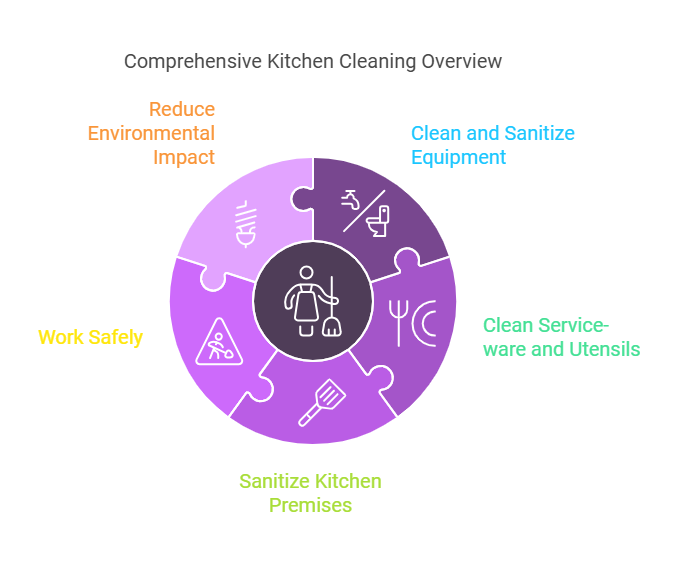
Organisational cleaning information integrates with other hospitality components by forming the foundational hygiene protocols upon which all food preparation and service operations are based. Clean environments enhance operational efficiency, meet regulatory compliance, and ensure a positive customer experience, thus supporting the broader service and operational goals.
Where can the student go to find out more information about organisational cleaning information in kitchens?
What job roles would be knowledgeable about organisational information when cleaning kitchen premises and equipment?
Roles include:
- Kitchen Hands
- Head Chefs
- Kitchen Supervisors
- Cleaning Staff
- Food Safety Officers
What is organisational cleaning information like in relation to sports, family, or schools?

In the realm of sports, organisational cleaning information is akin to maintaining equipment and facilities to ensure athlete safety and performance. In a family setting, it involves routines and responsibilities to keep the home clean and orderly. Regarding schools, it parallels ensuring that educational facilities are safe and hygienic, supporting a conducive learning environment.
(The first edition of this post was generated by AI to provide affordable education and insights to a learner-hungry world. The author will edit, endorse, and update it with additional rich learning content.)
- About the Author
- More info

Workskill training for all

 Post Tagged with