
Contract Terms When Conducting and Completing a Sale by Auction
Posted by SkillMaker in Feb, 2026
What is a concise description of contract terms when conducting and completing a sale by auction?

Contract terms when conducting and completing a sale by auction define the legal obligations and rights of the buyer and seller, ensuring a transparent process. These terms establish the conditions of sale, bidder requirements, deposit regulations, and post-auction procedures, providing a structured framework for transactions.
Why do people in the Real Estate industry need contract terms when conducting and completing a sale by auction?
People in the real estate industry need contract terms to ensure clarity and transparency for both buyers and sellers. Well-defined contract terms protect parties from legal disputes by specifying roles, responsibilities, and expectations during the auction process. They enhance trust among participants and support compliance with regulatory standards.
“Contract terms in auction sales create a clear pathway for transactions, minimising disputes and ensuring a fair, structured process for all parties involved.”
What are the key components or elements of contract terms when conducting and completing a sale by auction?
Key components of contract terms in auction sales include:
- Conditions of Sale: Rules governing the sale, such as reserve prices and the highest bid obligations.
- Bidder Registration: Requirements and processes for potential bidders to register and participate.
- Deposit and Payment Terms: Information on deposit amounts, payment timelines, and acceptable methods of payment.
- Legal and Compliance Obligations: Adherence to local laws and regulations regarding auctions and property sales.
- Post-Auction Procedures: Steps following the auction, including contract signing, deposit handling, and transfer of ownership.
What key terms, with descriptions, relate to contract terms when conducting and completing a sale by auction?

Registered Trademark®
- Reserve Price: The minimum price the seller is willing to accept for the property at auction.
- Hammer Price: The final bid amount accepted when the auctioneer’s hammer falls.
- Bidder’s Card or Number: Identification used by participants to place bids at an auction.
- Vendor Bid: A bid made by or on behalf of the seller up to the reserve price to encourage bidding.
- Cooling-off Period: A statutory period following the auction where the buyer can reconsider the purchase, not commonly applicable in auctions.
Who is typically engaged with operating or implementing contract terms when conducting and completing a sale by auction?
Real Estate agents, auctioneers, legal advisors, and the involved buyers and sellers typically engage in operating or implementing contract terms during an auction sale. These professionals ensure the process follows legal guidelines and the contract terms are clearly communicated and understood by all parties.
How does this topic align or integrate with other components of Real Estate industry in Australia?
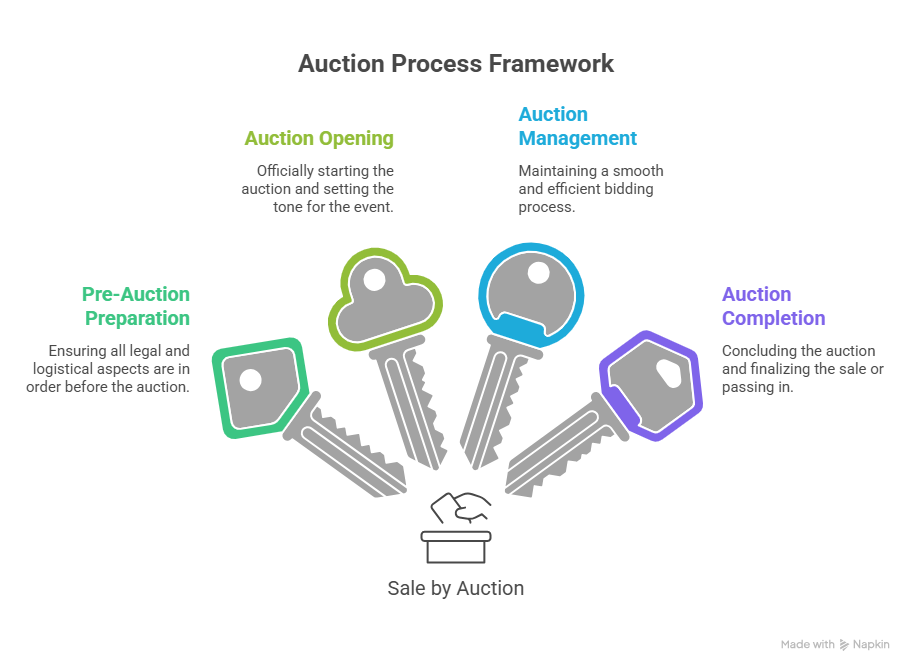
Contract terms for auction sales integrate with the broader Real Estate industry by supporting standardised practices and ensuring legal compliance. They align with property marketing, negotiation strategies, and legal regulations—fundamental components that govern property transactions and underpin real estate professionals’ credibility and effectiveness.
Where can the student go to find out more information about contract terms when conducting and completing a sale by auction?
- General rules for conducting an auction of goods
- The law and authority of auctioning real property
- Skillmaker
What job roles would be knowledgeable about contract terms when conducting and completing a sale by auction?
Roles include:
- Real Estate Agents
- Auctioneers
- Legal Advisors
- Compliance Officers
- Property Managers
What is the topic like in relation to sports, family or schools?

In sports, contract terms are like the rules of the game, ensuring each player knows the boundaries and what’s expected of them. In a family, it’s akin to house rules that guide daily interactions and responsibilities. For schools, it resembles a code of conduct that outlines expected behaviours and consequences, ensuring a harmonious learning environment.
(Skillmaker – 2025)- About the Author
- More info

Workskill training for all
