
Appropriate Techniques When Cleaning Kitchen Premises and Equipment
Posted by SkillMaker in Jan, 2025
What is a concise description of appropriate techniques when cleaning kitchen premises and equipment?
Appropriate techniques when cleaning kitchen premises and equipment involve systematic approaches to ensure all surfaces and tools are sanitary and maintained. It includes selecting the right cleaning agents, using appropriate methods for different types of equipment, and ensuring compliance with health and safety regulations to maintain the kitchen’s hygiene standards.
Why do people in enterprises need appropriate techniques when cleaning kitchen premises and equipment?
Enterprises need these techniques to ensure the health and safety of staff and patrons by preventing food contamination and bacterial growth. Proper cleaning techniques maintain equipment efficiency, extend the lifespan of fixtures and appliances, and ensure compliance with Australian food safety regulations. Maintaining a clean kitchen directly influences the quality and safety of food served and protects the business’s reputation.
“Proper cleaning techniques are vital in ensuring kitchen hygiene, safeguarding health, and enhancing operational efficiency in any hospitality setting.”
What are the key components or elements of appropriate techniques when cleaning kitchen premises and equipment?
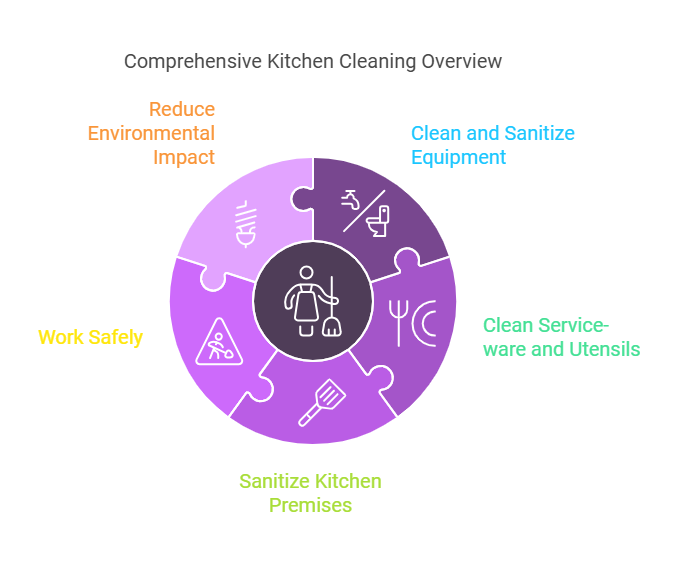
Key components include:
- Selection of Cleaning Agents: Choosing suitable chemicals for different surfaces and bacteria types.
- Proper Disposal Methods: Ensuring waste is disposed of correctly and safely.
- Use of Protective Gear: Wearing gloves, masks, and aprons to protect staff and prevent cross-contamination.
- Scheduled Cleaning: Regular cleaning routines to ensure ongoing maintenance and sanitation.
- Equipment Disassembly: Taking apart appliances for thorough cleaning.
What key terms, with descriptions, relate to appropriate techniques when cleaning kitchen premises and equipment?

Registered Trademark®
- Sanitisation: Reducing microbial presence to safe levels using chemicals or heat.
- Decontamination: Removing unwanted contaminants from surfaces or equipment to maintain hygiene.
- Cross-Contamination Prevention: Techniques to prevent the spread of bacteria from one surface or piece of equipment to another.
- HACCP (Hazard Analysis and Critical Control Points): A systematic preventive approach to food safety.
- Disinfection: The process of eliminating or reducing harmful microorganisms from inanimate objects and surfaces.
Who is typically engaged with operating or implementing appropriate techniques when cleaning kitchen premises and equipment?
Chefs, kitchen hands, cleaning staff, and food safety officers are typically responsible for implementing these cleaning techniques. These roles collaborate to ensure that the kitchen environment remains hygienic and that all equipment is kept in optimal working condition.
How do appropriate techniques when cleaning kitchen premises and equipment align or integrate with other components of Hospitality and Catering?
These techniques are essential within the broader framework of Hospitality and Catering as they directly impact food safety, service quality, and kitchen efficiency. Clean and well-maintained kitchen premises support seamless operations, facilitate compliance with health regulations, and contribute to overall customer satisfaction.
Where can the student go to find out more information about appropriate techniques when cleaning kitchen premises and equipment?
What job roles would be knowledgeable about appropriate techniques when cleaning kitchen premises and equipment?
Roles include:
- Chefs
- Kitchen Hands
- Cleaning Staff
- Food Safety Officers
- Kitchen Managers
What are appropriate cleaning techniques in relation to sports, family, or schools?

In sports, appropriate cleaning techniques are similar to maintaining gym equipment to prevent infection spread among athletes. In a family setting, it can be likened to keeping a clean home kitchen where regular cleaning prevents illness. For schools, it mirrors custodial practices where classrooms and cafeterias are kept hygienic to ensure a safe environment for learning and dining, underscoring the importance of routine and care.
(The first edition of this post was generated by AI to provide affordable education and insights to a learner-hungry world. The author will edit, endorse, and update it with additional rich learning content.)
- About the Author
- More info

Workskill training for all

 Post Tagged with