
Effective Communication in Responding to Emergency Situations in Sport and Recreation
Posted by SkillMaker in Dec, 2024
What is a concise description of effective communication in responding to emergency situations?

Effective communication in responding to emergency situations involves the clear, concise, and timely exchange of information to ensure that everyone involved understands the situation, risks, and required actions. This ensures that emergency responses are coordinated and efficient, minimising confusion and enhancing safety.
Why do people in enterprises need effective communication when responding to emergency situations?
In enterprises, particularly within the sport and recreation sector, effective communication during emergencies is crucial for coordinating response efforts, delegating tasks, and ensuring the safety of participants and staff. It helps to reduce panic and confusion, providing clear instructions that improve response time and effectiveness. This not only protects individuals but can also safeguard the organisation’s reputation.`
“Effective communication is the backbone of successful emergency response, ensuring clarity, reducing chaos, and enhancing safety for all involved.”
What are the key components or elements of effective communication when responding to emergency situations?
Key components include:
- Clarity and Conciseness: Providing clear and straightforward information without unnecessary jargon.
- Timeliness: Rapid dissemination of information to keep all parties informed of the situation as it evolves.
- Active Listening: Ensuring that feedback is sought and considered to adjust responses as needed.
- Coordination: Ensuring all channels and parties are aligned to avoid mixed messages.
- Empathy: Acknowledging the emotional state of others to tailor communication effectively.
What key terms, with descriptions, relate to effective communication in emergency situations?

Registered Trademark®
- Incident Command System (ICS): A standardized approach to command, control, and coordination.
- Emergency Operation Centre (EOC): A central command where decisions are made during an emergency.
- SitRep (Situation Report): A report providing information on the current status of an emergency.
- Interoperability: The ability of different systems and organisations to work together effectively.
- Risk Communication: Communicating about risks to help people make informed decisions.
Who is typically engaged with operating or implementing effective communication during emergencies?
Roles involved typically include emergency managers, communication officers, on-site coordinators, and first responders. These individuals work to ensure that all communication during an emergency is accurate, timely, and reaches the necessary stakeholders.
How does effective communication in emergencies align or integrate with other components of Sport and Recreation?
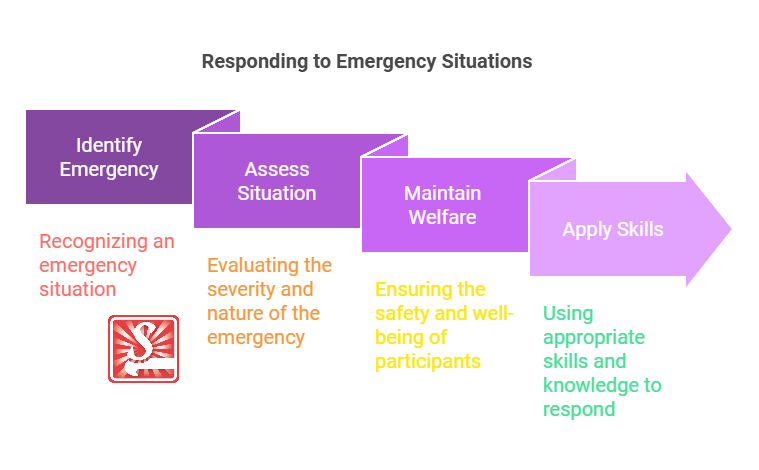
Effective communication is integral to risk management and safety protocols within the sport and recreation industry. It ensures that emergency plans are executed smoothly, allowing participants and staff to feel secure and focused on activities, knowing that there is a reliable method for handling emergencies.
Where can the student go to find out more information on effective communication in emergency situations?
- Emergency Management Training
- Australian Red Cross Emergency Preparedness
- Australian Government, Department of Communications
What job roles would be knowledgeable about effective communication during emergencies?
Roles include:
- Emergency Managers
- Communication Officers
- Safety Coordinators
- Event Coordinators
- First Responders
What is effective communication in responding to emergencies like in relation to sports, family, or schools?

In sports, it resembles a coach communicating strategies during a high-pressure game, ensuring everyone knows their role. In family, it mirrors parents calmly instructing children during a household emergency. In schools, it’s akin to teachers guiding students during a fire drill to ensure orderly and safe evacuation.
(The first edition of this post was generated by AI to provide affordable education and insights to a learner-hungry world. The author will edit, endorse, and update it with additional rich learning content.)
- About the Author
- More info

Workskill training for all

 Post Tagged with