
Ethical Management When Conducting and Completing a Sale by Auction
Posted by SkillMaker in Feb, 2026
What is a concise description of ethical management when conducting and completing a sale by auction?

Ethical management in conducting and completing a sale by auction involves adhering to established moral standards and legal requirements to ensure that the auction process is transparent, fair, and equitable for all parties involved. This includes preventing fraudulent actions, misrepresentation, and ensuring full disclosure and open communication with buyers and sellers.
Listen to this article as a podcast
Why do people in the Real Estate industry need ethical management when conducting and completing a sale by auction?
Professionals in the Real Estate industry need to uphold ethical management during auctions to maintain trust and integrity in the market. Adhering to ethical practices reduces the risk of legal disputes, enhances the reputation of involved stakeholders, and ensures compliance with regulatory standards. This leads to increased buyer confidence, seller satisfaction, and overall market stability.
“Ethical management in auctions ensures transparency and trust, fostering a fair marketplace for all participants.”
What are the key components or elements of ethical management when conducting and completing a sale by auction?
Key components of ethical management in auctions include:
- Clear Communication: Maintain open dialogues concerning terms, conditions, and property details.
- Full Transparency: Provide all necessary disclosures to eliminate surprises during the auction.
- Impartial Conduct: Remain unbiased in interactions with sellers and buyers.
- Due Diligence: Verify the authenticity and legality of auctioned items and involved parties.
- Compliance: Adhere strictly to legal requirements and industry standards.
What key terms, with descriptions, relate to ethical management when conducting and completing a sale by auction?

Registered Trademark®
- Transparency: Clarity and openness throughout the auction process.
- Disclosure: Providing necessary information about the property and transaction terms.
- Conflict of Interest: Avoidance of situations where personal interests could influence auction outcomes.
- Integrity: Upholding honesty and strong moral principles in auction dealings.
- Accountability: Taking responsibility for all actions and decisions made during the auction process.
Who is typically engaged with operating or implementing ethical management when conducting and completing a sale by auction?
Auctioneers, real estate agents, legal advisors, and compliance officers are typically engaged in implementing ethical management in auctions. These professionals work to ensure adherence to ethical standards and legal requirements to uphold the integrity of the auction process.
How does ethical management when conducting and completing a sale by auction align or integrate with other components of the Real Estate industry in Australia?
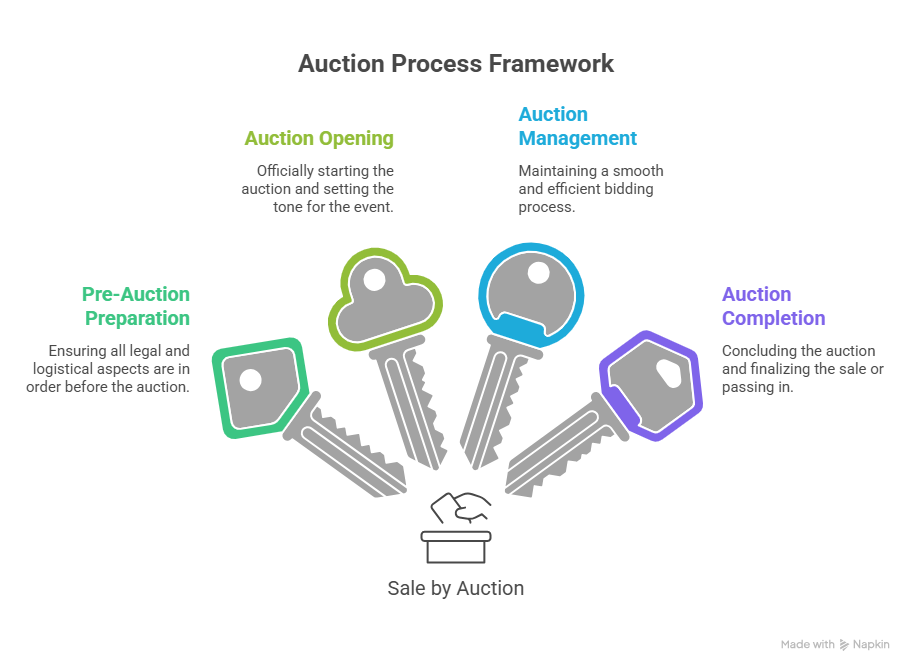
Ethical management in auctions aligns with the broader real estate industry by promoting fair trading practices, safeguarding consumer interests, and preventing fraud. It complements legal, regulatory, and professional frameworks, thereby enhancing the credibility and functionality of the real estate market.
Where can the student go to find out more information about ethical management when conducting and completing a sale by auction?
- General rules for conducting an auction of goods
- The law and authority of auctioning real property
- Skillmaker
What job roles would be knowledgeable about ethical management when conducting and completing a sale by auction?
Roles include:
- Auctioneers
- Real Estate Agents
- Compliance Officers
- Legal Advisors
- Property Managers
What is ethical management when conducting and completing a sale by auction like in relation to sports, family, or schools?

In sports, ethical management in auctions resembles fair play, ensuring everyone abides by the rules and competes on an equal footing. In family contexts, it is akin to maintaining honesty and trust in relationships, ensuring all members feel valued and respected. In schools, it reflects the establishment of a code of conduct to achieve fairness and transparency in both educational and extracurricular activities.
(The first edition of this post was generated by AI to provide affordable education and insights to a learner-hungry world. The author will edit, endorse, and update it with additional rich learning content.)
(Skillmaker – 2025)- About the Author
- More info

Workskill training for all
