
Maintaining Hygiene: Cleaning Kitchen Premises and Equipment
Posted by SkillMaker in Jan, 2025
What is a concise description of cleaning kitchen premises and equipment?

Cleaning kitchen premises and equipment involves systematically sanitizing all surfaces, machinery, and tools used in the kitchen environment. This ensures a hygienic space for food preparation, preventing contamination and the spread of food-borne illnesses. This process includes the regular cleaning of floors, counters, utensils, cooking appliances, and storage areas using appropriate cleaning agents and methods to maintain health and safety standards.
Why do people in enterprises need to clean kitchen premises and equipment?
Enterprises must clean kitchen premises and equipment to ensure compliance with health regulations, thereby safeguarding consumer health and reputation. Regular cleaning promotes a sanitary environment, minimizes the risk of contamination, and extends the lifespan of kitchen equipment. Additionally, maintaining cleanliness boosts operational efficiency, reduces hazards, and supports productivity, ensuring a positive work atmosphere and enhancing customer satisfaction.
“Effective cleaning in the kitchen is crucial for maintaining hygiene, ensuring compliance, and protecting both staff and customers.”
What are the key components or elements of cleaning kitchen premises and equipment?
Key components of cleaning kitchen premises and equipment include:
- Surface Cleaning: Sanitizing all surfaces including countertops, tables, and cutting boards.
- Equipment Maintenance: Regular cleaning and descaling of utensils, appliances, and machinery.
- Waste Management: Proper disposal of waste materials to prevent pest infestations.
- Floor Care: Cleaning and disinfecting floors to avoid slip hazards.
- Ventilation Hygiene: Cleaning air ducts and ventilation systems to ensure air quality.
- Sanitisation: Process of eliminating bacteria and viruses to ensure safe food preparation.
- Disinfection: Destroying harmful microorganisms on surfaces and equipment.
- Food Safety Standards: Regulations governing hygiene practices in food handling.
- Cross-Contamination: Transfer of harmful residues from one surface to another.
- Cleaning Agents: Chemicals used in the cleaning process to remove dirt, grease, and bacteria.
- Chefs
- Kitchen Porters
- Cleaning Staff
- Food Safety Specialists
- Kitchen Managers
- About the Author
- More info
What key terms, with descriptions, relate to cleaning kitchen premises and equipment?

Registered Trademark®
Who is typically engaged with operating or implementing cleaning kitchen premises and equipment?
Kitchen staff, including chefs, dishwashers, and cleaning personnel, are typically responsible for cleaning kitchen premises and equipment. Their roles may involve routine daily cleaning tasks, deep cleaning schedules, and ensuring that all health regulations are adhered to for optimal kitchen hygiene.
How does cleaning kitchen premises and equipment align or integrate with other components of Hospitality and Catering?
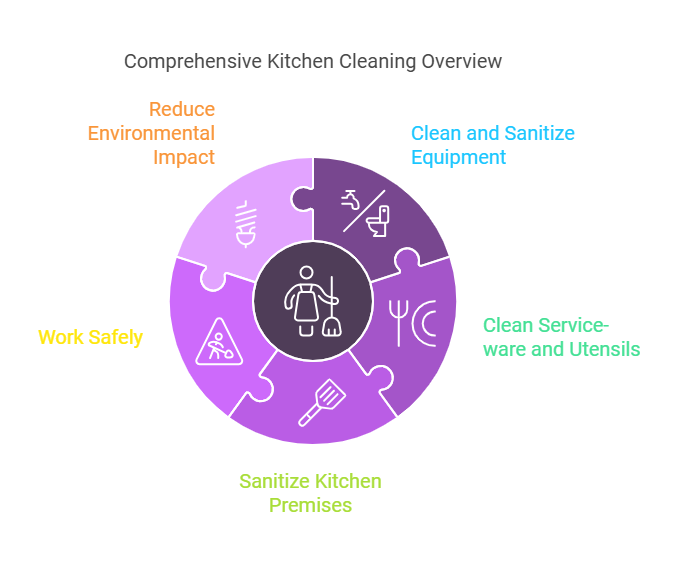
Cleaning kitchen premises and equipment is integral to the culinary chain, ensuring food safety and quality. Within Hospitality and Catering, this process supports operations by preventing food contamination, adhering to regulations, and promoting a safe working environment, thus complementing areas such as food preparation and service delivery to ensure a seamless and satisfactory customer experience.
Where can the student go to find out more information about cleaning kitchen premises and equipment?
What job roles would be knowledgeable about cleaning kitchen premises and equipment?
Roles include:
What is cleaning kitchen premises and equipment like in relation to sports, family, or schools?

Cleaning kitchen premises and equipment is like maintaining discipline in sports; it requires routine, focus, and precision for best results.
In a family setting, it’s comparable to managing household tasks to ensure a clean and orderly environment.
In schools, it aligns with creating a safe and hygienic learning environment, where regular cleaning and maintenance play key roles in fostering an optimal atmosphere for education and growth.
(The first edition of this post was generated by AI to provide affordable education and insights to a learner-hungry world. The author will edit, endorse, and update it with additional rich learning content.)

Workskill training for all

 Post Tagged with