
Organisational Policy for Cleaning Kitchen Premises and Equipment
Posted by SkillMaker in Jan, 2025
What is a concise description of organisational policy for cleaning kitchen premises and equipment?

Organisational policy for cleaning kitchen premises and equipment comprises a set of established guidelines and procedures aimed at maintaining hygiene and safety standards in hospitality environments. It includes the use of appropriate cleaning products, techniques, schedules, and safety measures to ensure a sanitary kitchen space.
Why do people in enterprises need an organisational policy for cleaning kitchen premises and equipment?
Organisational policies are vital in ensuring consistent hygiene and safety in kitchen environments. They help prevent foodborne illnesses by reducing cross-contamination, increase the longevity of equipment through regular maintenance, and support compliance with health regulations. This safeguards the business’s reputation and enhances customer trust.
“Implementing effective cleaning policies fosters a safe, clean, and efficient kitchen environment, crucial for upholding industry standards and enhancing customer confidence.”
What are the key components or elements of organisational policy for cleaning kitchen premises and equipment?
Key components of an organisational cleaning policy include:
- Standard Operating Procedures (SOPs): Detailed instructions on cleaning methods and frequency.
- Sanitation Protocols: Measures and products to ensure disinfection and cleanliness.
- Training Programs: Educating staff on cleaning practices and safety protocols.
- Monitoring and Auditing: Regular checks to ensure compliance with cleaning standards.
- Waste Management: Procedures for disposing of kitchen waste safely and sustainably.
What key terms, with descriptions, relate to organisational policy for cleaning kitchen premises and equipment?

Registered Trademark®
- HACCP (Hazard Analysis and Critical Control Points): A management system addressing food safety.
- Sanitation Schedule: A planned timetable for cleaning tasks.
- Personal Protective Equipment (PPE): Gear worn to minimise exposure to hazards.
- Cross-Contamination: Transfer of harmful bacteria between food, work surfaces, or equipment.
- Biohazard Waste: Waste that poses a risk of infection and must be handled according to specific procedures.
Who is typically engaged with operating or implementing organisational policy for cleaning kitchen premises and equipment?
Kitchen managers, head chefs, and cleaning staff are typically responsible for implementing cleaning policies. These roles work closely to ensure all cleaning tasks are performed correctly and hygienically, coordinating to maintain the kitchen’s sanitation standards.
How does organisational policy for cleaning kitchen premises and equipment align or integrate with other components of Hospitality and Catering?
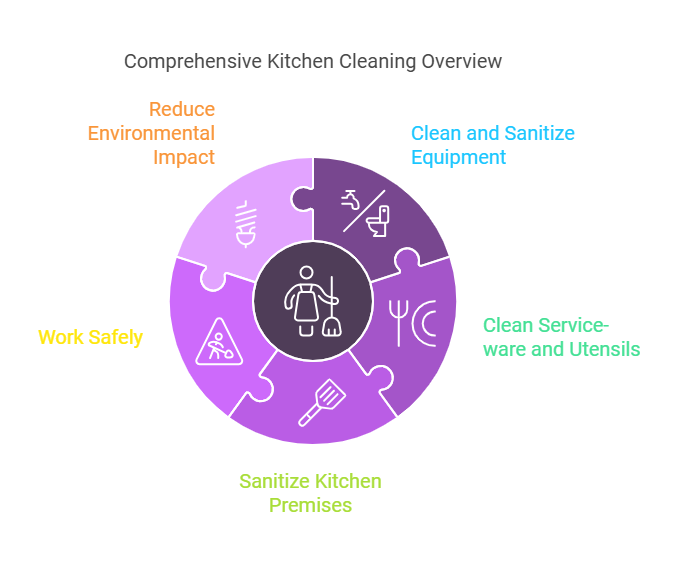
Cleaning policies align with organisational health and safety standards, ensuring a risk-free environment for staff and patrons. They support food quality control by reducing contamination risks and play a critical role in training programs, waste management, and compliance with industry regulations, all integral to successful hospitality and catering operations.
Where can the student go to find out more information about organisational policy for cleaning kitchen premises and equipment?
What job roles would be knowledgeable about organisational policy for cleaning kitchen premises and equipment?
Roles include:
- Kitchen Managers
- Head Chefs
- Cleaning Supervisors
- Health and Safety Officers
- Catering Managers
What is organisational policy for cleaning kitchen premises and equipment like in relation to sports, family, or schools?

In sports, a cleaning policy parallels a coach ensuring equipment is safe and the playing field is clean and ready for action.
In a family context, it’s like maintaining a household’s cleanliness to protect health and wellbeing.
At schools, it reflects custodians upholding sanitary facilities for a conducive and healthy learning environment.
(The first edition of this post was generated by AI to provide affordable education and insights to a learner-hungry world. The author will edit, endorse, and update it with additional rich learning content.)
- About the Author
- More info

Workskill training for all

 Post Tagged with