
Enhancing Hygiene through Effective Kitchen Cleaning
Posted by SkillMaker in Jan, 2025
What is a concise description of cleaning kitchen premises and equipment?

Cleaning kitchen premises and equipment involves a systematic approach to maintaining a hygienic and orderly kitchen environment. This process includes sanitation of surfaces, deep cleaning of equipment, removal of waste, and ensuring compliance with food safety regulations to prevent contamination and maintain high standards of cleanliness.
Why do people in enterprises need to clean kitchen premises and equipment?
Cleaning kitchen premises and equipment is essential to safeguard public health, maintain food safety, and ensure a pleasant dining experience. Comprehensive cleaning reduces the risk of foodborne illnesses, increases the lifespan of kitchen equipment, and complies with health regulations. It preserves the restaurant’s reputation and meets customer expectations for cleanliness.
“A clean kitchen serves as the heart of a quality culinary experience, ensuring health, reliability, and customer satisfaction.”
What are the key components or elements of cleaning kitchen premises and equipment?
Key components of cleaning kitchen premises and equipment include:
- Cleaning Agents: Selection and use of appropriate chemicals and tools for various surfaces and equipment.
- Sanitisation: Eliminating bacteria and pathogens from surfaces to ensure safety.
- Waste Management: Proper disposal of food waste to prevent infestations and odours.
- Health and Safety Compliance: Adhering to regulations and industry standards.
- Routine Maintenance: Regular cleaning schedules to ensure consistency and reliability.
What key terms, with descriptions, relate to cleaning kitchen premises and equipment?

Certificate of Hygiene®
- Degreasers: Chemicals used to break down and remove grease from kitchen surfaces.
- Sanitisers: Agents that reduce the number of microorganisms to safe levels.
- Cleaning Protocols: Established procedures that ensure consistent cleaning standards.
- Cross-contamination: The transfer of harmful bacteria from one item or surface to another.
- Ventilation: Systems that reduce odour and control air quality within the kitchen.
Who is typically engaged with operating or implementing cleaning kitchen premises and equipment?
The implementation of cleaning kitchen premises and equipment is typically managed by kitchen staff, chefs, and designated cleaning personnel. These individuals are responsible for executing cleaning protocols and maintaining hygiene standards, often under the guidance of kitchen or operations managers.
How does cleaning kitchen premises and equipment align or integrate with other components of Hospitality and Catering?
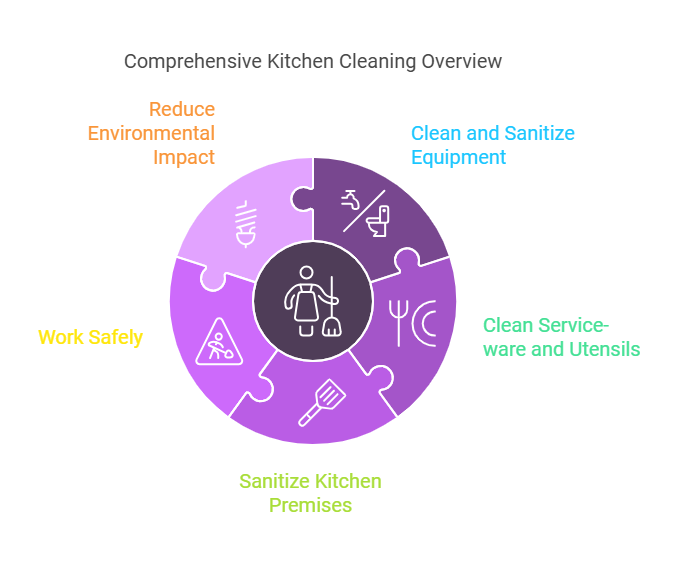
Cleaning kitchen premises and equipment complements food preparation, presentation, and service by ensuring a clean and organised environment. It integrates with safety standards, staff training, and operational efficiency, contributing to an overall dining experience that meets customer expectations and health regulations.
Where can the student go to find out more information about cleaning kitchen premises and equipment?
- Food Standards Code and Safety Guidelines
- Workplace Health and Safety Resources
- Restaurant & Catering Australia Guidelines
What job roles would be knowledgeable about cleaning kitchen premises and equipment?
Roles include:
- Chefs and Sous Chefs
- Kitchen Hands
- Cleaning Staff
- Operations Managers
- Food Safety Officers
What is cleaning kitchen premises and equipment like in relation to sports, family, or schools?

In relation to sports, cleaning kitchen premises and equipment is comparable to a team preparing their field or court, ensuring it’s in peak condition for optimal performance. Within a family, it resembles maintaining a tidy household where cleanliness leads to a healthy living environment. In schools, it reflects the importance of clean and organised classrooms that foster effective learning and health safety.
(The first edition of this post was generated by AI to provide affordable education and insights to a learner-hungry world. The author will edit, endorse, and update it with additional rich learning content.)
- About the Author
- More info

Workskill training for all

 Post Tagged with