
WHS Policies in Assisting with Maintaining Workplace Safety
Posted by SkillMaker in Dec, 2024
What is a concise description of WHS policies in assisting with maintaining workplace safety?

WHS (Work Health and Safety) policies define the procedures and measures businesses must follow to ensure a safe, healthy working environment. These policies guide how to identify hazards, assess risks, and implement control measures to prevent accidents and illnesses.
Why do people in enterprises need WHS policies in maintaining workplace safety?
Enterprises need WHS policies to comply with legislative requirements, protect workers from harm, and minimize the likelihood of workplace incidents. Implementing these policies not only helps in preventing injuries and diseases but also improves employee morale and productivity by fostering a safe work environment.
“WHS policies are the backbone of a safe workplace, ensuring hazards are identified and mitigated, fostering a culture of safety.”
What are the key components or elements of WHS policies in maintaining workplace safety?
Key components of WHS policies include:
- Risk Assessment: Identifying workplace hazards and evaluating associated risks.
- Training Programs: Educating and preparing employees on safety procedures and emergency response.
- Incident Reporting: Establishing a system to report and investigate accidents.
- Policy Review: Regularly updating policies to reflect new safety standards and regulations.
- Consultation: Engaging employees in discussions about safety issues and improvements.
What key terms, with descriptions, relate to WHS policies in maintaining workplace safety?

Registered Trademark®
- Hazard Control: Measures put in place to eliminate or reduce risks posed by workplace hazards.
- Personal Protective Equipment (PPE): Equipment worn to minimize exposure to workplace hazards.
- Safety Audit: A systematic examination to ensure safety regulations and policies are complied with.
- Emergency Preparedness: Planning and preparation to effectively respond to workplace emergencies.
- Ergonomics: Designing workplaces to fit the physical needs of employees to prevent strain injuries.
Who is typically engaged with operating or implementing WHS policies in maintaining workplace safety?
Health and Safety Officers, HR managers, supervisors, and employees collectively play a part in operating WHS policies. These stakeholders work to ensure compliance, promote safety culture, and respond to workplace incidents according to the policies.
How do WHS policies integrate with other components of Workplace Safety?
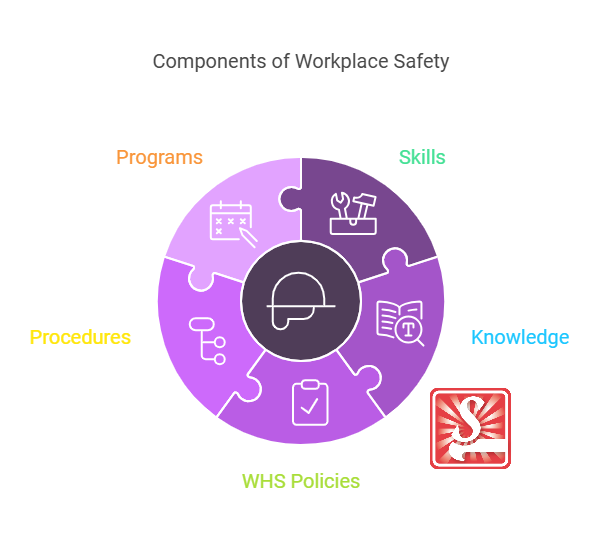
WHS policies integrate with other Workplace Safety components such as risk management, incident response, and safety training by establishing a comprehensive approach. Each component works together to ensure continuous improvement of safety standards and enhance operational safety across all levels of the organization.
Where can the student go to find out more information about WHS policies in maintaining workplace safety?
What job roles would be knowledgeable about WHS policies in maintaining workplace safety?
Roles include:
- Health and Safety Officers
- HR Managers
- Operations Managers
- Compliance Officers
- Workplace Safety Coaches
What are WHS policies like in relation to sports, family, or schools?

In sports, WHS policies are like the rules that ensure fair play and safety for all players. For families, it is similar to household safety guidelines, ensuring the well-being of family members. In schools, WHS policies are akin to protocols that ensure a safe learning environment, protecting students and staff alike from potential hazards.
(The first edition of this post was generated by AI to provide affordable education and insights to a learner-hungry world. The author will edit, endorse, and update it with additional rich learning content.)
- About the Author
- More info

Workskill training for all

 Post Tagged with